CENTEGIX® | Government
Where Does Response Slow Down Across Your Capitol Complex?

Why This Matters
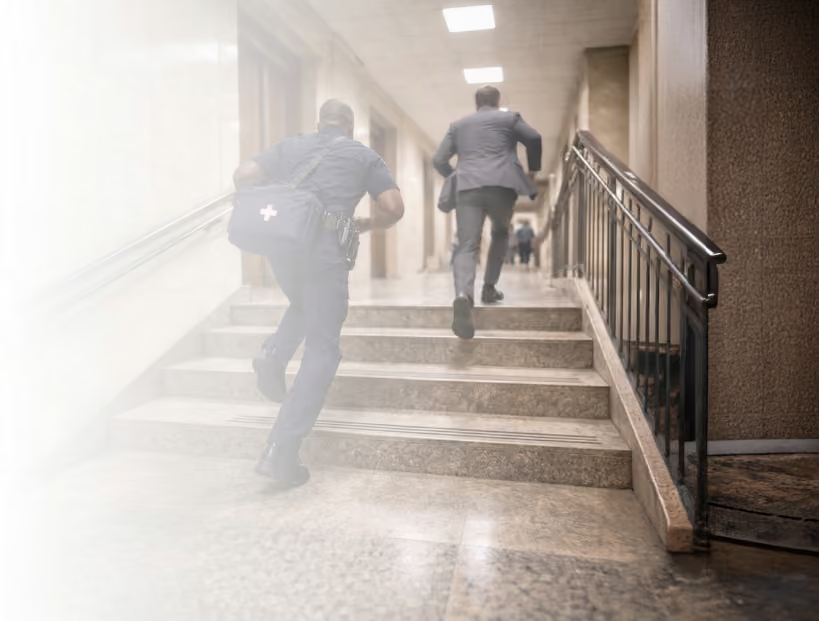
Response starts the moment your team knows who needs help and where they are. Everything before that is search time.
Capitol complexes are built for public access—chambers, galleries, committee rooms, administrative offices, tunnels, annexes, and parking decks, often across multiple buildings on a shared campus. Session days, hearings, and public events can change who is in the building by the hour. This guide walks through where those delays start and what a modern approach should close.

What You Will Find Inside
Five gaps. Each one covers what slows response, what a modern approach should provide, and a reality-check question you can put to your own complex.
- Alerting coverage: Whether staff can call for help from tunnels, basements, parking decks, and historic wings where Wi-Fi and cellular thin out
- Device readiness: How much your plan depends on someone reaching a fixed wall button or opening an app under pressure
- Location visibility: Whether responders get building, floor, and room-level detail across the full complex — not just a notification
- Map accuracy: Whether your floor plans reflect what is actually in the building today, including AEDs, bleed kits, and fire extinguishers
- Visitor accountability: Whether you can name and locate every non-employee inside during a tour, a lobbying day, or hearing overflow
Get the Guide
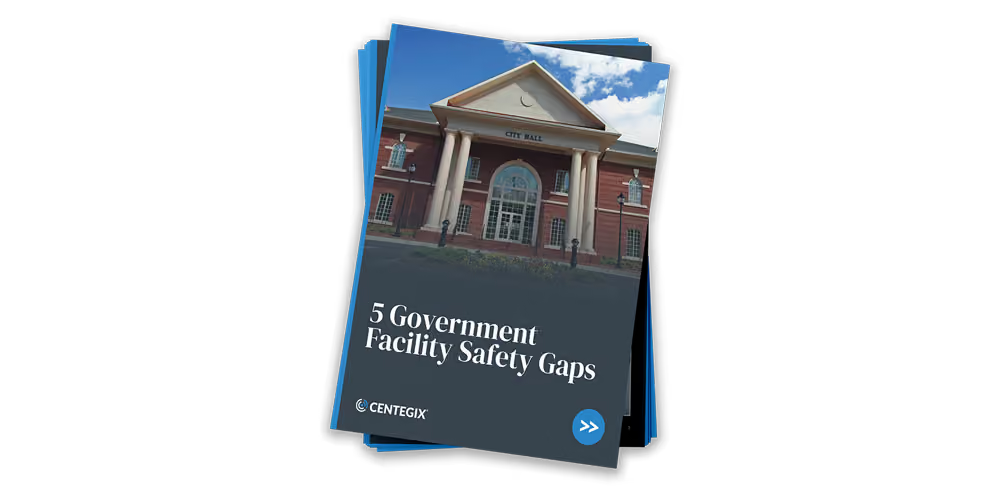
Complete the form to download 5 Government Facility Safety Gaps: A guide for government facility, security, and administrative leaders.