
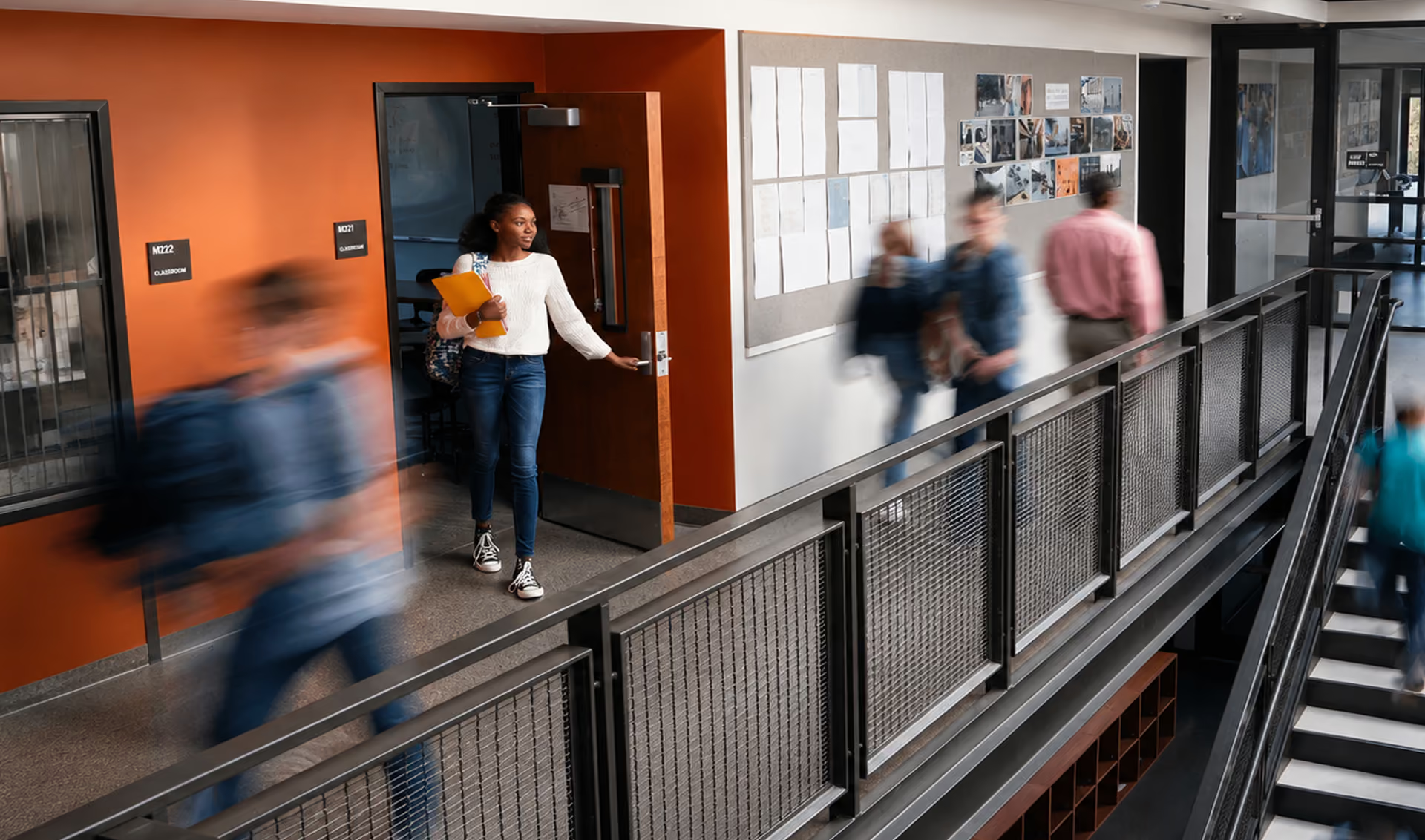
A student suffers a medical emergency in the gym. An elementary school student leaves a supervised area. A disagreement between students escalates into an altercation. None of these incidents may resemble the worst-case scenarios that dominate school safety discussions, but each demands an effective response.
For Craig Hawkesworth, founder of FiveStones Safety and a former 12-year school board member, these everyday emergencies reveal something important about school preparedness: the more consistently schools use their emergency response systems, the better prepared their personnel can become to respond when a more serious crisis occurs.
“You don't realize it, but you're training for it each and every day,” Hawkesworth told CENTEGIX CMO Robb Monkman in Episode 11 of The Safety Signal, “Everyone Has a Plan Until…”
Their conversation explores why everyday emergencies deserve greater attention, how districts can identify gaps in their response plans, and what school safety leaders should expect from technology providers. Hawkesworth also shares his vision for a future in which school safety systems work together rather than forcing responders to navigate disconnected technologies.
The discussion reinforces an important principle behind school alert system best practices: effective emergency response depends not only on having technology available, but also on making it accessible, familiar, reliable, and part of everyday school operations.
Why Should Schools Prepare for Everyday Emergencies?
Hawkesworth's commitment to school safety began as a parent. Following the 2012 Sandy Hook Elementary School shooting, he decided to become more involved in protecting students and educators. He was elected to his local school board in 2013 and later founded FiveStones Safety in 2020.
During his 12 years on the board, he witnessed districts make significant progress in emergency preparedness. Schools developed more comprehensive emergency operations plans, adopted new technologies, and began connecting different elements of their safety infrastructure.
Yet he also saw an important disconnect between the incidents driving safety conversations and those school personnel encounter most frequently.
When discussing school safety with district leaders, Hawkesworth observed that conversations often immediately turn to the worst-case scenario. Medical emergencies, student elopement, and behavioral incidents receive comparatively less attention.
These incidents, however, are precisely the situations in which many school employees need to summon assistance.
A student experiencing a medical crisis may need immediate attention from trained personnel. A student who leaves a supervised area may require several staff members to coordinate a search. An escalating altercation may demand additional support before someone is seriously injured.
The U.S. Department of Education's emergency planning guidance emphasizes comprehensive emergency operations plans that address school-specific needs, clarify responsibilities, and prepare personnel for different types of emergencies.
Hawkesworth offered a particularly powerful reminder of why everyday incidents matter.
“Some of those small emergencies are a parent's worst case scenario, right?”
An incident does not need to affect an entire campus to have life-changing consequences for a student or family. That's why a comprehensive school safety plan for everyday crises must prepare personnel to respond effectively to both routine incidents and extreme emergencies.
How Does Everyday Use of a School Alert System Build Emergency Readiness?
One of Hawkesworth's central arguments is that everyday use of a school alert system provides practical experience that cannot be replicated by written procedures alone.
When a staff member activates an alert for a medical emergency, the school has an opportunity to put several elements of its response process into action. The appropriate personnel must receive the notification, understand where assistance is needed, and respond according to established procedures.
Repeated experience with these processes can help employees become more familiar with their responsibilities and more confident in the technology they rely on.
For campus administrators, everyday incidents also provide opportunities to evaluate whether notifications reach the right people and whether responders receive sufficient information.
This aligns with the emphasis on training and practice in the federal guide for developing high-quality school emergency operations plans.
The distinction is that formal exercises deliberately test preparedness, while actual everyday incidents offer additional opportunities to reinforce established response procedures.
Hawkesworth believes this familiarity becomes particularly valuable during high-pressure emergencies.
With a wearable panic button, employees can request assistance without searching for a phone or navigating an application. CENTEGIX CrisisAlert™ allows authorized staff to initiate alerts from a wearable badge, while designated responders receive notifications identifying who needs help and where.
The value of this approach extends beyond a single emergency. When employees understand how to request assistance and have confidence that their alerts will reach responders, the system can become an established part of the school's safety culture.
Consistent use also creates opportunities to evaluate staff adoption of emergency response technology, identify training needs, and reinforce response expectations.
Everyday use does not replace formal drills. Rather, it can complement structured exercises by making emergency communication and response procedures more familiar.
Why Can False Alarms Undermine Confidence in School Safety Systems?
An emergency alert is only useful when people recognize its significance and respond appropriately.
Hawkesworth illustrates this challenge with a familiar example: a car alarm sounding in a parking lot.
When an alarm repeatedly activates without an actual threat, people may eventually stop paying attention.
He argues that school safety systems can encounter a similar problem when false alarms become frequent.
If employees repeatedly receive inaccurate notifications, they may begin to question whether future alerts require action. This creates a dangerous disconnect between the system's intended purpose and how personnel respond to it.
The broader concern is sometimes described as alarm fatigue: repeated unnecessary alerts can reduce attention to subsequent notifications.
Although the concept is often discussed in healthcare, the underlying issue of alert reliability is relevant to emergency communication in other settings.
The Cybersecurity and Infrastructure Security Agency's emergency communications guidance emphasizes the importance of assessing and maintaining effective emergency communications capabilities.
For school districts, maintaining confidence in an emergency notification system requires attention to alert accuracy, clear procedures, training, and ongoing system evaluation.
Technology should reinforce the expectation that an emergency notification matters.
That means school leaders must consider not only how quickly an alert can be activated, but also how reliably it reaches the intended recipients and how clearly it communicates the required response.
The way school safety devices communicate can be just as important as the device employees use to initiate an alert.
How Can Schools Identify Gaps Between Emergency Plans and Actual Readiness?
Having an emergency operations plan is not the same as knowing that every part of it will work during an actual incident.
Hawkesworth makes this distinction with the observation that inspired the episode's title:
“Everyone has a plan until you get hit in the mouth, right? Then your plan goes out the window.”
His point is not that planning is ineffective. It is that written procedures must be tested against the realities of emergency response.
A district may have access control technology, security cameras, intercoms, emergency alerts, and reunification procedures. But what happens when these systems must function together?
Can district leaders quickly access the information they need? Do the appropriate responders receive notifications? Are employees familiar with the procedures they must follow?
Hawkesworth believes these gaps become apparent through repeated testing and coordinated drills.
The Department of Homeland Security's exercise starter kits provide resources for conducting exercises that validate emergency operations plans and identify areas for improvement.
Hawkesworth encourages districts to go beyond minimum drill requirements and involve local first responders in comprehensive exercises at least once annually.
He also describes an exercise in which community members played the roles of parents attempting to reach their children during an emergency. Some moved past officers who were trying to maintain a restricted area.
The scenario revealed a practical challenge that might not have been apparent from a written plan.
These are the kinds of issues that can emerge when schools test their procedures under realistic conditions.
For a deeper examination of how to evaluate preparedness, districts should consider real-world testing of school safety plans alongside established emergency planning guidance.
How Do Wearable Panic Buttons Help Staff Respond to Emergencies?
When Monkman asks what changes when every employee can quickly summon assistance, Hawkesworth identifies peace of mind as one of the most important outcomes.
For educators and students, confidence in school safety can influence how secure they feel during the school day.
The Centers for Disease Control and Prevention identifies safe, supportive school environments as important to student connectedness and engagement.
Hawkesworth believes that knowing assistance can be requested immediately helps staff feel more confident in their ability to handle unexpected situations.
He describes a video from a Texas school district where an altercation escalated and a student produced a firearm. In the recording, a teacher could be heard desperately attempting to communicate with the front office.
The district did not have the CENTEGIX solution at the time of the incident.
Hawkesworth recounts that a school district police chief later shared the video with him, expressing appreciation that his district's wearable alert technology could help avoid similar communication delays.
The example highlights a fundamental challenge: employees facing an emergency may need to focus on protecting students, providing assistance, or managing an escalating situation.
They should not have to choose between taking those actions and requesting help.
Wearable panic buttons for school staff can provide a more accessible way to initiate a response. For medical incidents, the ability to request assistance while remaining with someone who needs care can be particularly important.
These capabilities are most valuable when supported by trained responders, clear protocols, and reliable communication.
What Will the Future of School Emergency Response Look Like?
Looking three to five years ahead, Hawkesworth predicts that school districts will increasingly expect their safety technologies to function together.
“Districts are going to start demanding that everything work together and they work together in one single screen.”
Today, a district may manage cameras, access control, visitor management, emergency alerts, and reunification through different interfaces.
Hawkesworth envisions a more connected environment in which safety personnel can access relevant information without repeatedly moving between disconnected systems.
That direction is consistent with the broader need for coordinated emergency communications and situational awareness.
The CENTEGIX Safety Platform already brings together several safety capabilities, including CrisisAlert, digital mapping, visitor management, and reunification. Additional integrations can support connections with compatible technologies.
The future vision Hawkesworth describes goes further: increasingly seamless interoperability across a district's safety ecosystem.
However, he emphasizes that better technology does not eliminate the need for training and human relationships.
His experience with FiveStones Safety has reinforced the importance of personal engagement during implementation, in-person training, and responsive customer support.
He believes successful safety technology partnerships must continue adapting as school districts' needs evolve.
Everyday Readiness Builds Confidence for the Unexpected
Craig Hawkesworth's message is that school safety preparedness is not measured solely by whether a district has purchased technology, written an emergency plan, or completed its required drills.
It is reflected in how confidently employees can request help, how effectively responders coordinate, and how reliably the district's systems perform during everyday incidents.
Those daily experiences can strengthen familiarity and reveal opportunities for improvement before a more serious emergency occurs.
For school leaders, the goal is to create an environment where employees know how to act, understand the resources available to them, and trust that assistance can be summoned when needed.
Watch or listen to The Safety Signal, Episode 11: “Everyone Has a Plan Until…” to hear Craig Hawkesworth's complete conversation with Robb Monkman about everyday emergencies, operational readiness, and the future of school safety technology.
Learn how the CENTEGIX Safety Platform helps schools connect emergency alert activation, precise location information, and coordinated response.
Frequently Asked Questions About School Alert Systems
What is a school alert system?
A school alert system enables authorized personnel to communicate emergencies and notify designated responders. Depending on the technology, it may support wearable panic buttons, location information, campus-wide notifications, and connections with other emergency response systems.
How can school alert systems help during everyday emergencies?
School alert systems allow staff to request assistance during medical incidents, student altercations, elopement, and other situations requiring additional support. Reliable notifications and location information can help responders identify where assistance is needed.
Why is regular use important for school emergency preparedness?
Regular use can help employees become familiar with alert procedures and give administrators opportunities to evaluate how effectively their response processes work. Everyday experience complements formal training, drills, and emergency exercises.
Can wearable panic buttons help during medical emergencies?
Yes. A wearable panic button can allow a staff member to request assistance while remaining with a student or colleague experiencing a medical emergency. The effectiveness of the response also depends on trained personnel, clear procedures, and timely communication.
How can schools improve confidence in their emergency notification systems?
Districts can strengthen confidence through reliable technology, staff training, clear response protocols, regular testing, and evaluation of alert performance. Addressing false alarms and reinforcing appropriate response procedures are also important.