

Michigan school districts have an opportunity to strengthen student safety with funding available through Section 31aa of the state's FY 2026–27 education budget. But before purchasing emergency response technology, upgrading security infrastructure, or investing in staff training, district leaders need to understand which expenditures qualify and what requirements apply.
Under Michigan's FY27 Section 31aa legislation, $310 million is allocated to support student mental health and school safety. The legislation establishes separate funding categories with different allowable uses, including an allocation of up to $200 million from the state school aid fund specifically for student safety.
For administrators evaluating school safety solutions, understanding these distinctions is essential. An investment may address a genuine safety need without necessarily qualifying under a particular funding provision.
What can Michigan schools use Section 31aa funding for? Under Section 31aa(3), eligible student safety expenditures include emergency response systems, safety infrastructure, threat assessment and crisis communication training, coordination with law enforcement, qualifying school resource officers, and other specifically authorized activities. Districts must comply with the legislation and Michigan Department of Education (MDE) requirements when using these funds.
Understanding allowable expenditures is one part of building an effective school safety plan. The next step is determining which eligible investments can address a district's operational needs and strengthen its ability to respond when emergencies occur.
What Is Michigan Section 31aa School Safety Funding?
Section 31aa is part of Michigan's State School Aid Act. For the 2026–27 school year, the state has allocated $310 million across two principal funding categories: student mental health and student safety.
Although both support safer learning environments, the funding streams serve different purposes and have different expenditure restrictions.
How Much Section 31aa Funding Is Available in 2026–27?
The FY27 legislation establishes the following allocations:
These figures represent statutory funding limits, not guaranteed payments to individual districts. According to MDE's FY27 Section 31aa FAQ, the final per-pupil allocation may be lower depending on the number of eligible applicants.
Funding is available to qualifying public school districts, intermediate school districts, public school academies, nonpublic schools, and the Michigan School for the Deaf, subject to applicable requirements.
How Is School Safety Funding Different From Mental Health Funding?
Section 31aa(2) focuses on improving student mental health. Allowable expenditures include mental health support personnel, screening tools, evidence-based training, and certain behavioral health technology.
Section 31aa(3), by contrast, focuses on student safety. Its allowable expenditures include emergency response systems, physical security improvements, safety training, and coordination with law enforcement.
The distinction matters when developing a school safety budget. For example, mental health screening software may qualify under subsection (2), while an emergency response system is explicitly listed under subsection (3). Districts should evaluate each proposed expenditure against the correct funding category rather than treating the entire $310 million allocation as interchangeable.
The Michigan Department of Education's allowable-use guidance provides a side-by-side comparison of expenses permitted under each subsection.
What Are the Allowable Expenditures Under Michigan Section 31aa?
The FY27 legislation identifies several categories of eligible student safety expenditures under Section 31aa(3). These include physical infrastructure, emergency response technology, personnel, training, and security assessments.
The following table summarizes the statutory categories.
These categories are established in Michigan Compiled Laws Section 388.1631aa(3). MDE also identifies examples of expenses that are not allowable, including general playground improvements, unrelated renovations, hall monitors, and security personnel who do not meet the statutory school resource officer definition.
Which Safety Infrastructure Improvements May Qualify?
Physical security improvements are among the most clearly identified allowable expenditures.
The legislation specifically references cameras, door blocks, hardened vestibules, window screening, and technology necessary to operate buzzer systems. It also permits certain firearm detection software that integrates with existing security cameras to identify visible firearms and alert school personnel and first responders.
These investments can address vulnerabilities associated with school entrances, access control, and incident detection. However, physical improvements alone do not necessarily resolve communication gaps between staff members and responders.
For districts evaluating school safety solutions for aging infrastructure, the purchasing process should consider how proposed improvements interact with existing buildings, communication systems, and emergency procedures.
The legislation also separately allows emergency infrastructure needed to address an immediate threat to student or staff safety. Expenditures under that specific provision require prior MDE approval. Districts should not assume that the same approval condition automatically applies to every other infrastructure expenditure.
Can Districts Fund Emergency Response Systems?
Yes. Section 31aa(3)(l) expressly includes an emergency response system among allowable student safety expenditures.
This provision is particularly relevant to districts evaluating technologies that help staff request assistance, communicate an emergency, and coordinate response activities.
An effective emergency response system should support more than the initial notification. It should help the appropriate personnel understand where an incident is occurring and what actions are required.
For example, a school alert system may provide staff with an accessible way to request help while delivering location information to designated responders. Depending on the system, it may also support campuswide notifications and coordination with public safety agencies.
The legislation establishes emergency response systems as an allowable category, but it does not identify every qualifying product, feature, or purchasing arrangement. Districts should confirm that their proposed expenditure falls within the statutory category and complies with current MDE guidance.
What Training and Personnel Expenses Are Eligible?
Section 31aa(3) authorizes several forms of training, including threat assessment training for school staff, threat response training for staff and students, and crisis communication training for school employees.
These investments can help districts translate emergency procedures into actions that staff understand and can perform consistently.
The legislation also permits qualifying school resource officers and safety dogs. However, these categories have specific restrictions. School resource officers must satisfy applicable licensing and statutory requirements, while safety dogs must meet the law's definition of a contracted detection dog.
MDE's guidance specifically excludes certain expenses that might otherwise appear safety-related, including general security personnel who do not qualify as school resource officers and the direct purchase of safety dogs. Districts should review these distinctions carefully before including personnel or training expenses in their Section 31aa plans.
Can Michigan Schools Use Section 31aa Funding for Emergency Alert Systems and Safety Technology?
Because emergency response systems are explicitly authorized under Section 31aa(3), Michigan districts have a defined statutory category to consider when evaluating emergency alert technology.
However, the practical value of a system depends on more than its eligibility for funding. District leaders must also consider whether the technology can support their staff, facilities, and emergency response procedures.
How Do Emergency Alert Systems Support School Safety?
Emergencies can occur anywhere on a school campus, including classrooms, athletic facilities, playgrounds, parking lots, and common areas. Staff members may need assistance during medical incidents, behavioral emergencies, or threats to campus safety.
Traditional communication methods can introduce delays when employees must locate a phone, access a radio, or explain their location before help can be dispatched.
A wearable panic button provides an immediately accessible way to initiate an alert. When supported by a reliable notification system, that alert can communicate the location of the incident and notify designated responders.
The underlying communication infrastructure also matters. As districts evaluate different technologies, they should consider how school safety devices communicate, including whether the system can maintain reliable coverage throughout campus buildings and outdoor spaces.
These considerations help administrators evaluate the operational capabilities of a proposed investment, separate from the funding eligibility determination.
How Can Connected Safety Solutions Improve Emergency Response?
Emergency response depends on multiple activities occurring in coordination: recognizing the incident, notifying the right people, identifying the location, and directing assistance where it is needed.
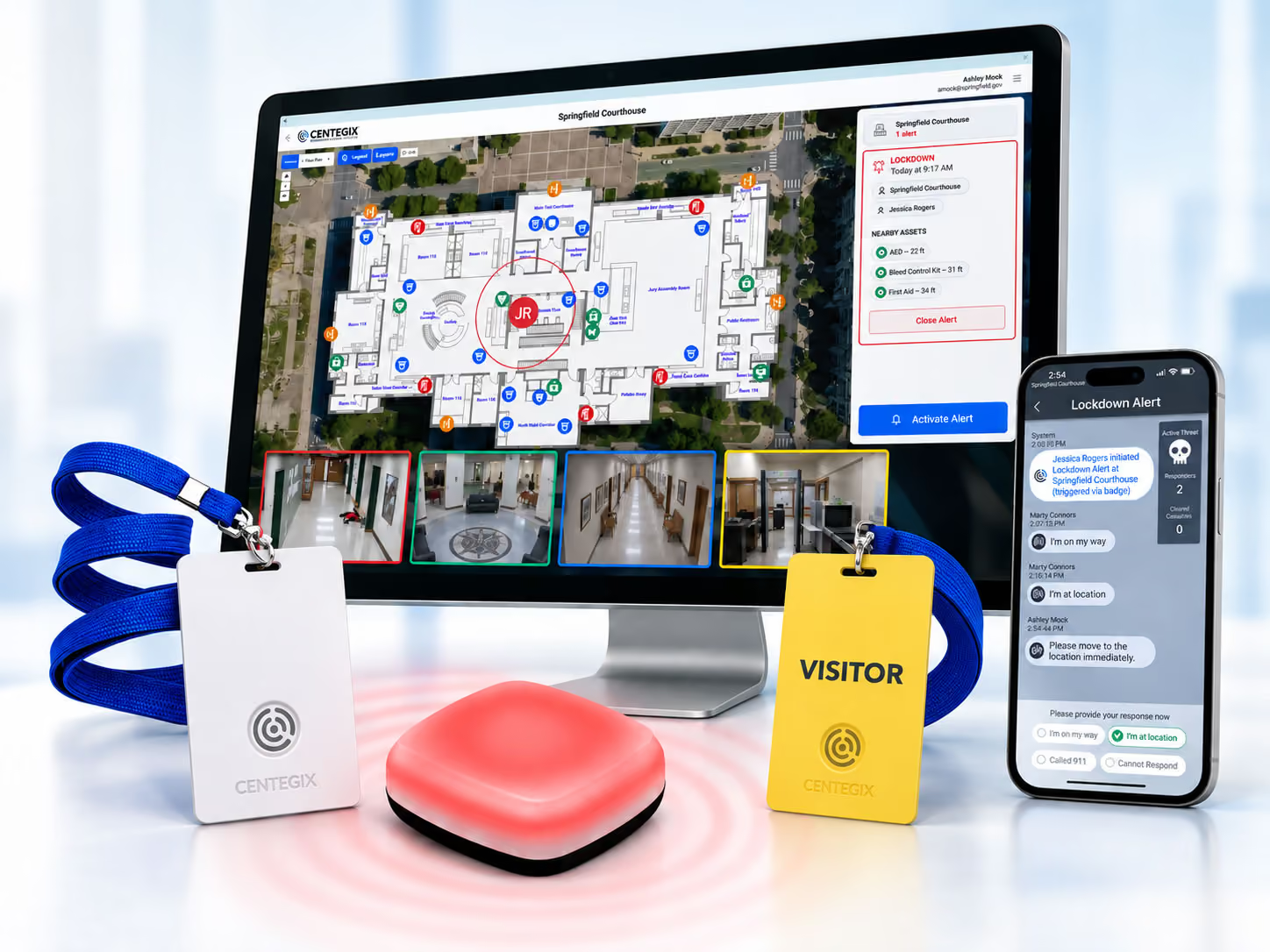
The CENTEGIX CrisisAlert™ system provides wearable alerting technology that allows school employees to request help without locating a phone or relying on a mobile application. Its private-network architecture is designed to support reliable alert transmission without depending on a school's Wi-Fi or cellular service for badge activation.
Digital mapping provides another important capability. By giving responders access to precise location information and relevant campus details such as nearby safety assets, critical incident mapping can help reduce uncertainty during emergencies. These capabilities illustrate how connected technologies can address common emergency response challenges.
Districts should verify the eligibility of their specific proposed purchase with MDE when necessary.
How Can Michigan Districts Verify Eligibility Before Purchasing School Safety Solutions?
Even when a proposed investment supports school safety, districts should confirm that it meets the applicable funding requirements before committing resources.
The MDE Office of Health and Safety publishes the current Section 31aa guidance and application instructions.
What Should Districts Confirm Before Making a Purchase?
Before using Section 31aa funding, district leaders should answer five questions:
- Which statutory category applies? Identify the specific Section 31aa(3) provision that authorizes the proposed expenditure.
- Does the purchase meet the category's requirements? Review the product, services, and implementation scope against the legislative language and MDE guidance.
- Are additional approvals or restrictions required? Some expenditures, including emergency infrastructure addressing an immediate threat under Section 31aa(3), have additional approval requirements.
- Does the purchase fit the district's funding allocation and expenditure timeline? Confirm available funding and applicable purchasing requirements before making a commitment.
- Has the district documented its eligibility determination? Maintain supporting information for the required expenditure reporting and seek clarification when necessary.
MDE directs questions about allowable expenditures to MDE-31aa@michigan.gov.
What Are the FY27 Application and Reporting Requirements?
According to MDE's FY27 Section 31aa application FAQ, the funding process is noncompetitive. Eligible entities that apply can receive funding, although actual awards may be below the statutory per-pupil maximum.
Applications are submitted through NexSys. The published FY27 application schedule includes the following deadlines:
MDE notes that application timing may be adjusted, so districts should verify the current schedule before submitting.
The initial NexSys application requires a designated budget entry indicating the district's intention to receive funding. MDE plans to return applications for amendments in spring 2027, when districts will report how funds were spent.
Recipients must submit the required final expense report by July 1, 2027. FY27 funds generally must be expended by September 30, 2027, although recipients may request an additional fiscal year through the required reporting process.
Districts receiving Section 31aa(3) funds must also agree to the legislation's comprehensive investigation requirements in the event of a qualifying mass casualty incident, including the specified disclosure and cooperation conditions.
These obligations make it important to understand the complete funding requirements rather than focusing exclusively on the allowable purchase categories.
How Can Eligible Purchases Strengthen a District's School Safety Plan?
Understanding Section 31aa eligible expenses helps districts identify potential purchasing opportunities. The next consideration is how those purchases can address the emergencies their students and staff may encounter.
Michigan districts have already demonstrated the importance of examining communication challenges and evaluating how emergency response technology performs in everyday situations.
Rochester Community Schools: Addressing Communication Gaps
Rochester Community Schools serves approximately 15,000 students across 22 facilities. District leaders identified opportunities to strengthen emergency communication after conducting a needs assessment of their buildings and existing systems.
The district implemented CENTEGIX CrisisAlert to improve its ability to respond to medical and behavioral incidents while accommodating different accessibility needs and protecting confidentiality.
Nick Russo, Superintendent of Rochester Community Schools, explained the relationship between the district's assessment and its investment: "Combined with the 31aa funding available, implementing CENTEGIX was the clear next step." Russo also emphasized that the investment became part of the district's daily safety practices, rather than simply another technology purchase.
Rochester's experience demonstrates why school safety investments should address identified operational challenges. Reliable communication, accessibility, and employee adoption can all influence whether a system delivers the intended value. For districts considering similar technology, it is important to evaluate both the proposed system's capabilities and its eligibility under the applicable funding requirements.
Forest Hills Public Schools: Supporting Everyday Emergency Response
At Forest Hills Public Schools, early experience with CrisisAlert demonstrated how emergency communication technology can support staff during medical incidents.
During the first week of implementation, employees activated CrisisAlert seven times. Six of those activations involved medical emergencies. In one incident, a student experienced a severe seizure. Superintendent Ben Kirby described the response: "One of the members of our Medical Emergency Response Team got to a student having a violent seizure inside of one minute."
Kirby explained that additional personnel, including the school resource officer, were able to respond within 60 seconds. He contrasted that experience with the delays that might have occurred if employees had relied on phone calls and radios.
The incident illustrates an important consideration for school safety investment: emergency response technology must be useful during the situations schools encounter regularly, not only during rare, large-scale threats.
Districts evaluating wearable panic buttons for medical emergency response should consider how quickly employees can initiate an alert, whether responders receive accurate location information, and how the system supports existing medical response procedures.
Both Michigan customer experiences are documented in CENTEGIX's announcement about Michigan districts investing in school safety.
Connecting Safety Investments to Emergency Preparedness
The value of an eligible purchase also depends on how effectively it fits within a district's established safety procedures. The Michigan State Police Office of School Safety provides emergency operations planning resources that emphasize coordinated planning, staff responsibilities, and consistent emergency response procedures.
Districts can use these resources to evaluate whether their existing systems support the actions required during an emergency. For example, technology that communicates an alert but does not provide actionable location information may leave responders searching for the person who needs assistance. Similarly, systems that employees find difficult to use may not deliver their intended benefits.
These concerns make implementation and adoption important considerations. A school safety system that employees consistently use is better positioned to support established response procedures than technology that remains unfamiliar or inaccessible. District leaders should also account for training, installation, ongoing support, and integration when assessing the long-term costs of safety technology.
Michigan's Emergency First Aid Guidelines for Schools reinforce the importance of defined staff responsibilities, emergency planning, and appropriate training for medical response.
These planning considerations do not expand the list of allowable Section 31aa expenditures. Instead, they help districts determine how qualifying purchases can support their broader school safety objectives.
Make the Most of Michigan School Safety Funding
Michigan Section 31aa funding gives eligible districts an opportunity to strengthen school safety through investments in emergency response systems, infrastructure, training, and other authorized activities.
Making effective use of these resources begins with understanding the legislation. District leaders should identify the relevant allowable expenditure category, review MDE requirements, and confirm that proposed purchases meet the conditions of the funding program. From there, the focus can turn to how eligible investments support the people and procedures responsible for emergency response.
For Michigan districts evaluating their options, CENTEGIX provides connected safety solutions designed to help staff request assistance, communicate critical information, and coordinate response when seconds matter.
Download the CENTEGIX Michigan Section 31aa School Safety Funding Guide to explore funding considerations and opportunities to strengthen emergency preparedness.
You can also visit the CENTEGIX Michigan School Safety Standards page for additional information about Michigan safety requirements, funding opportunities, and relevant emergency response solutions.
Frequently Asked Questions About Michigan Section 31aa Funding
Can Michigan schools use Section 31aa funding for panic buttons?
Section 31aa(3)(l) explicitly authorizes emergency response systems. A panic button system may be considered under this category when the proposed purchase meets applicable requirements. However, the legislation does not individually approve every panic button product or configuration. Districts should verify their proposed expenditure against current MDE guidance and seek clarification when needed.
Can Section 31aa funds be used for school safety technology?
Yes. Section 31aa(3) includes emergency response systems, certain safety infrastructure, qualifying student safety management systems, and other specified technology-related expenditures. Eligibility depends on the relevant statutory category and any applicable conditions.
How much Section 31aa school safety funding can Michigan districts receive?
For FY2027, the student safety allocation under Section 31aa(3) is capped at $147.06 per pupil. MDE states that actual awards may be lower depending on the number of eligible applicants. The allocation is separate from the student mental health funding available under subsection (2).
Can Michigan districts combine Section 31aa with other school safety funding?
Yes. MDE's FY27 FAQ confirms that districts may combine Section 31aa funding with other funding sources. Districts must still comply with the requirements applicable to each funding source and avoid charging the same expense improperly to multiple programs.