“It empowers teachers to be in control of the safety of their room.” —Trent North, Superintendent, Douglas County Public Schools, GA
It’s been two years since Congress approved over $13 billion to help K-12 schools during the COVID-19 crisis. Today, many districts are struggling to spend the remaining funds.
Our recent conversations with school districts have focused on how to support teachers and maintain focus on the learning environment.
Districts can use ESSER funds to make their schools safer and students less distracted with CrisisAlert. A school district may apply ESSER funds to purchase CrisisAlert, a safety, security, and learning continuity solution provided by CENTEGIX.
How Does CrisisAlert Work?
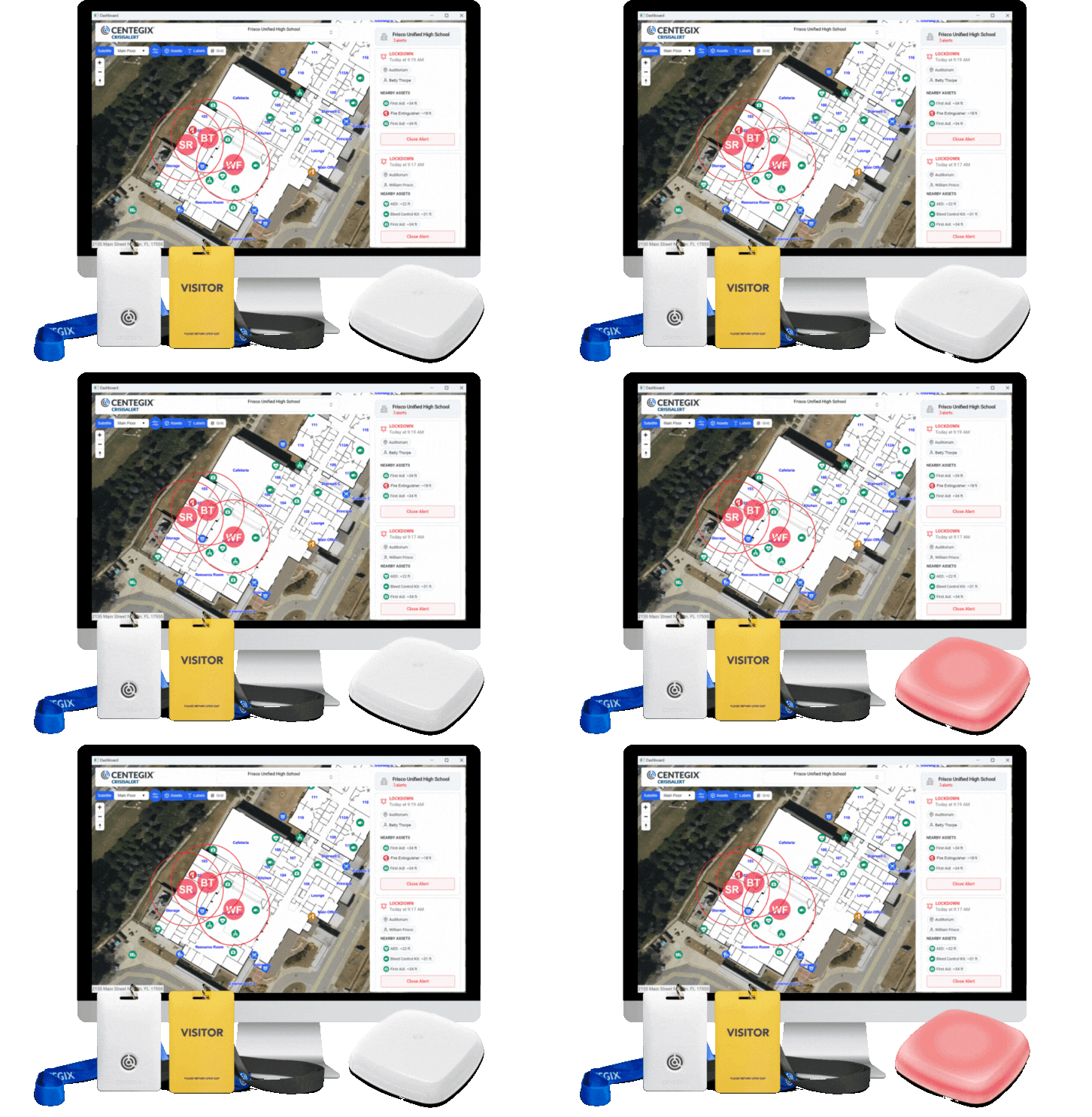
With CrisisAlert, each staff member is empowered with a wearable CrisisAlert badge to maximize, enhance, and protect learning time. The badge is worn whenever the staff member is on campus. The CrisisAlert badge can discreetly notify administrators (and other select personnel) about school incidents with precise location accuracy. The solution enables heightened learning continuity, minimizes distractions and interruptions, and gives teachers the peace of mind to devote their energies to teaching, supporting, and caring for students.
COVID-19 has caused significant learning loss for students. US households have already experienced disproportionately higher behavioral health impacts due to COVID-19. Additionally, educators’ ability to focus on teaching and learning is impeded by increased anxiety and stress surrounding COVID-19. CrisisAlert offers a solution.
ESSER Funds Are Applicable To CrisisAlert
Federal law lists 12 allowable uses of ESSER funds, and of those, CrisisAlert qualifies for three.
The CrisisAlert system directly and clearly “provides principals and other school leaders with the resources necessary to address the needs of their individual schools.”
With CrisisAlert, every staff member can alert principals and school leaders immediately and accurately of any incident that impedes the learning process at their individual school. Examples of these situations may include:
- Medical issues, for either staff or student
- A student with mental health challenges
- A threat or concern surrounding behavioral outbursts
- A student displaying COVID symptoms
- A student who has eloped ( a “runner”)
The CrisisAlert system directly enables schools to “develop and implement procedures and systems to improve preparedness and response efforts.”
With CrisisAlert, every staff member can utilize their CrisisAlert badge for monthly drills. The system provides school leaders with the ability to remotely, immediately, and clearly communicate the need for additional protocols for safety. The school leaders deliver communication to minimize or eliminate any interruption to the learning process. Examples of these situations may include:
- Immediately securing a campus due to an on-site or nearby mental health threat. Audio and visual notifications send campus-wide alerts informing everyone of an incident and actions needed to get to safety. CrisisAlert can also notify when it is safe to return to scheduled activities (again minimizing interruptions to learning).
- CrisisAlert usage data enables a school to improve response accuracy and reduce response time.
- CrisisAlert usage data enables a school to improve preparedness based on trends and expectations.
The CrisisAlert system “directly and clearly enables schools to better “maintain the operation of and continuity of services.”
CrisisAlert supports staff by minimizing distractions and reducing interruptions to the learning process, which is paramount due to the learning loss created by the pandemic. Examples of these situations include:
- When a student displays COVID symptoms, responding personnel can be alerted immediately and discreetly, allowing the teacher to continue with the curriculum.
- Responders can be alerted with immediacy and precise location in any medical or behavioral event. The duration of a crisis event directly impacts students; it affects the time they need to recover from the trauma and return to learning.
- The peace of mind experienced by every employee allows them to remain fully dedicated and focused on students’ learning, safety, and well-being.
What’s Next?
We can help your school district apply ESSER funds to purchase CrisisAlert, a safety, security, and learning continuity solution provided by CENTEGIX. For more information, contact us here.