

A recap of the February 2026 AASA webinar featuring district leaders from Texas and Georgia.
CENTEGIX®, the industry leader in wearable safety technology, recently partnered with AASA to present a compelling webinar on building trust through proactive school safety measures. Featuring Dr. LaTonya Goffney, Superintendent of Aldine ISD (TX), and Dan Chappuis, Superintendent of Colquitt County Schools (GA), the February 25th session explored how district leaders move beyond compliance to create cultures of safety that strengthen community confidence.
If you missed the live session, here's a recap of the key insights and why you'll want to watch the full recording to hear these experienced superintendents share real-world strategies for transforming safety from a checklist item into a trust-building cornerstone.
Why Safety Plans Aren't Enough
Every district has a safety plan. But as Dr. Goffney pointed out, having a plan stored on a bookshelf or online isn't sufficient when emergencies unfold in real time. "Emergencies don't wait for someone to locate the manual, unlock the phone, or open up an app," she explained.
"In a crisis, time compresses and stress increases. Clarity matters."
The distinction both superintendents emphasized: moving from compliance to readiness.
- Can your plan be activated instantly?
- Can staff act without searching for tools or protocols?
This shift from theoretical planning to operational safety is what builds genuine trust with boards, staff, and communities.
Quantifying Peace of Mind: Metrics That Matter
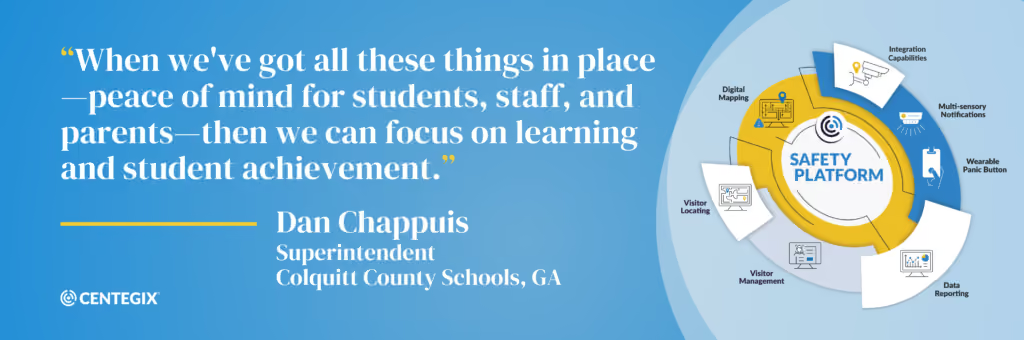
While safety can feel abstract, both districts demonstrated how data helps communicate effectiveness to boards and stakeholders. Chappuis shared how his team pulls metrics from the CENTEGIX Safety Platform® and student information systems to show board members exactly how safety measures perform during drills and real incidents.
Key metrics both districts track include:
- Response times to alerts
- Alert types and frequency (revealing that 98% of alerts address everyday incidents like medical emergencies and behavioral situations, not just extreme threats)
- System uptime and reliability
- Drill performance and continuous improvement
As Dr. Goffney noted, her Chief of Police has "full confidence in this product" because incidents show up in emergency dispatch within one to two seconds, a tangible measurement of trust.

Visibility and Accountability: Show, Don't Just Tell
Both superintendents emphasized the importance of visible safety measures that boards, staff, and communities can see and experience. From perimeter fencing and cameras to weapons detection systems and wearable panic buttons, these physical elements communicate commitment.
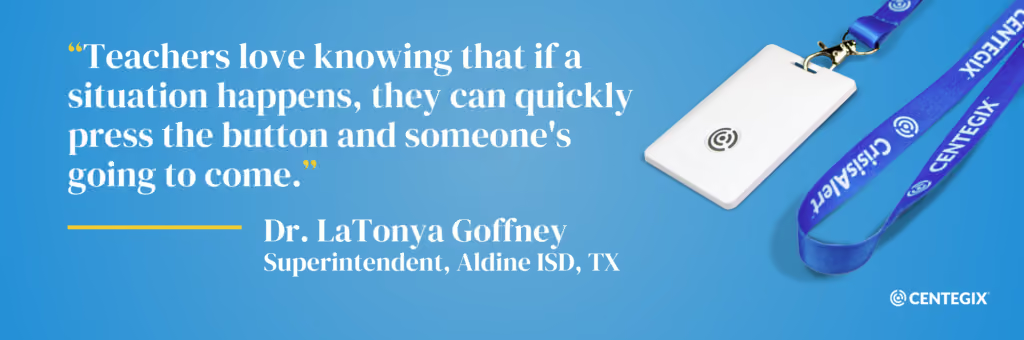
Dr. Goffney described the CENTEGIX CrisisAlert™ badge as "the most visible piece of security that's kind of invisible." Every employee in Aldine ISD's 74 buildings wears one, creating consistent confidence across the district. "Teachers love knowing that if a situation happens, they can quickly press the button and someone's gonna come," she explained. Chappuis added that visibility extends beyond equipment to people. His Director of School Safety spends 75-80% of his time on campuses, checking doors and being present so every teacher knows safety is a lived priority, not just a policy.
Culture Over Compliance: From Drills to Readiness
The webinar's most powerful theme centered on building a culture of safety rather than merely checking compliance boxes. While fire drills and lockdown procedures remain essential, true safety culture emerges when every stakeholder understands their role and feels empowered to act. Dr. Goffney emphasized this distinction: "Culture changes behavior. Safety is everyone's responsibility." This means moving beyond prescribed drill times to creating systems where staff instinctively know how to respond because they've internalized expectations through training, practice, and trust.
Chappuis shared a revealing example: an inadvertent badge press during lunch sent his high school into an unplanned lockdown. Rather than viewing it as a problem, the district used surveillance footage to show staff how they responded in an unpredictable moment, far more valuable than sanitized drills at prescribed times. "It's a great time to learn, and you can really build your culture of how we respond when things do happen," he noted.
The Unexpected Benefits: Beyond Crisis Response
Both superintendents revealed that their safety investments deliver returns beyond emergency preparedness. The connection between feeling safe and student achievement, attendance, and staff retention emerged as a critical theme.
Chappuis captured it succinctly: "You gotta Maslow before you can Bloom." When students and staff feel safe, they can focus on learning and teaching. His district has seen significant academic gains and reduced chronic absenteeism over the past five years, gains he attributes partially to comprehensive safety measures.
In an era of teacher shortages and school choice, communicating safety measures has become a recruitment and retention tool. "Parents want to know their children will be safe," Chappuis explained. "Having all these measures in place and communicating them out" helps districts compete for both students and quality educators.
Communication: The Trust Multiplier
Perhaps no theme recurred more frequently than the critical role of transparent, proactive communication. Both districts maintain robust communication protocols that activate immediately when incidents occur. Dr. Goffney shared her mantra: "In the absence of communication, people will make things up."
Her communications team sends out press releases and updates across all channels whenever anything happens, maintaining transparency even when the news is difficult. "The more transparent we are, people understand. But if you try to hide or sweep things under the rug, that's when they start digging deeper, and everybody loses." Chappuis echoed this approach: "We don't want to hide when something bad happens. We want to get it out there. Here's what happened, here's how we responded."
Key Takeaways for District Leaders
As the webinar concluded, both superintendents offered advice for peers:
From Dr. Goffney: "You can't wait until a crisis happens to start creating a culture of safety. It's got to be something that is truly baked into your system. Start with being clear about expectations and goals, and have a champion of the work."
From Chappuis: "Constantly evaluate your systems. Inspect what you expect. Be visible in your schools. When staff know safety is your top priority, that becomes the culture."

Watch the Full Webinar
The February 25 session included detailed discussions of specific safety technologies, real incident examples, and practical strategies for building board and community trust through proactive safety leadership.
For the complete conversation and to hear directly from these experienced superintendents about transforming safety culture in their districts, access the full webinar recording here.
Learn more about the CENTEGIX Safety Platform and download the 2025 School Safety Trends Report for comprehensive data on safety incidents and best practices across 18,000+ locations nationwide.
Schedule a consultation to explore how proactive safety solutions can strengthen trust in your district.