

The most effective school safety plan includes school safety solutions that provide clear communication and instruction to everyone on campus in an emergency. A school community includes a wide variety of groups, all of whom need critical, but different, information in an emergency. Districts must choose school safety solutions that support every group within the community.
Modern school safety solutions recognize that one-size-fits-all communication fails during emergencies. Federal guidance from SchoolSafety.gov emphasizes that effective emergency response requires coordinated communication tailored to each group's responsibilities and capabilities. When a single alert triggers multiple, simultaneous notifications customized for each audience, response times decrease dramatically.
According to the National Center for Education Statistics, 88% of schools have written emergency plans, yet many lack the technology infrastructure to execute those plans when seconds matter.

What School Administrators Need During an Emergency
During emergencies, administrators need immediate clarity. The correct technology gathers information quickly, makes it available and accessible, and empowers school leaders to issue directives based on accurate real-time information.
What administrators must know in an emergency:
- Type and location of incident to assess severity and coordinate appropriate response protocols
- If there are students unaccounted for during evacuations or lockdowns to confirm complete safety accountability
- Where visitors are on campus to include them in emergency protocols and support their safety
- Measures being taken such as whether 911 has been notified, if an ambulance is en route, and what safety assets are available nearby
What Teachers, Staff, and Students Need During an Emergency
Everyone on school property must receive clear instructions about where to go and what to do during an emergency. Clear, timely directives make sure students and staff can focus on following procedures rather than interpreting conflicting information in stressful moments.
What teachers, staff, and students need to know:
- Type of incident and actions and protocols to initiate based on the specific emergency
- When it's safe to bring students back into school, or if they should be taken to a reunification point
- Measures being taken including whether 911 has been notified, if an ambulance is en route, and if onsite responders are on their way
What First Responders Need During an Emergency
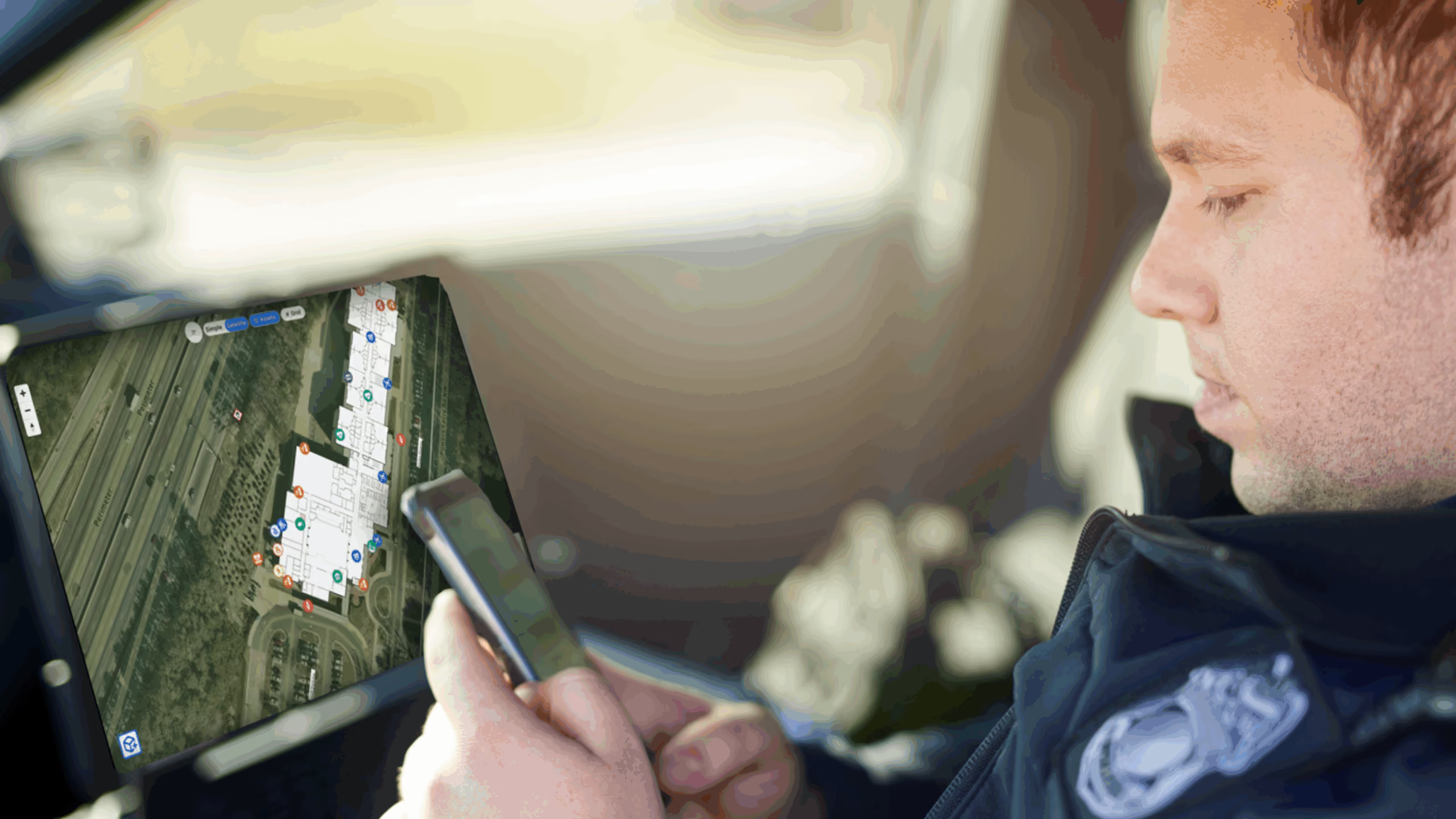
Modern school safety solutions provide first responders with automated emergency incident data, including precise incident location, emergency type, and real-time updates. The Department of Homeland Security's emergency planning guide emphasizes that accurate location information represents one of the most critical factors in successful emergency response.
What first responders need to know:
- Type and location of incident to deploy appropriate resources and personnel to the precise location of the emergency
- Layout of campus and buildings, including points of entry, nearby safety assets like AEDs, and potential danger areas
- What is happening on scene through live video feeds or status updates to assess the situation before arrival
What 911 Dispatchers and Law Enforcement Need During an Emergency
Knowing what is happening and where helps 911 dispatchers and law enforcement tailor their response to a situation. Law enforcement professionals consistently emphasize the importance of receiving detailed situational data during response, whether that's for a medical emergency requiring EMS support or an active threat requiring tactical response.
What 911 dispatchers and law enforcement need to know:
- Type and location of incident to determine appropriate response level and resources needed and where precisely to send help
- Layout of campus and buildings to direct first responders to the correct entrance and location
- What is happening on scene through video feeds or text status updates to provide real-time situational awareness

How CENTEGIX Safety Platform Addresses Each Stakeholder's Needs
The CENTEGIX Safety Platform® delivers role-appropriate emergency information through an integrated ecosystem of wearable badges, campus-wide visual and audio notifications, and intelligent mapping technology.
School Administrators:
- CrisisAlert provides the type and precise location of incidents
- CENTEGIX Reunification enables administrators to quickly identify if students are unaccounted for during and after emergencies
- CENTEGIX Enhanced Visitor Management enables admin to locate where visitors are on campus
- Through location-aware video or the Responder Statusing feature, administrators can know what is happening on scene
Teachers, Staff, and Students:
- Strobes, desktop notifications, and intercom takeovers notify everyone when a campus-wide emergency is happening and what actions to take
- Visual and audio notifications stay enabled until administrators close the alert, communicating when it's safe to resume normal operations or proceed to reunification sites
- The Responder Statusing feature lets teachers and staff know when onsite responders are on their way to help
First Responders:
- CrisisAlert provides the type and precise location of incidents
- Safety Blueprint® digital maps provide the layout of the campus and buildings, including points of entry, nearby safety assets like AEDs, and emergency exits
- Location-aware video and the Responder Statusing features provide continuous situational awareness throughout the emergency response
911 Dispatchers and Law Enforcement:
- CrisisAlert provides the type and precise location of incidents
- Safety Blueprint digital maps display campus layouts, building access points, and nearby safety assets to help direct first responders
- Location-aware video and Responder Statusing features communicate what is happening on scene in real time
School Safety Solutions Help Save Lives
Districts evaluating their emergency preparedness should assess not just whether their systems can send alerts, but whether those alerts provide each stakeholder group with the specific information needed to fulfill their role in the emergency response. When crisis strikes, having the right information at the right time for the right people makes all the difference. In campus safety, coordinated communication saves lives.
As you refine your school safety plan, consider how coordinated communication systems can deliver role-specific information to every stakeholder during emergencies. Learn more about the CENTEGIX Safety Platform.