
Compliance is the floor. Safety Blueprint® is built for what happens above it.
Built for the people already in the building
We didn’t build Safety Blueprint® to meet the standard. We built it to set one.
See how we meet every requirement.
Built for the peole already in the building
We didn’t build Safety Blueprint® to meet the standard. We built it to set one.
The principal. The nurse. The SRO. Compliance tells you who the law thought of. Safety Blueprint was built for everyone who needs to act before help arrives.
See how we meet every requirement.
Compliance tells you what the law requires. We built for what actually saves lives.
The average outside response time is 4 to 5 minutes. For a cardiac event, that is too long to wait. The person who reaches an AED first is almost never the paramedic. It is the principal, the nurse, the teacher who heard something and is already moving.
K-12 digital mapping legislation was written to ensure 911 has what it needs. That is necessary. But Safety Blueprint® was built to go further: putting accurate, real-time information in the hands of everyone who might need to act in the first 60 seconds.
We did not build to the standard. We helped define it.
Safety Blueprint was built in direct collaboration with districts, school resource officers, and first responders before most states had codified their mapping requirements. The requirements that exist today reflect what genuinely capable solutions have always delivered.
That is why Safety Blueprint does not just clear the bar. In several areas, it sets the bar that others are still working toward.
Every requirement. Every capability. Documented.
Here is exactly how Safety Blueprint performs against every K-12 digital mapping legislative requirement, pulled directly from our published compliance matrix.
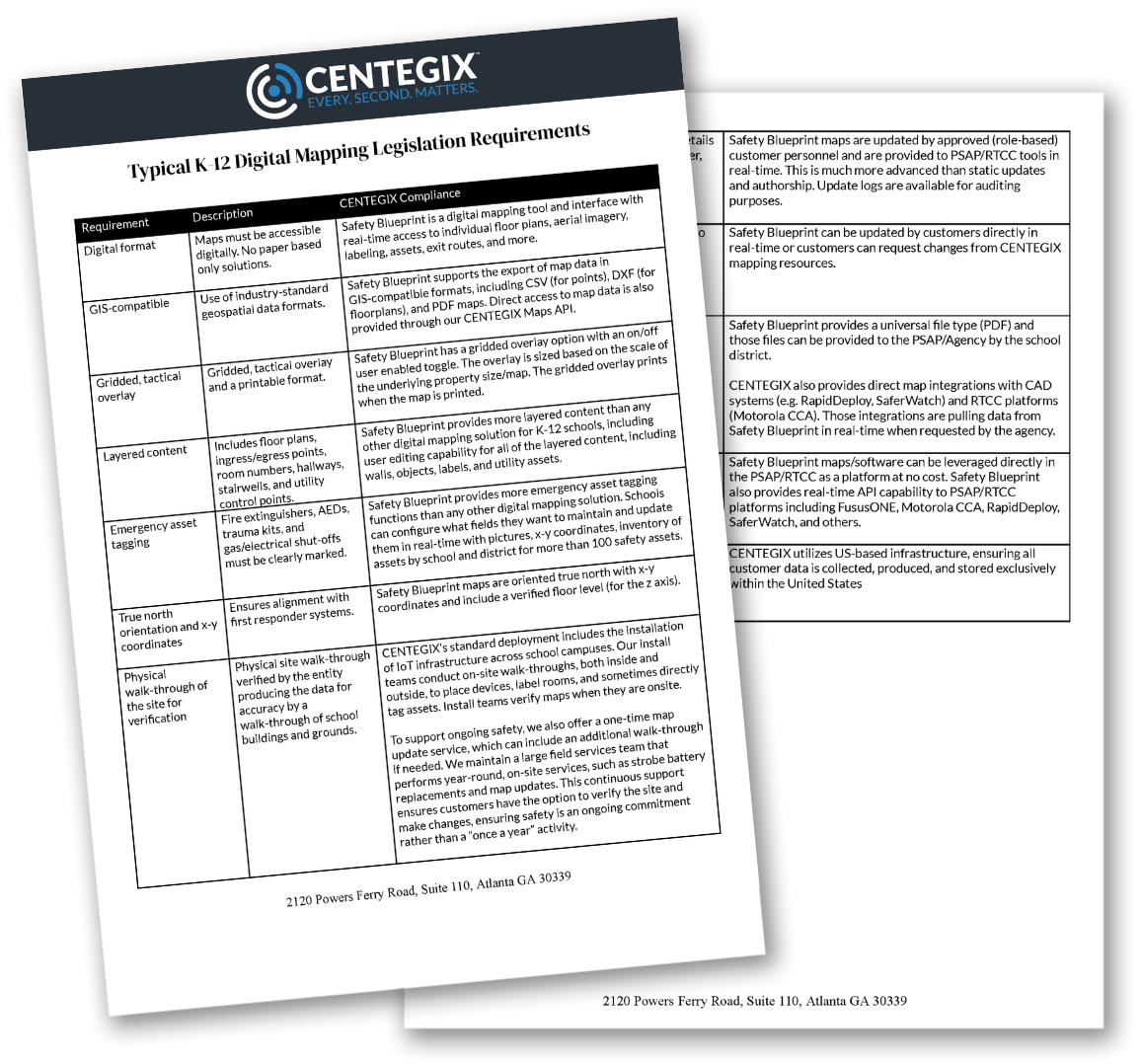
The questions every district should ask, starting with: who else needs the map?
We helped shape this standard. That means we know exactly what to look for, and we are sharing it openly.
Questions Every District Should Ask
Does the solution work for staff already in the building, not just 911?
Can you demonstrate live 911 integration?
Where is our data stored?
How does the CENTEGIX Safety Platform work?
How current is the map during an active incident?
See Safety Blueprint in the hands of the people who need it most.
Request a live demo or download our compliance matrix. We will show you what it looks like when a mapping solution is built for the principal running down the hall, not just the agency arriving four minutes later.

Our Safety Experts Are Standing By
SOLUTIONS
INDUSTRIES
RESOURCES
COMPANY
PARTNERS
CONTACT
EVERY. SECOND. MATTERS.®