

Artificial intelligence is revolutionizing healthcare—from predictive analytics to diagnostic imaging and patient scheduling. Every day, leaders are pitched on AI tools that promise to transform care, optimize workflows, cut costs, and reduce human dependence. While these innovations bring undeniable value to administrative and clinical efficiency, some challenges continue to demand a higher level of human expertise, including workplace violence prevention.
Workplace violence in healthcare continues to rise, and preventing it requires more than data modeling or predictive analytics. Instilling a culture of safety depends on human intuition, empathy, and split-second decision-making—traits no algorithm can replicate. AI may enhance how healthcare operates, but when it comes to protecting people, human-centered strategies truly make a difference.

AI's Role in Workplace Violence Prevention
According to the American Hospital Association, administrative, clinical, operational, and patient access applications demonstrate AI's current healthcare focus:
- Administrative – Improving claims denial prevention, helping providers predict which claims face rejection
- Clinical – Optimizing operating room scheduling through AI-driven algorithms that predict case duration and streamline resource allocation
- Operational – Leveraging supply chain data to enhance cost management and identify expired supplies
- Patient Access – Streamlining discharge planning, with AI generating discharge summaries in patient-friendly formats
These solutions excel at processing vast amounts of data, identifying trends, and automating routine tasks, helping healthcare organizations save time and redirect attention back to patient care.
But, as leaders explore new ways to integrate AI, some are beginning to apply it in another area: workplace violence prevention. Emerging AI tools claim to predict aggression, monitor video feeds for threatening behavior, or automatically trigger alerts based on pattern recognition.
While these technologies show promise, they should come with an important caveat: AI can assist safety efforts, but cannot replace the human feedback and experience required to effectively protect staff.

Why Human Experience Is Irreplaceable
Violence prevention in healthcare is built on empathy, awareness, and communication—all inherently human traits.
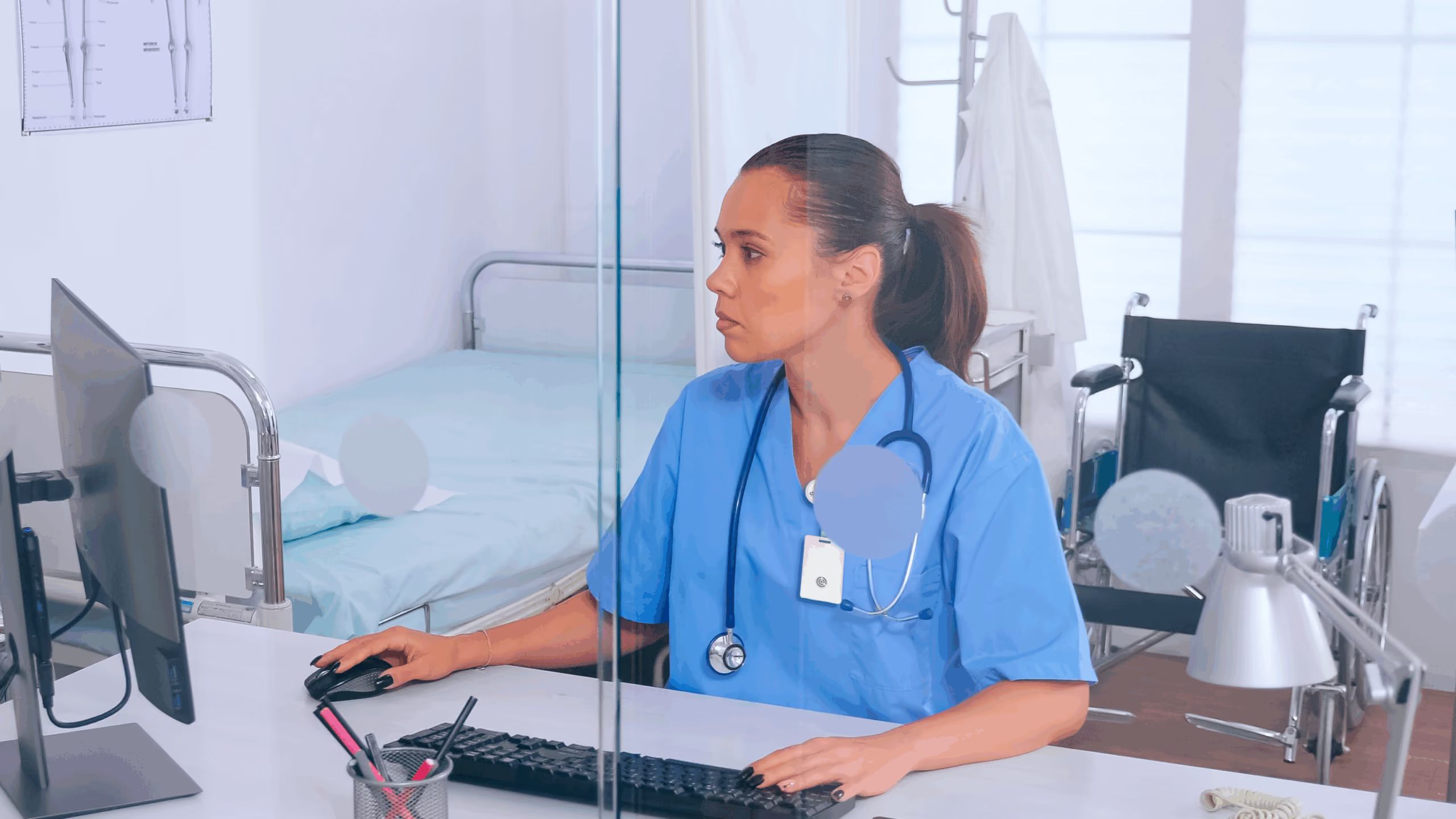
Nurses and other frontline professionals notice subtle shifts in tone, body language, and behavior that can precede aggression. They know when patients require extra reassurance and which situations can escalate quickly. According to the American Psychiatric Nurses Association, these human insights are the cornerstone of workplace violence prevention. Building trust, practicing trauma-informed care, and empowering patients to manage their emotions all depend on interpersonal skills, not automation.
Additionally, with an estimated 88% of workplace violence incidents going unreported, nurses and staff still hold invaluable institutional knowledge. Their lived experience fills the gaps in data and reveals patterns AI systems cannot see. They also understand the physical environment, including areas where communication dead zones lie or where help might be delayed. Leaving human intelligence unaccounted for risks creating safety plans that look effective on paper but fail in practice.
One powerful approach to preventing workplace violence in healthcare is the use of a Behavioral Emergency Response Team (BERT). As detailed in a Journal of Emergency Nursing study, the introduction of this specialized team in an emergency department yielded significant results. Following its implementation, hospitals experienced a rise in staff members' feelings of safety and a decrease in assaults on ED workers. The improvement wasn’t driven by replacing procedures with new technology—it came from empowering staff through training, teamwork, and readiness.
The lesson is clear: the most effective safety solutions are those that amplify the strengths of your people. Their insight, or lack of it, can make or break violence prevention plans.
In Emergencies, Simplicity Saves Lives
Emergency response systems must be easily accessible and intuitive enough to use under extreme stress. During a crisis, fine motor skills decline, adrenaline spikes, and decision-making narrows. Systems requiring multiple steps or additional interpretation can slow down response time.
The most effective tools are the simplest. One-button duress systems, for example, align with natural human stress responses. When someone feels threatened, they don’t have time to navigate to another device or wait for automated triggers—they need to push a button and know help is coming.
This simplicity is more than convenience; it’s a design principle rooted in psychology. In high-stakes moments, clarity saves lives. The ability to trigger an immediate, location-accurate alert without relying on Wi-Fi, voice commands, or AI processing ensures reliability when it matters most.
We should use this lens when considering technology to support workplace violence prevention. The tools that will prove to be most effective are those that enhance the actions of your most important and reliable resource—your people.
A True Culture of Safety in Healthcare Requires Leadership
Technology alone cannot create a culture of safety. That responsibility rests with leaders who model accountability, allocate resources, and communicate the importance of safety as a shared organizational value.
Strong leadership fosters trust. When executives, managers, and security directors participate in safety drills, respond promptly to concerns, and follow through after incidents, it reinforces the message that safety is a priority. These human connections build engagement, encouraging incident reporting and collaborative problem-solving.
Every facility has its own risks and culture. A rural critical access hospital faces different challenges than an urban trauma center. AI might overlook these nuances—but human leaders, informed by staff insights and lived experience, can tailor their strategies accordingly. They recognize which interventions gain staff buy-in based on institutional history.
Effective safety programs aren’t just about implementing the latest technology; they’re about aligning people, processes, and tools to create a cohesive, responsive safety ecosystem.
CENTEGIX Safety Solutions: Human-Centered Technology
The CENTEGIX Safety Platform combines technology with human-centered design to empower healthcare workers during emergencies. The platform includes:
- Wearable duress buttons (CrisisAlert™) – Enabling staff to summon help discreetly from anywhere on campus through simple button activation.
- Hospital-wide coverage – Offering complete protection across parking garages, stairwells, and patient rooms through private LoRaWAN and Bluetooth networks.
- Visitor management and access control – Screening visitors, tracking locations, and maintaining logs while preserving a welcoming healthcare environment.
- Automated reporting – Ensuring detailed incident documentation for analysis and continuous improvement.
Each component reflects a solution designed to support healthcare professionals. They augment rather than replace human capabilities and function reliably under extreme stress. Organizations implementing these solutions report a stronger culture of safety and improved staff retention—98% of users say CrisisAlert helps them feel safe and supported.
The Human Element Remains Essential
Artificial intelligence has a valuable place in healthcare. It can analyze data, predict outcomes, and optimize operations. But safety is, and always will be, a human mission.
Preventing workplace violence requires empathy, intuition, and leadership—qualities that cannot be programmed. The future of healthcare safety depends on combining innovation with compassion, ensuring that technology serves people, not the other way around.
At CENTEGIX, we help healthcare organizations achieve that balance, building safer workplaces, stronger teams, and a culture of trust that no algorithm can replicate.
Learn how wearable duress buttons can strengthen protection for your healthcare staff and empower your most valuable asset: your people.