On February 14, 2018, Lori Alhadeff’s life changed forever.
Her daughter, Alyssa, was one of 17 people killed in the shooting at Marjory Stoneman Douglas High School in Parkland, Florida. In the years since, Alhadeff has turned this unimaginable loss into a relentless mission to help ensure other families never experience the same tragedy.
Today, she serves as co-founder of Make Our Schools Safe, champions Alyssa’s Law across the country, and has spent more than seven years on the Broward County School Board, where she continues to advocate for stronger school safety policies from inside the system.
“I will be Alyssa’s voice every day,” Alhadeff said. “That is my life’s mission.”
That mission has already helped reshape the national conversation around school safety. But equally as important, it has also broadened what school safety means. It’s no longer just about preventing or responding to the worst day imaginable. It’s about creating schools where students and staff feel protected every day, and education thrives.
School Safety Begins Long Before an Emergency
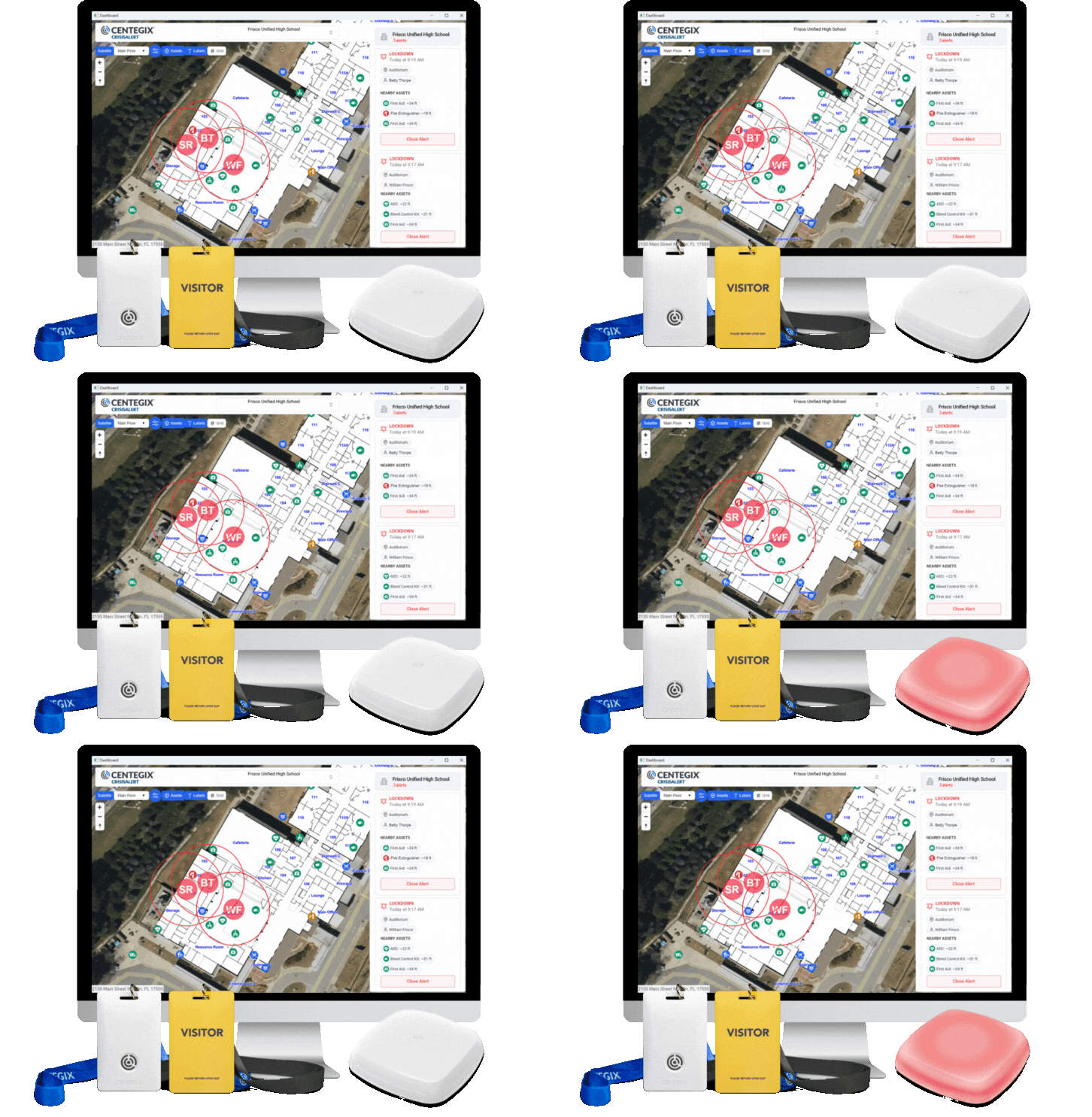
When many people hear the words school safety, they immediately think of violence prevention or an active shooter response. Alhadeff believes that perspective is too narrow. A recent CENTEGIX report backs her up, publishing data that shows that only 1% of wearable panic button alerts last school year were initiated for an extreme, campus-wide threat, versus 99% of alerts which were activated for everyday emergencies.
“It’s really for that everyday use,” Alhadeff explained, describing how wearable panic buttons are used far more often for medical emergencies, behavioral incidents, and situations requiring immediate assistance than for large-scale crises.
As a Broward County School Board member, she sees this firsthand.
“We use the panic button about 800 to 900 times a month,” she said. “We have those medical issues. So having every teacher have a wearable panic button…they can press their panic button to get help in their classroom as quickly as possible.”
She recalled one incident where a student suffered a medical emergency. A nearby teacher used the alert to summon help, allowing another staff member to retrieve an AED before emergency responders arrived. Their quick response ultimately saved the student’s life.
For Alhadeff, these moments reinforce one simple principle: “Time equals life.”
Whether responding to a medical emergency, a behavioral crisis, or an active threat, reducing response time can dramatically change outcomes.
Students Are More Than Participants. They’re Leaders.
One of the most distinctive aspects of Make Our Schools Safe (MOSS) is its focus on empowering students themselves to drive the change they want to see.
Through MOSS Clubs, students work alongside educators to identify safety challenges, promote preparedness, and strengthen school culture.
“Students really want to be in charge and be a part of the driving conversation of school safety,” Alhadeff said.
The results have been remarkable.
Students in one New York school successfully advocated for CPR and first aid training as a graduation requirement. In Connecticut, student members attended a school board meeting to ask why their schools didn’t have panic buttons. The board ultimately allocated $700,000 to fund them.
Beyond physical safety, Alhadeff says these clubs create opportunities for students to support one another, encourage a see-something-say-something mindset, and promote mental health awareness before issues escalate.
Rather than viewing students simply as those being protected, she believes schools should recognize them as valuable partners in building a safer environment.
Policy or Technology Alone Can’t Create Safe Schools
While Alhadeff has become one of the nation’s leading advocates for wearable panic buttons through Alyssa’s Law, she is equally passionate about another component of preparedness: training.
“It’s very important that we invest into the training of our staff and of our students,” she said.
She points to seemingly small actions, like propping open a secured door, as cracks in the layers of security a district has established. It serves as a reminder that policy alone cannot overcome human behavior.
The same is true of technology without training.
“When a life-threatening emergency happens, your body goes into trauma…you fall back to your training.”
For school leaders, that means preparedness cannot end once new technology is installed. Regular drills, staff education, student awareness, and accountability all play critical roles in creating safer schools.
Technology provides the tools. Training determines how effectively those tools are used.
Safety Is the Foundation for Everything
Perhaps the most powerful insight from Alhadeff’s perspective is that investments in safety extend well beyond emergency preparedness.
“When teachers are trained, we will then start to retain our teachers more,” she said. “They’ll want to come to work.”
She sees similar ripple effects throughout the entire educational system.
Students who feel safe are more likely to attend school consistently. Families develop greater confidence in their schools. Graduation rates improve. Communities strengthen their trust in district leadership.
“Students who feel safe in school will not be as absent…because they want to be there.”
For school leaders navigating teacher shortages, declining enrollment, and growing community expectations, Alhadeff offers a perspective: safety isn’t separate from those challenges; it amplifies them. When you choose to invest in safety, everything else follows.
“Enrollment rates go up, FTE funding goes up, graduation rates go up. And, ultimately, we bring the community to trust us, to have their children in our schools to be safe and educated.”
Creating a culture of safety doesn’t simply prepare schools for emergencies. It creates an environment where students and educators can succeed every day.
Leadership Means Looking for the Gaps
After years advocating for safer schools, and serving on the school board responsible for implementing those changes, Alhadeff has learned that no school is ever truly finished improving.
“I say, don’t live in the Parkland bubble,” she shared.
For parents, that means asking questions and understanding the layers of protection already in place. For district leaders, it means welcoming outside perspectives and regularly assessing vulnerabilities rather than assuming existing plans are sufficient.
“Everybody has gaps that need to be fixed,” Alhadeff said. “If you don’t know what your vulnerabilities are, you’re not going to be able to fix them.”
It’s a reminder that meaningful safety isn’t achieved through compliance alone. It requires a commitment to continuous evaluation and accountability, and a willingness to improve.
A Mission That Continues
Eight years after Parkland, Lori Alhadeff continues to advocate for stronger school safety at every level, from local school boards to state legislatures and Congress.
Her goal remains unchanged: ensuring every school has the tools, training, and culture needed to protect students and staff before tragedy strikes.
“I will be Alyssa’s voice every day,” she said. “That is my life’s mission.”
For school leaders, her message is both simple and challenging: school safety isn’t a checklist to complete. It’s an ongoing commitment to protecting the people entrusted to their care, and creating learning environments where every student and educator can thrive.
Want to hear the full conversation? Listen to this episode of the Safety Signal podcast featuring Lori Alhadeff as she shares her personal journey and practical insights for school leaders.

FAQ:
What is Alyssa’s Law?
Alyssa’s Law is legislation named in honor of Alyssa Alhadeff, one of the 17 victims of the Marjory Stoneman Douglas High School shooting in 2018. The law requires or encourages schools to implement silent panic alert systems that enable staff to quickly notify first responders during an emergency. While requirements vary by state, the goal is to reduce emergency response times and improve communication during critical incidents.
What are wearable panic buttons for schools?
Wearable panic buttons for schools are emergency communication devices that allow teachers and staff to discreetly request help from anywhere on campus with the press of a button. Unlike traditional emergency notification methods that may require finding a phone or leaving students unattended, wearable panic buttons enable staff to quickly alert designated responders during medical emergencies, behavioral incidents, fights, or campus-wide threats. Many states have adopted or are considering Alyssa’s Law, which encourages or requires schools to implement silent panic alert systems to improve emergency response and help first responders receive critical information more quickly.
How do wearable panic buttons improve school safety?
Wearable panic buttons allow teachers and staff to discreetly request help from anywhere on campus. Rather than searching for a phone or leaving students unattended, staff can immediately alert designated responders during medical emergencies, behavioral incidents, fights, or campus-wide threats. Faster communication helps schools coordinate a quicker, more informed response when every second matters.
Are wearable panic buttons only used during active shooter incidents?
No. While wearable panic buttons play an important role during campus-wide emergencies, they are used far more often for everyday incidents. Medical emergencies, behavioral crises, student altercations, and staff assistance requests account for the vast majority of alerts, making them an important tool for improving daily safety and response across a school campus.
Why is creating a culture of safety important in schools?
A culture of safety helps students and educators feel supported before, during, and after emergencies. Beyond emergency preparedness, schools with strong safety practices often experience improved staff confidence, stronger community trust, better student attendance, and learning environments where everyone can focus on education rather than uncertainty.
Why is training just as important as school safety technology?
Technology is only effective when people know how to use it. Regular training helps teachers, staff, and students respond confidently during emergencies and reinforces everyday safety practices. Combined with reliable safety technology, ongoing training strengthens preparedness and helps schools respond more effectively when incidents occur.
What role do students play in improving school safety?
Students can be active partners in creating safer schools. Programs like Make Our Schools Safe (MOSS) Clubs encourage students to identify safety concerns, promote preparedness, advocate for safety improvements, and foster a positive school culture. Their involvement helps build shared responsibility for safety across the entire campus.
How can school leaders strengthen school safety?
School leaders can strengthen safety by taking a layered approach that combines trained staff, emergency preparedness, reliable communication tools, regular safety assessments, and continuous improvement. Reviewing vulnerabilities, practicing emergency procedures, and investing in both technology and people helps create safer learning environments for students and educators.