Healthcare leaders have never been more focused on safety.
A recent survey found that 93% of healthcare leaders view workplace safety and security as an essential or high priority, reflecting growing concern around workforce well-being, operational resilience, and emergency response preparedness.
That urgency is warranted. Workplace violence, behavioral health incidents, aggressive visitors, and other emergencies continue to challenge healthcare organizations nationwide. At the same time, workforce shortages and burnout have left many teams stretched thin, making preparation more important than ever.
With June marked as Safety Month, it’s an ideal time for healthcare leaders to evaluate whether their organization is truly prepared for an emergency—not just on paper, but in practice.
Here are seven questions healthcare organizations can ask as they work to mitigate violence in healthcare, increase preparedness and build a safer environment for staff, patients, and visitors.
How Often Should Healthcare Organizations Review Their Workplace Violence Prevention Plan?
Every healthcare organization should have a documented workplace violence prevention plan. The more important question is whether that plan reflects today’s realities.
Workplace violence prevention programs should address:
- Risk assessment processes
- Incident reporting procedures
- Staff training requirements
- Emergency response protocols
- Post-incident support and follow-up
Healthcare workers remain among the professions most likely to experience workplace violence, and experts continue to emphasize organization-wide prevention strategies that go beyond compliance alone.
Safety Month is an excellent opportunity to review your plan, identify gaps, and ensure procedures remain relevant to current risks.
Questions to Ask:
- When was our violence prevention plan last updated?
- Have recent incidents revealed any new gaps or weaknesses?
- Are frontline staff proficient in response protocols and procedures?
How Can Healthcare Workers Quickly Get Help During an Emergency?
Emergency preparedness often focuses on policies and procedures. But in a crisis, response time is critical.
Whether facing an aggressive patient, escalating visitor, behavioral health emergency, or suspicious person, staff need a fast and reliable way to signal for help.
This is particularly important because physical incidents rarely occur without warning. Escalation often begins with verbal aggression, disruptive behavior, or other early indicators. The faster support can be mobilized, the greater the opportunity to intervene before an incident worsens.
Healthcare leaders should evaluate:
- How staff request help today
- Whether the process works under stress
- If support can be summoned discreetly
- How quickly responders receive information and respond
Preparedness depends not only on having a response plan, but also on ensuring staff can activate that plan immediately when they need to.
Why Is Incident Reporting Critical to Workplace Violence Prevention?
Organizations cannot improve what they cannot measure.
Unfortunately, workplace violence remains significantly underreported across healthcare. Research suggests a substantial percentage — as high as 80 percent — of incidents never make it into formal reporting systems.
Without accurate reporting:
- Leadership lacks visibility
- Trends go unnoticed
- Resources may be allocated incorrectly
- Prevention efforts remain reactive instead of proactive
Safety Month provides an opportunity to review reporting processes and remove barriers that discourage participation.
Consider:
- Is reporting simple and accessible?
- Do staff believe reporting leads to action?
- Are trends being analyzed regularly?
- Are findings shared with leadership and frontline teams?
The most effective organizations use reporting data and trends to guide prevention strategies rather than simply documenting incidents after they occur.
What Workplace Violence Prevention Training Is Most Effective for Healthcare Staff?
Compliance-based training is important, but preparedness requires more than checking a box.
Healthcare organizations should consider ongoing education opportunities focused on:
- De-escalation techniques
- Situational awareness
- Threat recognition
- Emergency communication
- Team-based response
- Simulations and drills
Research has shown workplace violence prevention training can improve confidence and communication skills among healthcare workers.
The most successful programs reinforce learning throughout the year rather than relying solely on annual requirements.
Microlearning, tabletop exercises, refresher training, and scenario-based education can help keep skills sharp and improve readiness.
How Often Should Hospitals Conduct Emergency Response Drills?
Many organizations provide annual training. Far fewer routinely test their response capabilities.
Preparedness improves when staff practice responding to realistic scenarios. Potential exercises include:
- Aggressive visitor incidents
- Behavioral health emergencies
- Active threat situations
- Staff duress activations
- Emergency communication failures
These drills help identify gaps before a real emergency occurs. They also improve confidence. Staff who understand their role during an emergency are more likely to respond effectively when seconds matter.
The goal isn’t perfection. It’s creating familiarity, reducing uncertainty, and strengthening coordination across teams.

What Safety Technology Helps Improve Emergency Response in Healthcare?
Technology alone cannot prevent emergencies. However, it can play a critical role in accelerating response and improving coordination when incidents occur.
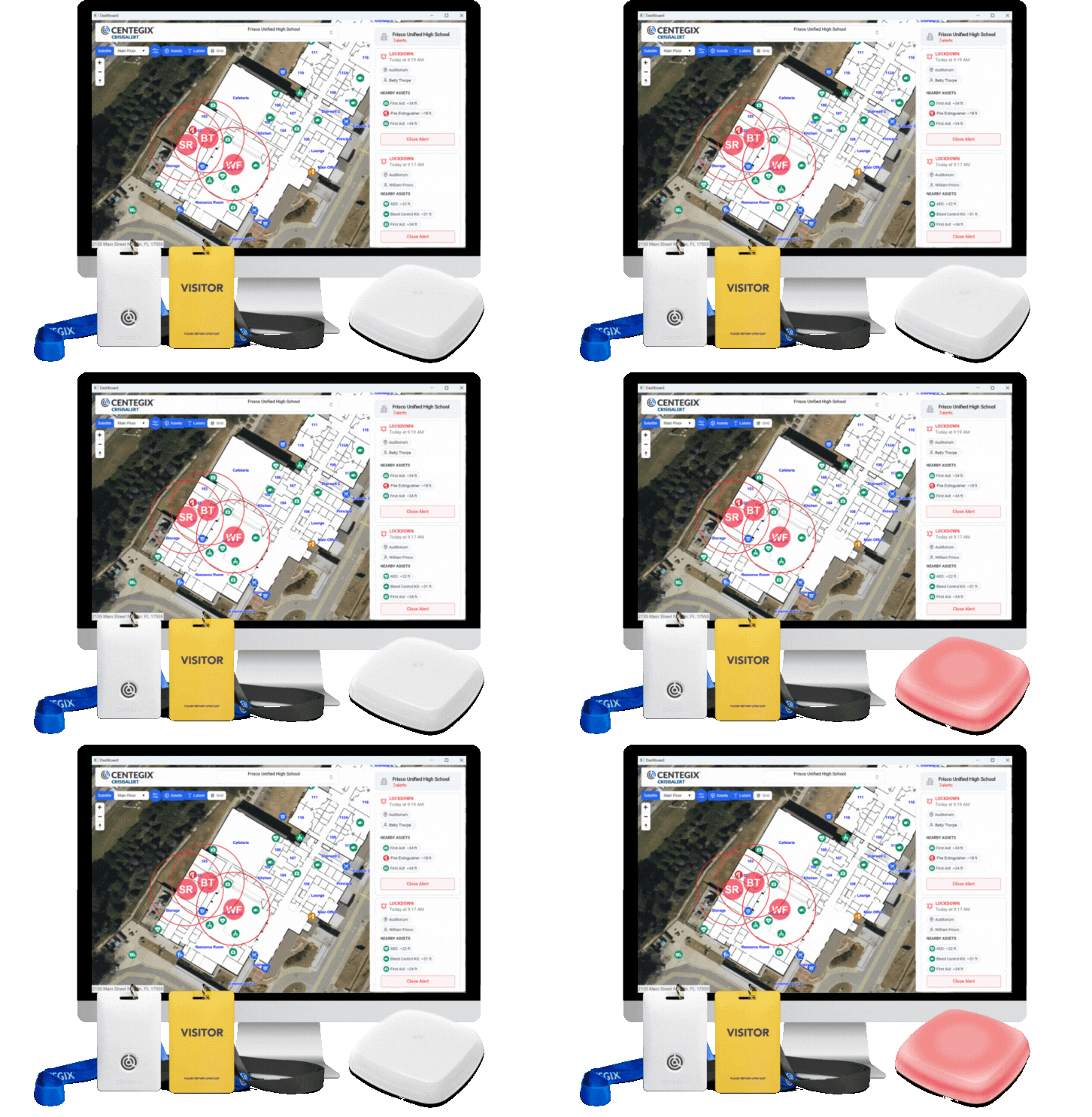
A recent survey report showed the top three measures that help healthcare workers feel safer at work are onsite security personnel, wearable duress buttons, and video monitoring/security cameras.
But solutions must be considered against the unique criteria of each healthcare facility. Leaders should assess whether solutions:
- Support rapid communication
- Provide clear situational awareness
- Cover every square foot of the campus
- Scale across departments and facilities
- Integrate with existing workflows
- Empower all staff to request help when needed
Organizations nationwide are increasingly investing in technologies designed to improve safety and operational resilience. They are prioritizing solutions that empower their employees, preserve their privacy, and cover them everywhere on campus — from the parking lot to patient rooms, and everywhere in between. The most effective solutions are layered, and complement existing safety programs rather than operate independently.
Preparedness improves when technology, training, and policy work together as part of a layered approach.
How Can Healthcare Leaders Build a Stronger Culture of Safety?
The safest organizations don’t treat safety as an annual initiative. They make it part of daily operations.
Healthcare leaders can reinforce preparedness by incorporating safety into:
- Key organizational priorities and performance indicators
- Shift huddles and department meetings
- New employee onboarding and training
- Performance discussions and leadership rounding
This consistent visibility helps create a culture where safety remains top of mind.
The 2026 Healthcare Workforce Safety Survey found that more than one in four healthcare workers worry about their personal safety weekly, while many report concerns about organizational preparedness and support.
When safety becomes part of routine conversations, leaders gain better visibility into workforce concerns and opportunities for improvement.
Questions to Ask:
- How often do teams discuss safety?
- Are staff comfortable raising concerns?
- Do employees believe leadership prioritizes safety?
Safety Month Is a Reminder That Preparedness Is Never Finished
Healthcare emergencies are unpredictable. Preparedness is not.
Organizations that regularly evaluate risks, strengthen response protocols, invest in workforce support, and create a culture of safety are often better positioned to protect staff and patients when emergencies occur.
Safety Month serves as a reminder that preparedness is not a one-time project. It is an ongoing commitment to continuous improvement.
The question for healthcare leaders is simple: If an emergency occurred today, would your staff know exactly how to respond—and would they have the tools and support needed to get help quickly?
CENTEGIX is trusted by more than 18,000 organizations nationwide to empower and protect their people. FIND OUT WHY.
Frequently Asked Questions About Healthcare Emergency Preparedness
Why is safety month in June?
June marks the midway point of the year, providing an ideal time for organizations to retrain employees on OSHA standards, review emergency protocols, and mitigate workplace risks.
What is healthcare emergency preparedness?
Healthcare emergency preparedness refers to the policies, training, communication systems, and response protocols organizations use to prepare for emergencies such as workplace violence, behavioral health incidents, natural disasters, and other critical events.
Why is workplace violence prevention important in healthcare?
Healthcare workers face a higher risk of workplace violence than many other professions. Effective prevention strategies help protect staff, improve retention, reduce operational disruption, and support patient care.
How can hospitals improve emergency response times?
Organizations can improve response times through staff training, clear communication protocols, emergency drills, incident reporting systems, and technologies that allow employees to quickly request assistance.
What should be included in a workplace violence prevention program?
A comprehensive program should include risk assessments, reporting processes, staff education, response protocols, leadership oversight, and continuous program evaluation. Many organizations also incorporate safety technology and multidisciplinary response planning.
What is the biggest workplace safety risk facing healthcare organizations today?
While healthcare organizations face a variety of safety challenges, workplace violence remains one of the most significant and rapidly growing threats. Violence can take many forms, including verbal aggression, threats, physical assaults, and disruptive behavior from patients, visitors, or even coworkers.
Beyond the immediate risk of injury, workplace violence contributes to burnout, turnover, workforce shortages, and diminished patient experience. As a result, many healthcare leaders now view workplace violence prevention as both a safety priority and a strategic workforce initiative.
How do healthcare organizations prepare for workplace violence?
Effective workplace violence prevention requires a proactive, layered approach. Leading healthcare organizations combine risk assessments, staff training, incident reporting, threat assessment programs, emergency response protocols, and safety technology to reduce risk and improve preparedness.
Cross-functional collaboration is also essential, bringing together security, nursing leadership, human resources, risk management, behavioral health, and frontline staff to identify vulnerabilities and strengthen prevention efforts before incidents occur.
What are the key elements of a healthcare emergency response plan?
A strong healthcare emergency response plan outlines how staff should identify, communicate, and respond to emergencies. Key elements typically include defined response procedures, communication protocols, staff training, emergency drills, leadership responsibilities, and post-incident review processes.
Effective plans also establish clear methods for summoning help quickly, coordinating responders, and maintaining situational awareness during critical events. Regular testing and updates help ensure plans remain effective as organizational needs evolve.
How can hospitals improve staff safety?
Hospitals can improve staff safety by creating a culture of safety supported by leadership, training, reporting, and technology. Practical steps include implementing workplace violence prevention programs, conducting routine risk assessments, offering de-escalation training, improving incident reporting processes, and ensuring employees have reliable ways to request assistance during emergencies. Organizations that consistently engage staff in safety conversations and act on reported concerns often build greater trust, preparedness, and workforce confidence.
What technologies help prevent workplace violence in healthcare?
Technology can play an important role in supporting workplace violence prevention and emergency response. Common solutions include wearable duress buttons, emergency notification systems, incident reporting platforms, visitor management systems, threat assessment tools, and safety analytics software. The most effective technologies are easy to use under stress, integrate with existing workflows, and help accelerate response when assistance is needed. Technology is most impactful when combined with strong policies, training, and organizational support.
Why is workplace violence prevention important for employee retention?
Workplace safety has become an increasingly important factor in employee satisfaction and retention. Healthcare workers who experience violence or feel unsafe at work are more likely to experience burnout, disengagement, anxiety, and turnover. In contrast, organizations that invest in safety initiatives often strengthen perceptions of organizational support and workforce well-being. Creating a safer work environment can help healthcare organizations improve retention, reduce turnover-related costs, and better support the employees who deliver patient care every day.
How do healthcare leaders measure the effectiveness of safety programs?
Healthcare leaders often evaluate safety programs using a combination of operational, workforce, and incident-related metrics. Common measures include workplace violence incident rates, injury claims, response times, employee perception surveys, reporting activity, staff turnover, and workers’ compensation costs. Many organizations also assess trends over time to determine whether safety investments are improving preparedness, reducing risk, and strengthening workforce confidence. The most effective programs combine quantitative data with employee feedback to create a comprehensive view of safety performance.