

2025 marks an important year in Texas’s ongoing effort to create safe schools. This year marks the deadline for all Texas schools to be equipped with silent panic alarms and to conduct required school safety audits.
In 2023, the Texas state legislature passed Alyssa’s Law, mandating that schools incorporate panic buttons into school safety plans and allocating more than $17 million to support this statewide effort. According to a Texas Education Agency spokesperson, “As of June 2025, 98% of school districts reported as being compliant with state requirements for silent panic alarm technology.” In addition, Texas law now requires schools to undertake safety audits administered by the Texas Education Agency.
Read on to learn more about how your district can meet TEA school safety audit requirements.

What Does the TEA Audit Require?
TEA school safety audits are comprehensive assessments of safety and security in Texas schools. The assessments are conducted onsite during regular school days or facility operations when students and staff are present. Audits may take one or more working days. The Texas School Safety Center provides documents, checklists, and materials to support school audits. TEA recommends that districts administer safety surveys to students, staff, and other stakeholders before the onsite audit and recommends a list of specific documents for the audit team to review.
School safety audits aim to create safe schools by requiring the following:
1. Establish an audit team. Convene a team of personnel that includes district staff and community partners. Include local first responders, subject matter experts, and staff with applicable experience and expertise. The team may include: school safety and security committee members, administrators, teachers, nurses, counselors, maintenance personnel, custodial personnel, transportation personnel, and other district support personnel. Teams of three to six persons are optimum for most districts.
2. Prepare audit team members. Train team members on their roles in the audit process. Members will be responsible for keeping audit findings confidential and for making recommendations for the audit report.
3. Conduct an intruder assessment. During this assessment, an individual attempts to enter the school as an unauthorized person, through unauthorized areas, or both. The process tests staff adherence to established facility access control and visitor management procedures. The intruder should document the date and time of the assessment, which areas of the school were accessed, the amount of time before the intruder was observed or approached, and visitor procedures in use at the school.
4. Schedule the onsite audit. Team members should make every effort to minimize disruption to a facility’s everyday activities.
5. Conduct the onsite audit. The TEA recommends a multi-part one-day audit that includes:
- Entrance conference. During this one-hour meeting, administrators, staff, and the audit team discuss staff safety and security needs and perceptions, issues requiring special attention, and the audit team’s planned onsite activities.
- Facility walkthrough. The audit team should observe hallway traffic patterns, the condition of safety equipment, facility lighting and cameras, and other elements relevant to the facility’s safety and security.
- Exit conference. During this brief meeting, the audit team should provide feedback about items the staff may have discussed during the entrance conference. Be sure to include commendations for good practices as well as observations on areas for improvement.
6. Write the district audit report. The district administration should use this internal report to identify areas for improvement and commend positive practices and conditions. The report should be used to develop school safety plans or improvement plans.
7. Review the district audit report. Districts should use the information reported to update and improve district emergency operations plans and develop improvement action plans for each facility. The district superintendent will decide how best to disseminate facility information into a district-wide report that must be shared with the district’s board of trustees.
8. Submit the audit report. Districts must submit audit information to the Texas School Safety Center for inclusion in a statewide public report by September 15 of the reporting year.
9. Track recommended changes. After the audit is complete, districts should identify improvement goals and monitor progress.

CENTEGIX School Safety Solutions Help Texas Schools Conduct Safety Audits
The CENTEGIX Safety Platform® is a comprehensive, campus-wide safety platform that helps districts strengthen emergency response and support TEA school safety audit readiness. CENTEGIX panic button capabilities have helped schools across the country comply with Alyssa’s Law.
After convening their expert team, district administrators can use the CENTEGIX Safety Platform to meet School Safety Audit requirements. The Safety Platform’s visitor management capabilities empower schools to quickly check in and authenticate visitors, and to check them against customized lists. Visitor kiosks enable this process at multiple entry points, so administrators know who is on campus at all times. When conducting the Safety Audit Intruder Assessment, schools can use the Safety Platform to record visitors' names, times, and locations within the building and provide accurate Safety Audit data.
Texas schools use CENTEGIX Safety Platform to help keep staff and students safe and achieve TEA safety audit compliance. With wearable panic button technology, teachers and staff can discreetly and immediately get help from anywhere on campus—whether it’s a medical emergency, a student altercation, or an active threat situation. When sharing about why they chose CENTEGIX, Lisa Cantu, Federal Programs Director of Mercedes ISD, said: “We didn’t want to go with a system that would ask our teachers to download an app or have to fumble through a phone or have to run to a panic alert button. The CrisisAlert system is a really small device; it’s wearable… and it’s inconspicuous.”
Every use of a wearable panic button generates a report that includes relevant data for the School Safety Audit. Without burdening school staff, schools can record the locations, times, and circumstances surrounding safety incidents and include this data for review during the team’s preparation for the audit and during the audit itself.
Following the audit, districts continue to gather Safety Platform data to track progress. This data can inform the district if revised safety protocols are working and what challenges remain. The Safety Platform is purpose-built to help districts implement school safety plans and reduce emergency response times.
The CENTEGIX Safety Platform®
The CENTEGIX Safety Platform is the center of a multilayered school safety plan. It runs on private, managed networks that prioritize alerts, integrate effectively with existing school safety infrastructure, and help schools maximize existing safety investments. Michelle McCord,
Superintendent of Frenship ISD, underscored why this matters: “Safety and security is everyone’s responsibility, so if we’re going to make that everyone’s responsibility, then everyone needs to be empowered to have a voice. These are public schools and parents entrust their children to us every day.”
Texas schools use the Safety Platform to:
- Facilitate data gathering and analysis to inform safety audits and school safety plans.
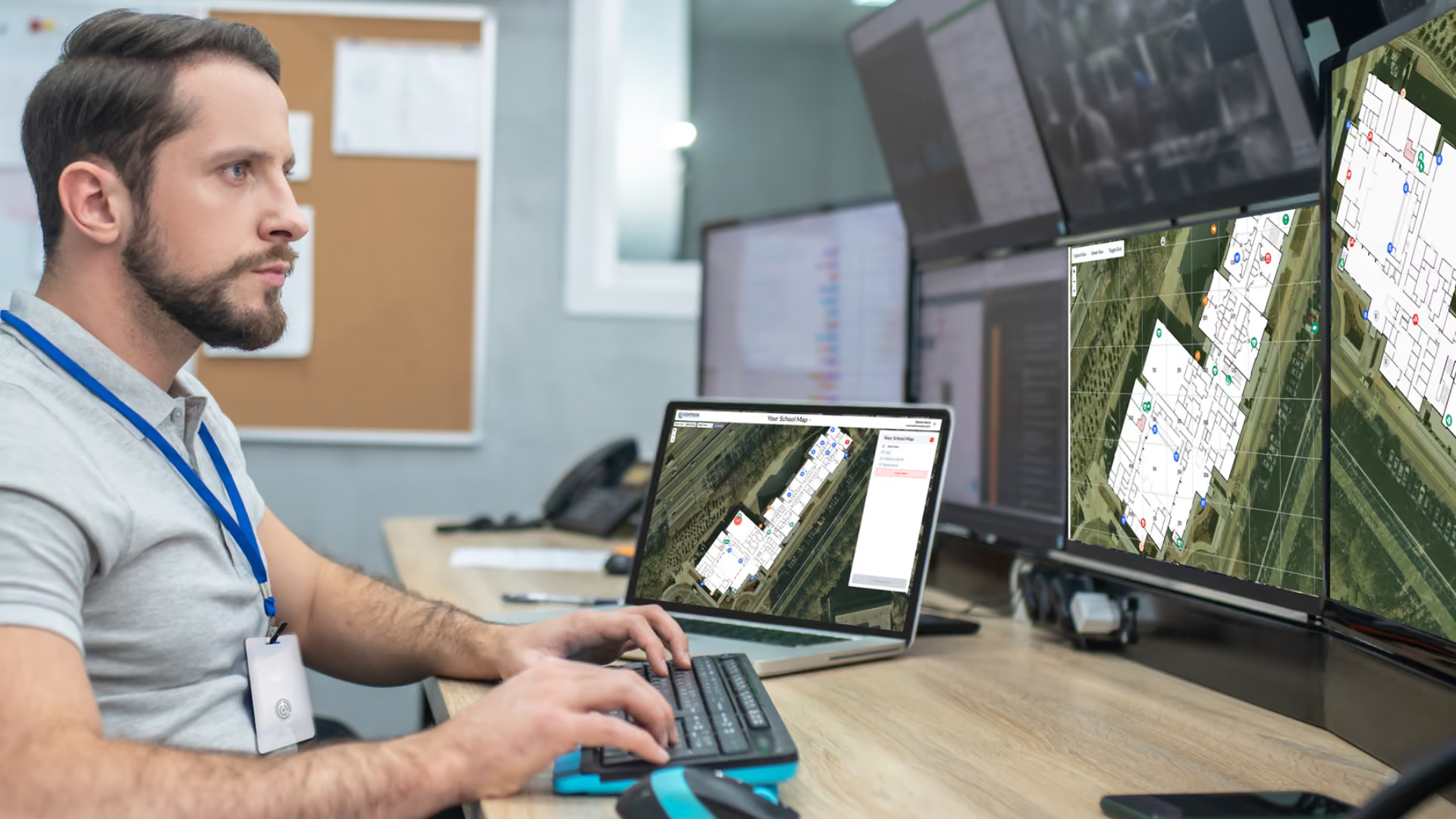
- Equip every staff member with a wearable panic button as required by SB 838. Staff can discreetly request help from anywhere on campus, and responders see alert locations in real time digital incident map. Precise location details reduce response times.
- Extend schools’ existing safety investments. Safety Platform components are purpose-built to integrate with existing systems, including mass notification and intercom systems, to facilitate rapid communication with first responders and reduce emergency response times.
- Safety Platform components work together to promote a culture of safety throughout campus. From visitor management to critical incident mapping to wearable panic buttons, the CENTEGIX Safety Platform addresses the many facets of school safety.
Texas districts appreciate the Safety Platform’s campus-wide alerts, which are activated when a significant threat occurs. When triggered, the system instantly notifies all individuals on campus to take immediate action. This alert uses both audio and visual notifications:
- Flashing and beeping strobe lights in classrooms and hallways
- Color-coded indicators aligned with the Standard Response Protocols (Secure, Lockdown, Evacuate, Shelter, or Hold)
- A desktop takeover alerting all staff and students on their computers
Schedule a demo today to learn more about how CENTEGIX Safety Platform can help your district satisfy TEA Safety Audit requirements and create safe schools.