Employee satisfaction drives organizational success, and safety is central to that equation. When staff members feel psychologically and physically secure, they engage fully with their work and commit to the organization’s mission. A comprehensive facility or school alert system does more than protect staff during emergencies. The technology creates a culture of safety that directly impacts recruitment, retention, and workplace morale across industries.
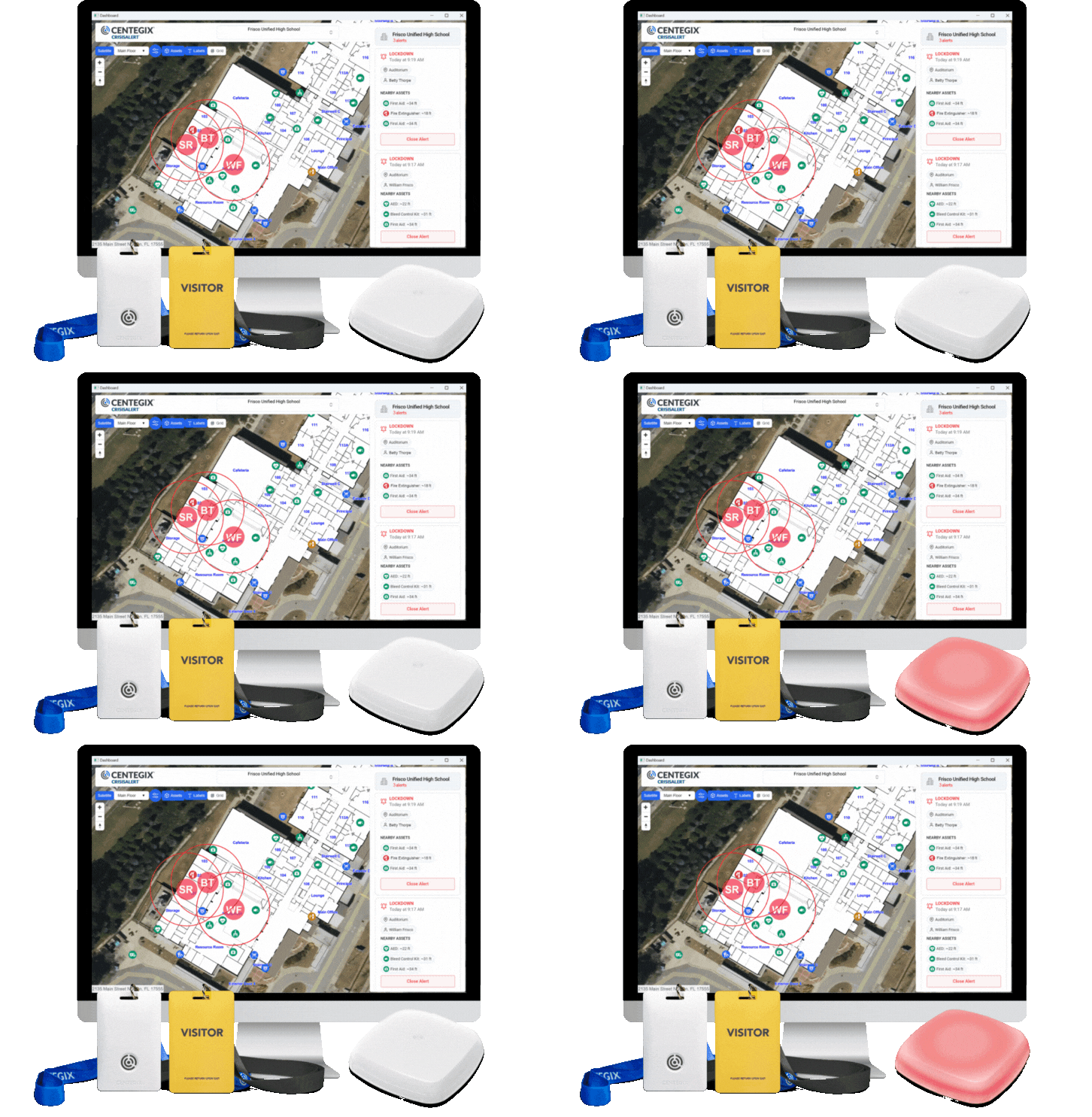
The CENTEGIX Safety Platform®, featuring CrisisAlert™, a wearable panic button that empowers every staff member to get help immediately and discreetly during an emergency, reduces response times from minutes to seconds, transforming how organizations handle emergencies, from the everyday to the extreme.

The Connection Between Safety and Retention
Staff members who experience workplace violence often consider leaving their professions entirely. Research from the National Institute for Justice found alarming rates of educator victimization:
- 83% of teachers reported victimization during the school year
- 45% experienced verbal abuse from students
- 35% faced aggression
- 47% reported physical distress following incidents
- 90% reported emotional distress after victimization
These numbers translate directly into turnover. All types of victimization, except sexual harassment and cyberbullying, predict teacher transfers and attrition.
Healthcare faces similar challenges. According to the American Hospital Association, violence costs hospitals $18.27 billion annually, with psychological impacts including compassion fatigue, PTSD, and reduced job satisfaction driving staff turnover and absenteeism. The 2025 NSI National Health Care Retention Report confirms the severity of healthcare’s retention crisis: RN turnover stands at 16.4% nationally, with the average cost of turnover for a bedside RN reaching $61,110. First-year RN turnover runs at 22.3%, meaning nearly one in four newly hired nurses leaves within 12 months. The average hospital loses between $3.9 million and $5.7 million annually from nurse turnover alone.
A wearable panic button addresses these concerns by giving every staff member immediate access to help. The technology eliminates the need to locate a phone, remember an extension, or leave a dangerous situation to get assistance.
Education: Empowering Teachers and Staff to Get Help Quickly
Comprehensive wearable safety technology reduces response times through integrated alert systems. Tim Craig, Lieutenant over the Training Division for Hillsborough County Schools Security and Emergency Management, oversees approximately 280 schools with 350 security officers. He describes the transformation the wearable panic button solution provides: “Now you have the actual system in place that has the lights and actually takes over the computers and does the intercom system.”
Craig emphasizes the difference from older approaches: “Before you had to hope that somebody was getting on an intercom and saying it over an intercom, or somebody was running around the school telling people to do a lockdown. Now it’s a mass alert throughout the whole school so that teachers know within seconds to lock down their classrooms.”
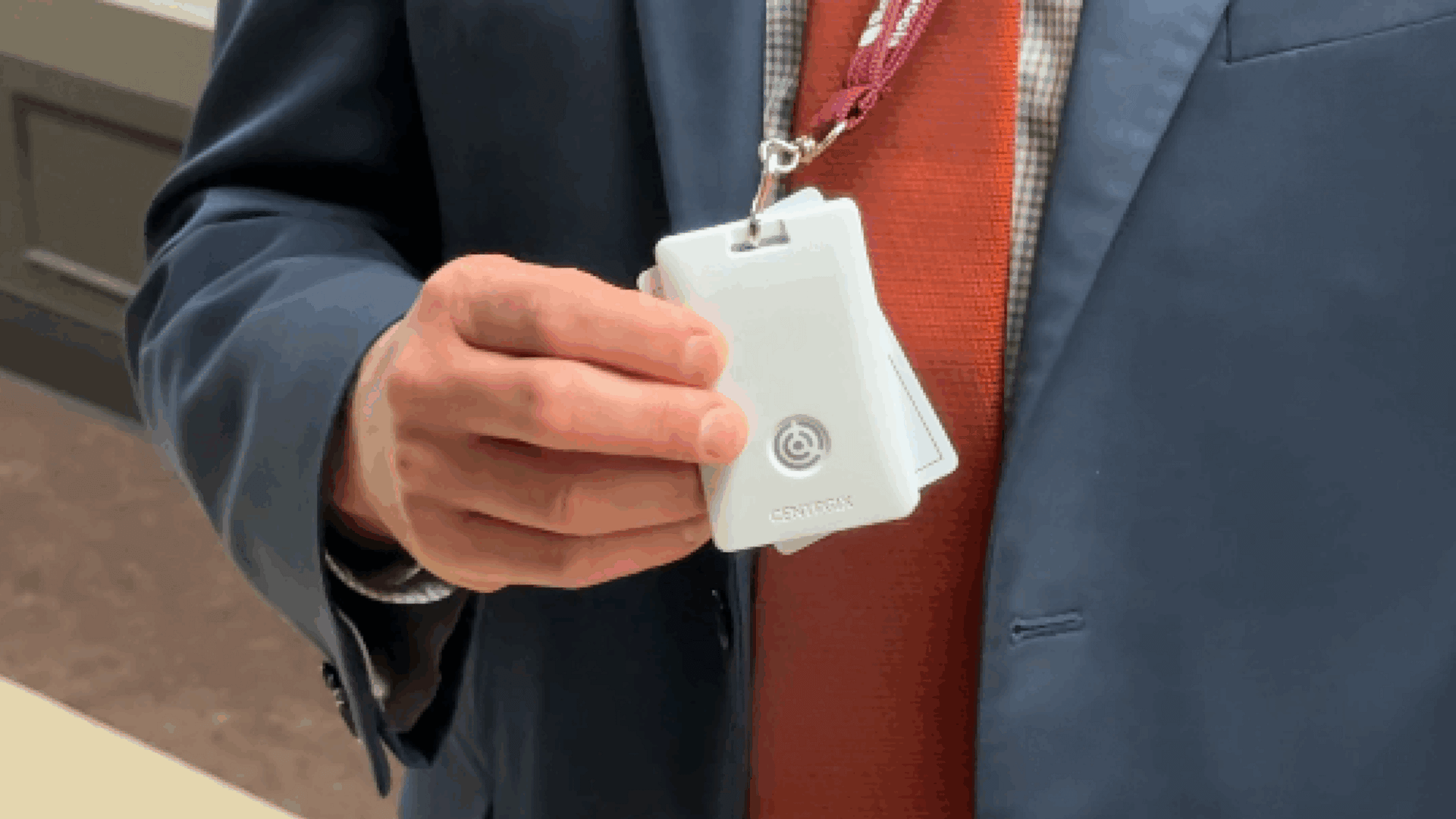
Staff equipped with a CrisisAlert badge gain confidence knowing help is always accessible. 98% of users report that the wearable panic button system helps them feel safe and supported.
37 Seconds to Safety
On September 25, 2024, SL Mason Elementary School in Valdosta City, Georgia, faced an active threat during afternoon dismissal. An armed individual entered campus and proceeded toward the front of the school. Within 37 seconds of the first signs of danger, an assistant principal initiated lockdown protocols using their CrisisAlert badge.
The campus locked down immediately. Students already loaded on buses departed safely. Staff and students inside the building followed their training protocols. The school resource officer engaged and stopped the threat. No students, staff, or parents sustained injuries.
This incident demonstrates why seconds matter. The wearable panic button eliminated delays caused by searching for phones or running to intercoms. Strobes activated throughout the building, and the intercom system automatically delivered lockdown instructions.
Trent North, Superintendent of Douglas County Public Schools in Georgia, notes that 98% of CrisisAlert usage addresses everyday emergencies, including medical situations and behavioral incidents. This daily utility reinforces staff confidence in the system.
Seeing Alerts on Digital Maps Improves Responders’ Situational Awareness
Safety Blueprint® provides dynamic digital mapping that equips responders with critical information to respond to emergencies effectively. Dr. Lockhart explains the value for first responders unfamiliar with school layouts: “From the outside as an entity that doesn’t work in that school in and out every day, I have no idea where those emergency items are. But now with [Safety Blueprint], it pops up on the computer for our officers, for our law enforcement.”
The mapping solution shows precise locations for AEDs, stop-the-bleed kits, fire apparatus hookups, water turnoffs, electrical controls, and more. Dr. Lockhart describes how this transforms response: “If I tell them that CrisisAlert has now gone off on the second floor at the very end, north end of the school, they know exactly where to go instead of trying to go piece by piece to get there. Now they can get there within seconds instead of minutes, and that saves lives.”

Healthcare: Reducing an $18 Billion Crisis
Healthcare workers face the highest rates of workplace violence of any industry. The American Association of Critical-Care Nurses reports that 72.8% of all nonfatal workplace violence cases occurred in healthcare and social assistance settings during 2021-2022. Nurses documented 16,975 assaults in 2023 alone, a 5% increase from the previous year.
Violence Harms Caregivers and Institutions
The effect of violence harms healthcare employees’ physical and psychological well-being. Victims of violence experience demoralization, depression, loss of self-esteem, and signs of post-traumatic stress disorders, including sleeping disorders, irritability, difficulty concentrating, and reliving of trauma. These widespread impacts lead to declines in quality of care, increased absenteeism, and healthcare workers’ decisions to leave the field entirely.
The 2025 NSI National Health Care Retention Report documents the institutional toll: hospitals lost an average of $4.75 million from RN turnover in 2024. A 1% change in RN turnover costs or saves the average hospital $289,000 annually. With 22.3% of newly hired RNs leaving within their first year, hospitals face compounding recruitment and training costs that drain operational budgets.
McKinsey research found that 32% of registered nurses surveyed indicated a likelihood of leaving their current positions providing direct patient care due to insufficient staffing, inadequate pay, and not feeling heard or supported at work.
Creating a Culture of Safety in Healthcare
Safety solutions, combined with training and protocols, create environments where staff feel protected while delivering high-quality patient care. A Physician’s Practice analysis highlights how wearable panic button technology enables staff to de-escalate incidents through discreet alerts, mitigating violence before it becomes a crisis.
Vail Health Behavioral Health in Colorado implemented CrisisAlert after staff reported feeling unsafe as their patient population grew more complex. Christine Stiebel, Patient Experience Coordinator, described the pre-implementation environment: “It was really fear-based what we were thinking. We felt like anyone could just come in and do the worst thing possible.”
The wearable panic button transformed their workplace culture. Stiebel now describes the system’s responsiveness: “The immediate response is something I love. It’s not even a second after I hit my button. It’s that comfort and reassurance that my team is here for me and will help protect me and the clinic.”
Joe Fasolino, Behavioral Health Operations Specialist at Vail Health, confirms the impact: “I think workplace safety has improved tremendously since implementing CrisisAlert. Having the response system has made it so there is an efficient way to reach out if a situation is escalating that needs immediate help.”
An unexpected benefit emerged: continuity of patient care. Providers can summon support during sessions when additional clinical assistance becomes necessary, allowing treatment to continue rather than be interrupted. One staff member credited CrisisAlert with saving a life during a potential attempted suicide by reducing response time.
Higher Education: Campus-Wide Protection for Staff
College campuses present unique safety challenges. A 2024 CUPA-HR survey found that 11% of higher education employees disagreed that they feel safe from violence, up from 6% in 2022. Library staff, academic affairs personnel, and student affairs workers reported feeling the least safe. Employees of color feel less safe from violence at work than White employees, and women feel less safe than men.
Community Colleges and Universities: Different Challenges, Shared Solutions
Community colleges maintain closer ties to their surrounding communities than traditional universities, creating safety dynamics similar to those in K-12 environments. Some community colleges have students living on campus, while others do not. Technical and community colleges typically operate with multiple locations, allowing faculty who work across campuses to take their wearable panic button badges wherever they go. Community and technical colleges typically implement campus-wide coverage across their main campus and satellite locations.
Practicality Drives Adoption
Justin Masek, who works with colleges considering CENTEGIX solutions, emphasizes the practical appeal: “This is a simple solution; there are no language barriers, and one button to click. It’s simple to use. This makes it 100 percent adoptable. When you make it possible for anyone to get help from anywhere on campus, this is valuable.”
Faculty governance presents unique considerations in higher education. Masek notes that faculty members tend to resist mandates from leadership initially. The wearable panic button solution overcomes this resistance because staff recognize the direct benefit: “This empowers faculty. It helps them feel more supported. It’s an additional layer of security already within the investments that they have. Typically, these colleges have an open campus. There are no locked doors anywhere.”
Proven Results on College Campuses
West Georgia Technical College serves nearly 10,000 students across nine campuses spanning seven counties. James Perry, Chief of Police for WGTC and CENTEGIX customer since 2021, emphasizes the transformation: “Our response time has been in the seconds, not in the minutes. And it’s been fantastic for us.”
One incident proved the system’s life-saving capability. A staff member arrived on campus feeling unwell. Shortly after Chief Perry left her office, she collapsed under her desk, unable to reach a phone. She pressed her wearable panic button before losing consciousness. Chief Perry received the alert immediately: “It took me a second to look at the phone, recognize the name, and then I just sprinted right down the hallway to her office where I found her.”
He rendered aid immediately and radioed dispatch for an ambulance. The staff member was transported to the hospital, where she stayed several days before returning to work.
The system works even in challenging environments. One campus building, a former World War II bomb manufacturing plant with lead-lined roofs, makes cell phone service extremely difficult. “CENTEGIX has worked fantastic in that building,” Chief Perry confirmed. Staff now use the system confidently: “We’re averaging probably two students a week that are having medical issues and we’ve had to call ambulances in. Our staff have gotten so comfortable that they’re really hitting it now.”
Building a Culture of Safety
Organizations that invest in comprehensive safety solutions signal to employees that their well-being matters. This commitment affects recruitment, retention, and daily morale. When staff know help is always seconds away, they approach their work with greater confidence.
The Safety Platform integrates CrisisAlert wearable panic button technology with Safety Blueprint dynamic digital mapping. Responders see exactly who needs help, where they are located, and the nearest safety assets. This integration reduces response times and provides detailed incident data to support ongoing safety improvements.
Take the Next Step Toward Safer Workplaces
Employee retention depends on many factors, but safety should be central to every organization’s strategy. A wearable panic button provides the fastest, easiest way for staff to get help in an emergency, reducing response times and fostering a culture of safety that keeps talented employees committed to their work.
Learn how the CENTEGIX Safety Platform can strengthen safety and retention at facilities across industries.