Understaffing has become a chronic problem across healthcare, affecting everything from employee morale to patient outcomes. Hospitals and care facilities cannot solve these challenges solely through hiring. They also need a stronger approach to Workplace Violence Prevention, because when employees do not feel safe, retention suffers, burnout rises, and maintaining organizational stability becomes harder. Improving nurse safety is not separate from solving the staffing crisis. It is one of the clearest ways to address it.
Often, staffing shortages and safety issues are managed as separate problems. But in practice, they reinforce one other. Unsafe environments push experienced employees out. Fewer employees on the floor increases stress, delays, and the likelihood of violent incidents. Over time, this creates a cycle that weakens care delivery and makes recruitment harder. Breaking that cycle requires organizations to view safety as a strategic investment in workforce well-being.

The Cycle of Workplace Violence and Understaffing in Healthcare
The scale of workforce instability in healthcare is hard to ignore. In AMN Healthcare’s survey of more than 12,000 nurses, 61% said they planned within the following 12 months to leave their current employer, switch departments, retire, return to school, or move to part-time, per diem, or virtual work. That level of disruption reflects more than temporary dissatisfaction. It points to a workforce under severe strain.
Workplace violence is a major reason why. In some cases, employees leave because they have directly experienced threats, assault, or aggressive behavior. In others, the damage is cumulative. Repeated exposure to stressful environments, uncertainty about support, and the psychological toll of feeling unprotected can drive burnout and disengagement long before someone resigns.
Understaffing makes the risk of violence worse. When patient demand rises, but staffing and resources do not keep pace, tension builds across the care environment. Long wait times, overextended teams, delayed responses, and fewer available coworkers can all increase the likelihood of escalation. Research has increasingly identified organizational conditions, especially insufficient staffing and resource strain, as important contributors to workplace violence in healthcare settings.
This is the real cost of inaction. Healthcare organizations that fail at improving safety are not just susceptible to avoidable risk; they are also making retention harder, recruitment less effective, and patient care more vulnerable to disruption.
What Mandatory Ratios May Miss
Staffing ratios matter. Better nurse-to-patient ratios can reduce burnout and improve outcomes. But ratios alone will not fully solve the staffing crisis in healthcare. Organizations must also consider whether employees feel protected, supported, and equipped to respond when incidents occur.
Some healthcare organizations respond to shortages by bringing in temporary or traveling staff to fill gaps. While this may help satisfy minimum coverage requirements, it leaves gaps when trying to build a stable workforce. Temporary staffing can create inconsistencies in team coordination, familiarity with protocols, and confidence during high-pressure situations. The result may be a unit that looks adequately staffed on paper but still feels unstable to the people working it.
Evidence reviewed by the National Center for Biotechnology Information indicates that lower patient loads per nurse can reduce burnout and improve patient outcomes. At the same time, the same body of evidence notes that adequate staffing numbers alone are not enough to optimize outcomes to their highest potential, and that reliance on temporary staffing may be associated with worse outcomes and higher mortality in some settings.
That distinction matters. Healthcare leaders should absolutely pay mind to staffing levels, but they should also ask a broader question: Do employees feel safe enough to stay? If the answer is no, then recruitment efforts become more expensive, turnover remains high, and workforce instability continues even when ratios improve.

Improving Nurse-to-Patient Ratios Isn’t Enough
To effectively combat the staffing crisis, healthcare leaders must look beyond the schedule and invest in comprehensive motivational efforts outside of physical security. A ratio simply dictates headcounts but misses the human elements of workforce motivation.
The best, human-centered organizations are increasingly focusing on holistic employee well-being through:
- Work-Life Integration: Implementing flexible scheduling options to help nurses balance demanding careers with their personal lives.
- Mental Health Support: Expanding access to counseling and wellness resources to combat compassion fatigue.
- Professional Development: Creating clear, accessible pathways for continuing education, specialized training, and career advancement.
- Meaningful Recognition: Fostering a culture where leadership actively listens to frontline staff and acknowledges their daily contributions.
- Zero-Tolerance Provider Protection: Establishing expectations that aggressive behavior towards healthcare staff won’t be tolerated, and supporting victims if incidents do occur.
When leadership invests in these areas, employees feel valued as dedicated professionals rather than just numbers on a shift roster.
Build a Comprehensive Culture of Safety
Improving safety is about more than adding security measures. It is about creating a culture where employees feel valued, protected, and supported. That kind of culture can directly affect recruitment and retention by telling current and prospective staff that their well-being is taken seriously.
A culture of safety is more than a morale booster. It strengthens engagement, trust, and consistency across teams. Employees are more likely to stay when they believe their employer has made a concrete investment in their physical and psychological safety. They are also more likely to recommend that workplace to others, which matters in a competitive hiring environment.
This is where healthcare organizations can shift from reactive thinking to long-term workforce strategy. Safer environments help reduce the constant churn that drains teams and undermines patient care. They also support a stronger employee experience, which in turn stabilizes operations.
The connection between safety and staffing is increasingly clear. The healthcare organizations best positioned to retain talent are not just those offering competitive pay or adding temporary labor. They are the ones building environments where people feel they can do demanding work without feeling exposed or alone.
A Powerful Investment in Nurse Safety
Healthcare leaders often ask whether safety investments can influence retention and recruitment in measurable ways. The answer is yes. At Vail Health, leaders described how a stronger investment in staff safety supported both retention and recruitment efforts in a behavioral health setting.
Kim Goodrich, Community Mental Health Center Program Improvement Director, explained that the investment in staff safety helped bring people on board at a new inpatient behavioral health facility. She also emphasized the importance of data showing incidents where a response was readily available. That distinction matters. In many environments, staff may be forced to locate a wall-mounted button or hope someone nearby can respond. A more responsive system changes that experience and the confidence employees bring to their work.
Broader findings point in the same direction. CENTEGIX® reports in its 2026 Healthcare Safety Trends resource that 97% of users say they feel safe and supported at work. That sense of support creates what many organizations seek but struggle to build: a durable layer of confidence that shapes morale, retention, and organizational trust.

How the CENTEGIX Safety Platform Supports Workforce Stability
For healthcare organizations facing staffing pressure, the CENTEGIX Safety Platform® represents more than a security measure. It is a practical investment in workforce support.
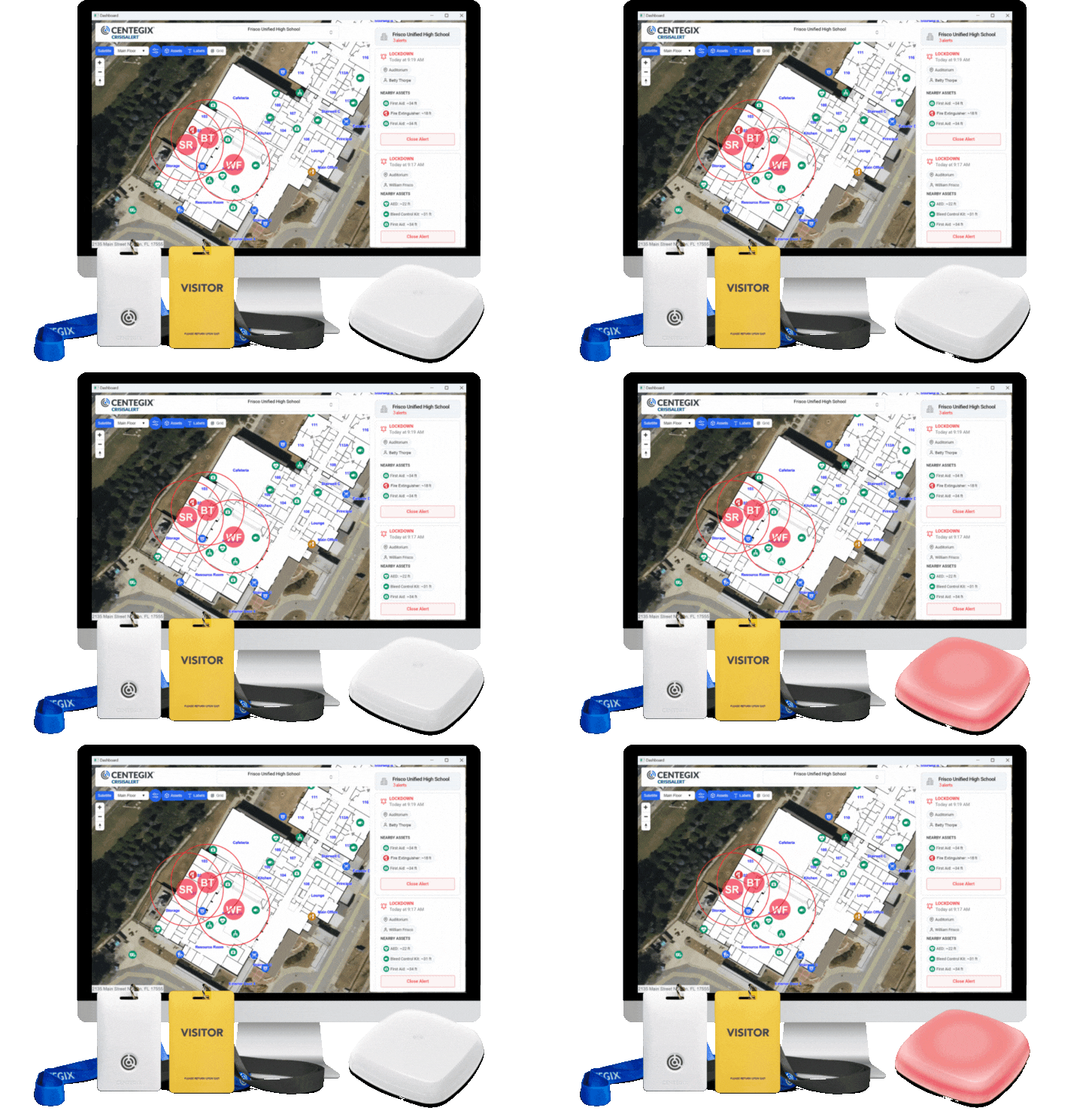
Employees equipped with a wearable duress button can request help from their location at any time. That speed is critical because seconds matter in a healthcare emergency. Engineered networks do not depend on Wi-Fi or cellular service, reducing delays when response time is critical.
The Safety Platform also improves clarity. Instead of leaving employees and responders to piece together what is happening, increased situational awareness helps communicate the situation quickly and support coordinated action. In high-stress environments, that clarity can make the difference between confusion and a confident response.
Coverage matters just as much. Healthcare workers move frequently between departments, hallways, treatment areas, and different units. A platform built for every person, every place, every time helps close the gaps that undermine confidence in older or less reliable approaches.
Finally, intelligence helps organizations improve over time. Safety data provides leaders with insight into response patterns, training needs, and preparedness gaps. That visibility helps healthcare teams move beyond assumptions and make better decisions about readiness and workforce support.
Taken together, these benefits support a larger goal. They show employees that the organization is not asking them to tolerate risk as part of the job. It is making a real investment in nurse safety and backing that investment with action.
The Cost of Inaction Is Too High
Healthcare organizations cannot afford to treat workplace violence as a side issue while focusing only on recruitment targets or staffing ratios. When employees feel unsafe, the consequences spread across the entire organization. Retention drops. Hiring becomes harder. Burnout rises. Patient care suffers.
A stronger approach starts by recognizing that safety is central to workforce stability. Investing in nurse safety helps healthcare leaders address not only immediate risk, but also the long-term staffing crisis that continues to affect care environments nationwide.
Learn how the CENTEGIX Safety Platform can support stronger nurse safety, improve employee confidence, and help healthcare organizations build a more stable workforce.