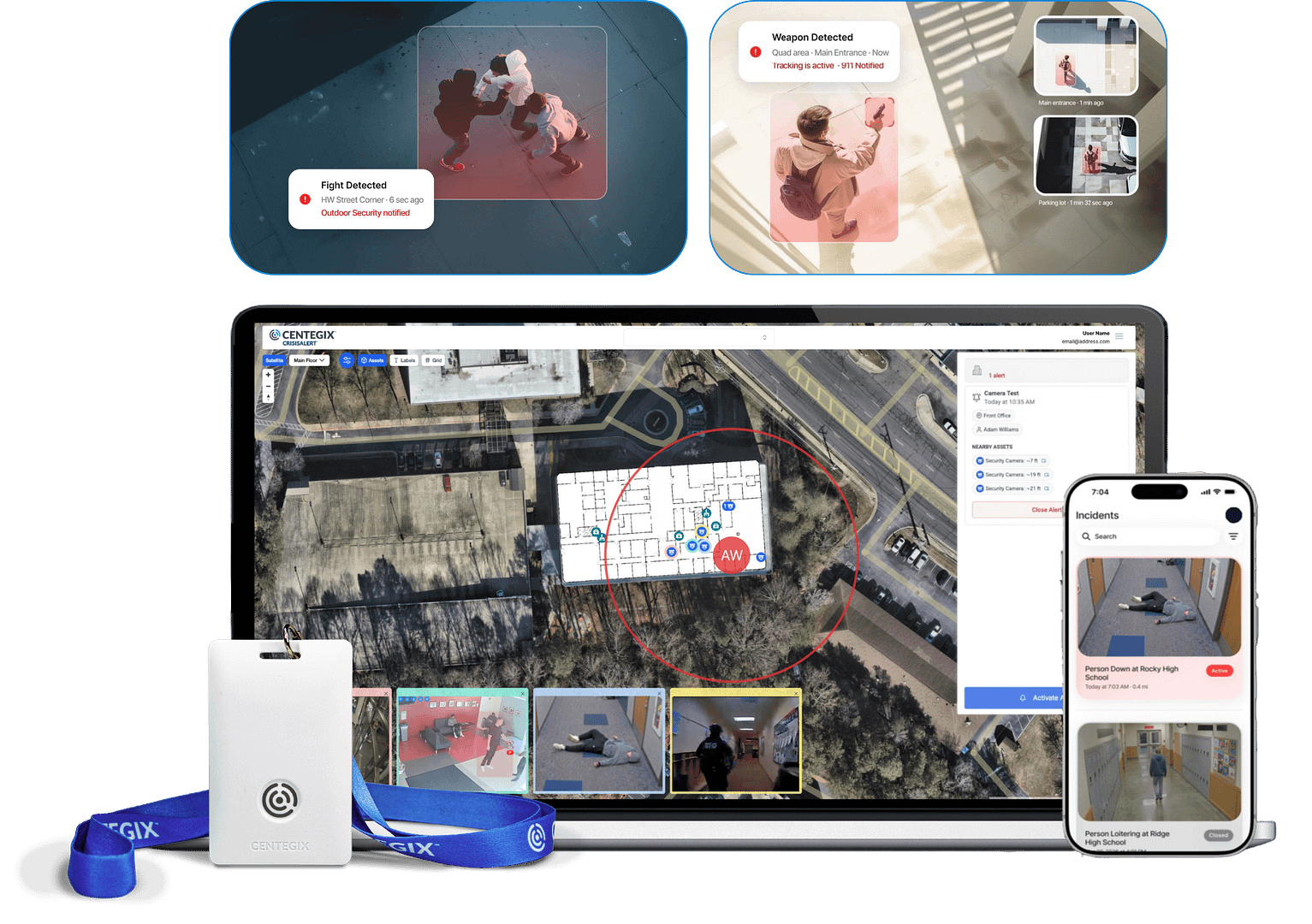
AI-activated alerts turn a school’s existing security cameras into real-time threat detection tools. AI identifies potential safety events like fights, weapons, medical emergencies, or intrusions, a trained human verifies every alert, and the verified alert activates the school’s response workflow through the CENTEGIX Safety Platform. No new cameras, no facial recognition, no biometric data.
That’s the model behind the partnership between CENTEGIX and VOLT, and it addresses a problem nearly every school in America shares: cameras that only answer the question “what happened?” after it’s too late to change the outcome.
On a recent episode of The Safety Signal, CENTEGIX CEO Brent Cobb and VOLT CEO and Founder Dmitri Sokolovsky explained why the partnership came together, how the technology works, and what it means for schools, hospitals, and frontline workers. Here’s what school and safety leaders need to know.
Why Aren’t Traditional Security Cameras Enough?
Traditional security cameras are forensic tools. They record what happened, but they can’t summon help while it’s happening. Most incidents that escalate do so precisely because no staff member is present to witness them: a medical emergency in an empty hallway, an altercation after hours, an intrusion no one sees coming.
“One of the CENTEGIX core values is empower,” Cobb explained. “We’ve worked hard to help customers empower their employees to take action when they see an issue. But sometimes those things happen when a teacher or administrator isn’t there to actually see it.”
AI-activated alerts close that gap by making protection independent of whether a person happens to be in the right place at the right time.
How Do AI-Activated Alerts Work?
The workflow has four steps: detect, verify, alert, respond.
- Detect. VOLT’s AI analyzes live video from the school’s existing cameras and identifies potential safety events, including fights, weapons, medical emergencies, and intrusions.
- Verify. Every AI-generated candidate alert is reviewed by a trained human professional. AI never makes the final call.
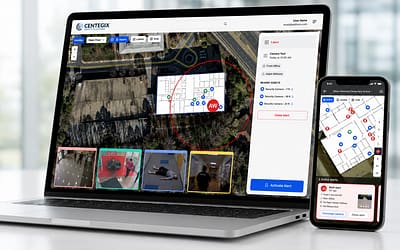
- Alert. Once verified, the alert flows into the CENTEGIX Safety Platform and activates the school’s established response workflow, routing to the right people, whether that’s medical staff, an SRO, or administrators.
- Respond. Responders arrive with context. They know whether they’re walking into a medical emergency or a physical altercation before they get there.
“You’re going into any given situation much more aware, with a lot more context,” Sokolovsky said. That context shortens the response cycle end to end, and it means responders can bring the right tools, like an AED, while they’re on the way.
Does AI Decide When a School Responds?
No. A human makes every determination. AI surfaces candidate events; trained professionals apply judgment before anything reaches the school.
“You don’t want to be sending a school into lockdown because someone’s eating Dorito chips,” Sokolovsky said. The AI does not determine whether there’s a medical emergency. A human does.
This human-in-the-loop model also flips the surveillance concern on its head. In traditional monitoring, humans watch cameras continuously. With AI-activated alerts, no human watches any feed until the AI flags a specific potential safety event. Students aren’t tracked or followed. The system pinpoints moments that matter and ignores everything else.
Does AI School Security Use Facial Recognition?
VOLT’s platform uses no facial recognition and stores no biometric data. It is built to understand environments and behaviors, not identities. It can recognize that a person is in distress at this moment; it cannot tell you where that person has been all day, because it was deliberately designed never to know.
“Safety should not be a trade-off between privacy and safety, especially when you’re dealing with kids,” Sokolovsky said. “As a parent myself, I want to make sure my kids are protected, but I also want to make sure my kids are not tracked.”
The platform is recognized under the Department of Homeland Security SAFETY Act, reflecting the scrutiny applied to technology deployed in schools.
Who Controls the Data?
The school does. The combined platform only shares information when a customer requests help, whether through a CrisisAlert badge press or a human-verified video alert.
“Think of it as an on/off switch,” Cobb said. “The data flow is only turned on when there’s an actual incident, and the switch is turned off the minute that incident is closed.” Video and incident data stay within the customer’s environment until an event occurs, then flow outward only through policies the district has predetermined.
Do Schools Need to Replace Their Cameras?
No. AI-activated alerts run on the cameras a school already owns. There is no rip and replace, and no new hardware investment required to gain real-time situational awareness.
“When you can leverage an existing investment, that’s the key to unlocking value,” Cobb said. “It’s almost like free situational awareness. When you can get value and not have to spend additional dollars, that’s the definition of ROI.”
For districts weighing budgets against safety mandates, this is often the deciding factor: cameras purchased years ago as recording devices become active sensors in a full-day safety platform.
Is This Technology Only for K-12 Schools?
No. The model extends to hospitals, universities, government buildings, and enterprise environments. The partnership started in K-12 deliberately, because protecting children is where public safety starts and where trust must be earned first. But the same problem exists everywhere: hundreds of cameras, and no team that could possibly watch them all.
“We think this solution should be deployed in every building in the country,” Cobb said.
Looking ahead, both leaders see cameras as just the beginning. Access control, wearable badges, and other sensors will increasingly feed a connected intelligence layer, with AI helping formulate faster responses, supporting behavioral threat assessment, and extending protection to transportation and the journey home.
The Real Heroes Aren’t Algorithms
Both CEOs were emphatic on one final point: AI is not the hero of this story.
“The people who are responding to events, the teachers, the school staff, the first responders, those are really the heroes,” Sokolovsky said. “This partnership is about giving them the context and the time to respond.”
Technology doesn’t replace the educators, healthcare workers, and responders who keep communities safe. It buys them back the seconds they need to do what they already do with courage every day. And when every second matters, that changes everything.

Frequently Asked Questions
What are AI-activated alerts?
AI-activated alerts use artificial intelligence to analyze live video from existing security cameras, detect potential safety events, and, after human verification, push alerts into the CENTEGIX Safety Platform to activate a school’s emergency response workflow.
How is this different from traditional video surveillance?
Traditional surveillance is forensic: it records footage for review after an incident. AI-activated alerts are proactive: they identify events as they happen and activate a verified, immediate response.
Does anyone watch students on camera all day?
No. No human views any camera feed until the AI flags a specific potential safety event for review. The system does not track individuals or monitor routine activity.
Does the AI ever activate a lockdown or emergency response on its own?
No. Every AI-generated alert is reviewed and verified by a trained human professional before it reaches the school and activates any response workflow.
Can this work with the cameras our district already has?
Yes. The platform runs on existing camera infrastructure, so districts gain real-time detection without replacing hardware.
How do AI-activated alerts differ from alert-activated video?
AI-activated alerts start with the camera: AI detects a potential threat and a verified alert flows into CENTEGIX. Alert-activated video starts with a person: a CrisisAlert badge press activates nearby cameras to give responders live visual context. Together they cover both witnessed and unwitnessed events.
Hear the full conversation with Brent Cobb and Dmitri Sokolovsky on The Safety Signal, available on YouTube, Spotify, Apple Podcasts, or wherever you get your podcasts.