A safety incident can come to an organization’s attention in more than one way.
Sometimes a camera sees the incident first. AI threat detection identifies a visible event before anyone has reported it.
Other times, a person recognizes the danger first. A staff member sees, hears, or experiences something that requires help and activates a wearable alert.
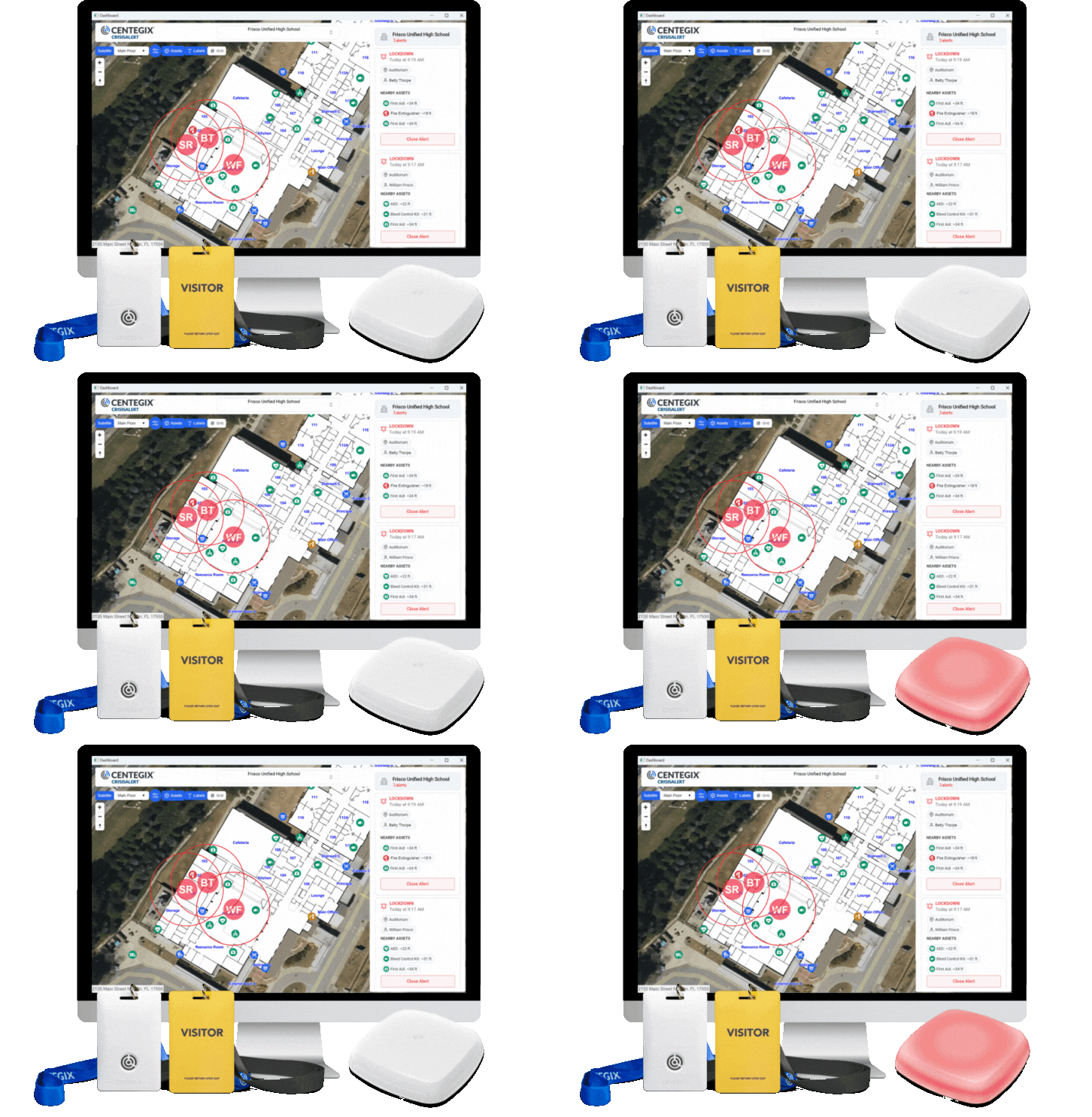
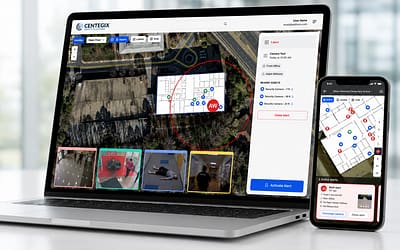
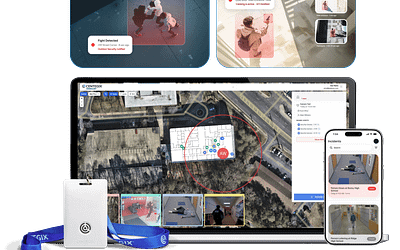
The CENTEGIX Safety Platform® supports both paths. VOLT brings AI-activated video alerts into the CENTEGIX Safety Platform, while an integration with Rhombus connects a CrisisAlert activation with live video from the nearest cameras, called Alert Activated Video. Both models connect visual information with the same incident detection and response ecosystem.
Together, they create more ways to recognize an incident and connect it with location, visual context, and coordinated response.
Key takeaways
- AI threat detection begins when VOLT identifies a potential event on a camera.
- Alert Activated Video begins when a person activates a CrisisAlert wearable badge.
- VOLT sends human-verified alerts and visual context into the CENTEGIX Safety Platform.
- Rhombus surfaces live video from the four cameras nearest to a CrisisAlert activation.
- Both paths connect relevant incident information with the CENTEGIX Safety Platform.
- Used together, the two models address incidents recognized first by technology and incidents recognized first by people.
What is the difference between AI-activated and Alert Activated Video?
AI-activated and Alert Activated Video differ in what initiates the response.
AI-activated video begins with the camera. VOLT analyzes feeds from existing security cameras and identifies a potential safety event. After the alert is human-verified, the information enters the CENTEGIX Safety Platform.
Alert Activated Video begins with a person. A staff member activates a CrisisAlert™ wearable panic button, and the system surfaces live video from the four Rhombus cameras closest to the alert.
| Factor | AI-activated video | Alert Activated Video |
|---|---|---|
| Starting point | A camera feed | A person requesting help |
| Activation | VOLT identifies a potential event | Staff member activates CrisisAlert |
| Direction | Cameras to CENTEGIX | CrisisAlert to cameras |
| Human role | Reviewer verifies the AI alert | Staff member initiates the alert |
| Video’s role | Identifies and provides context for the event | Adds context to a person-generated alert |
| Integration partner | VOLT | Rhombus |
| Shared outcome | Visual context enters the response workflow | Location and visual context enter the response workflow |
Neither model replaces the other. Each provides a response path for situations the other may not identify first.
How do AI-activated video alerts work?
VOLT continuously analyzes connected camera feeds for predefined safety events. Depending on the configuration, that may include AI weapon detection, physical altercations, medical emergencies, unauthorized access, and behavioral escalation.
When the platform identifies a potential event:
- AI flags the activity.
- A trained reviewer evaluates the alert.
- The verified alert and available visual context enter the CENTEGIX Safety Platform.
- Designated personnel receive the information.
- The organization’s configured response process begins.
The primary benefit is proactive awareness. AI security camera alerts can identify visible events even when no one is actively watching the relevant feed or has had an opportunity to report the incident.
Learn how VOLT connects AI threat detection with response.
How does Alert Activated Video work?
With the Alert Activated Video model, a person initiates the response.
When someone activates a CrisisAlert badge:
- CrisisAlert identifies the staff member and alert location.
- Designated personnel receive the alert.
- The four Rhombus cameras closest to the alert activate.
- Authorized responders access live video from the Safety Platform.
- Responders use the available alert, location, mapping, and visual information to coordinate their actions.
The primary benefit is direct access to help. Staff can recognize and report an emergency even when it is not visible to AI, occurs outside camera coverage, or depends on context technology cannot understand.
See how Alert Activated Video provides immediate context.
Why does a layered safety strategy need both activations?
No single detection method can account for every incident. Existing security cameras can monitor areas when no person is present, but they cannot see beyond their field of view. People understand context, but they may not witness an event or be able to report it immediately.
The CISA K–12 School Security Guide recommends a layered, systems-based approach to school physical security. AI threat detection and CrisisAlert serve different roles within that kind of strategy: one extends awareness across camera feeds, while the other gives people a direct path to help.
Together, the two activations address a broader range of everyday and critical emergencies.
Human judgment remains central
Both models preserve an important role for people.
With VOLT, a trained reviewer verifies potential events before escalating them. With CrisisAlert, the staff member uses personal judgment to initiate the alert.
The NIST AI Risk Management Framework emphasizes managing the roles and limitations of people and AI throughout an AI system’s use. In this two-activation model, AI expands what an organization can monitor without eliminating human observation, judgment, or authority.
Real-time video intelligence reaches the response workflow
Both models reduce the work required to connect an incident with relevant video.
With VOLT, the detected event and visual context move into the CENTEGIX Safety Platform. With Rhombus, the CrisisAlert alert location determines which camera feeds responders see.
In both cases, responders receive relevant visual information without beginning with a manual search across the entire camera system.
Connected technology supports coordinated planning
The U.S. Department of Education’s emergency-planning guidance emphasizes comprehensive emergency operations plans developed collaboratively and reviewed regularly. Technology should support those established roles and procedures rather than exist as a separate response plan.
Likewise, the CISA Cybersecurity and Physical Security Convergence Action Guide addresses the risks and operational considerations created by increasingly interconnected cyber-physical systems.
The CENTEGIX Safety Network connects existing school safety technology with the platform where response is coordinated. Cameras, alerting, mapping, and communication tools can contribute to the same response instead of requiring people to bridge disconnected systems during an emergency.
Which activation starts the response?
The answer depends on who, or what, recognizes the incident first.
A visible weapon appears in a hallway
VOLT may use AI weapon detection to identify the event and initiate an alert before someone manually reports it.
A staff member experiences a medical emergency in a room
A nearby employee may activate their CrisisAlert badge, initiating a response and surfacing available nearby camera feeds.
A fight begins in a common area
VOLT could identify the physical altercation, or a staff member could activate CrisisAlert. Either path can connect the event with the CENTEGIX incident detection and response workflow.
A teacher recognizes subtle escalation
A teacher may understand that a situation is becoming dangerous before the behavior meets the visual criteria for an AI-generated alert. CrisisAlert gives that person a direct way to request help quickly.
Unauthorized access occurs after hours
AI threat detection may flag visible unauthorized activity when few or no employees are present to observe it.
The goal is not to predict which activation will be used. It is to make sure more than one path is available.
How does the two-activation model support incident detection and response?
The two models address different gaps in incident detection and response. AI-activated video alerts can reduce the time between an event appearing on camera and someone becoming aware of it. Alert Activated Video can reduce the time between a staff member requesting help and responders finding the relevant video.
Together, they can support:
- Earlier awareness of visible incidents
- Direct staff access to help
- Broader coverage across incident types
- Faster access to relevant camera feeds
- More precise location context
- Greater situational awareness
- Fewer manual handoffs
- Better-informed response decisions
- Stronger coordination among staff and responders
- Greater value from existing security cameras
The technology does not determine the outcome on its own. Training, protocols, camera coverage, communication, and responder coordination remain essential. The benefit of the two-activation model is that it provides those people and processes with more timely, relevant information.

Frequently asked questions about the two-activated video model
Does AI threat detection replace the CrisisAlert wearable panic button?
No. AI threat detection identifies predefined events visible to connected cameras, while CrisisAlert allows a person to request help directly. CrisisAlert remains important for incidents outside camera coverage and situations that depend on human context or judgment.
Does an organization need both video-activation models?
Not every organization will deploy both models. VOLT is suited to organizations seeking proactive detection across existing camera feeds, while Alert Activated Video is available to customers using supported Rhombus camera systems. Using both provides additional ways for an incident to enter the same response workflow.
Can both models work with existing security cameras?
Yes, when the existing systems are compatible. VOLT is designed to analyze existing camera feeds, and CENTEGIX Alert Activated Video works with supported Rhombus environments without requiring a separate camera system. Compatibility and camera readiness should be confirmed before implementation.
Which activation takes priority during an incident?
The response can begin through whichever activation identifies the need first. VOLT may initiate an AI-activated video alert, or a staff member may initiate a CrisisAlert alert. Both paths are designed to bring relevant incident information into the CENTEGIX Safety Platform.
Does the two-activation model eliminate the need for emergency planning and training?
No. The technology supports incident detection and response, but organizations still need established protocols, defined responsibilities, staff training, drills, and coordination with emergency responders.
Two activations. One platform. A more connected response.
VOLT gives existing security cameras the ability to recognize potential safety events and initiate AI security camera alerts. CrisisAlert gives staff a direct way to request help, while Rhombus provides live video from the four nearest cameras to the emergency.
The activations are different, but the goal is the same: connect the people responsible for responding with timely information about what is happening and where.
Explore the CENTEGIX Safety Platform or request a custom demo to see how AI threat detection and Alert Activated Video work together.