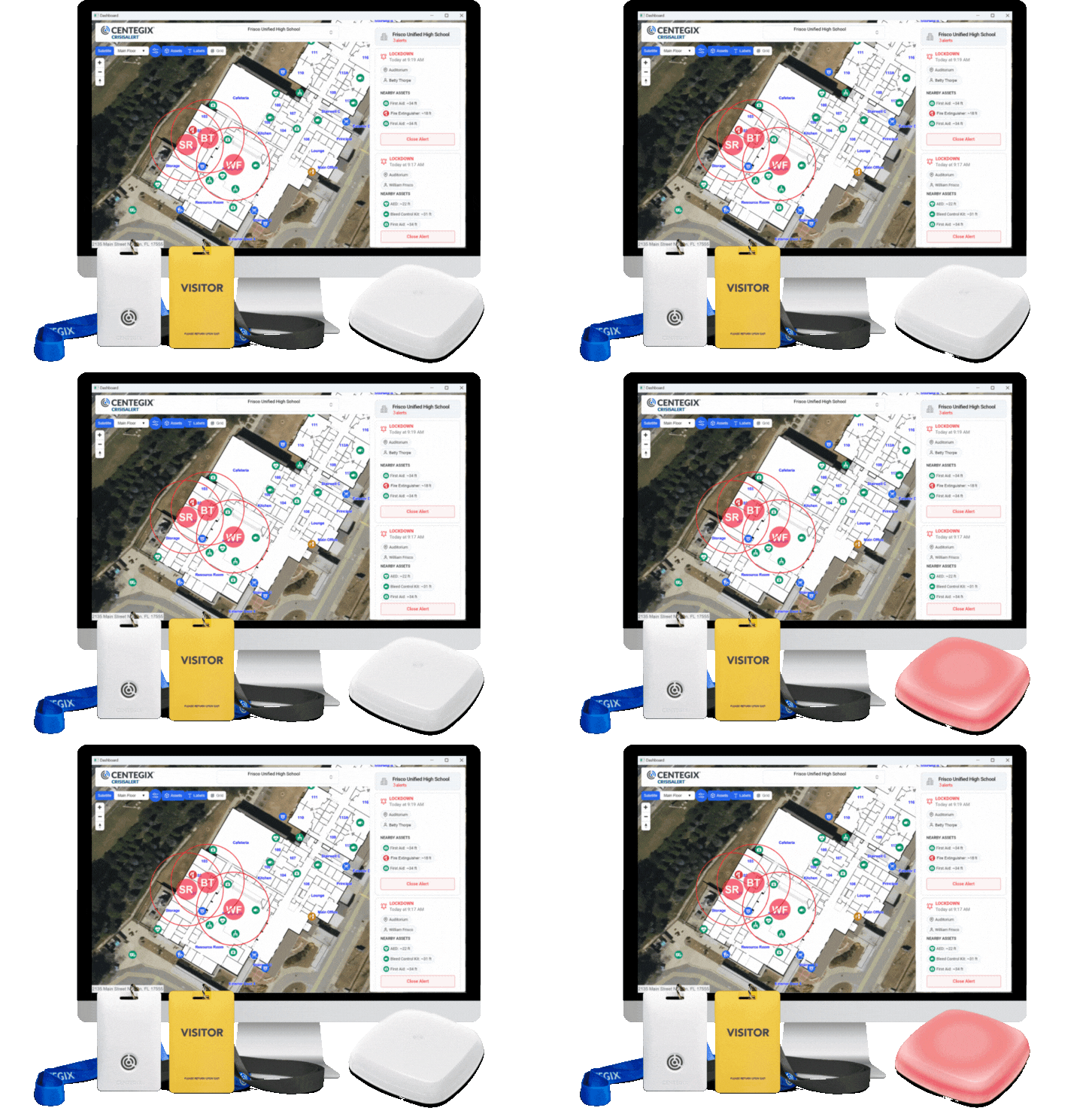
No. AI-activated safety alerts from CENTEGIX and VOLT are designed so that no human ever watches school cameras, no facial recognition is used, no biometric data is stored, and every alert is verified by a trained professional before a school is notified. Schools retain full control of their video data, which is shared only when help is requested and only according to policies the school defines.
That’s the short answer. The longer answer, from the two CEOs who built the partnership, is worth understanding in full.
On a recent episode of The Safety Signal podcast, CENTEGIX CEO Brent Cobb and VOLT CEO and Founder Dmitry Sokolowski addressed the Big Brother question head-on. What emerged wasn’t a defense of surveillance. It was a picture of a system deliberately engineered to be the opposite.
Do AI Security Cameras Mean Someone Is Watching Students All Day?
No. With the CENTEGIX and VOLT integration, no human being watches school camera feeds at all unless AI flags a potential safety event.
Here’s the irony most people miss. The traditional approach to school camera monitoring was far more invasive than what AI enables today. Historically, schools had two options for their cameras. Use them as forensic tools to review footage after an incident, or put a human being in front of a wall of monitors watching live feeds all day. That second option literally meant a person watching students move through their school day.
The CENTEGIX and VOLT partnership flips that model entirely.
“The camera is never watched by a human being, period, until AI identifies a potential event that could be a safety concern,” Sokolowski explained. “It eliminates the need for humans to actually watch and follow kids.”
AI doesn’t add surveillance to a school. It removes the human eyes that constant monitoring would otherwise require. The system pinpoints only the precise moments that could represent a safety concern, whether that’s a fight, a medical emergency, an intrusion, or a weapon.
Who Decides Whether an AI Safety Alert Is Real?
A trained human professional reviews and verifies every AI-generated alert before any school is notified. The AI never makes the final call.
Powerful as it is, AI isn’t perfect, and both leaders were emphatic that it should never act alone. Every alert the AI generates is treated as a candidate, not a conclusion.
“The AI actually does not determine if there’s a medical emergency in the school. A human does,” Sokolowski said.
That verification layer serves two purposes. It protects trust in the technology by preventing false alarms from eroding confidence, and it keeps human judgment at the center of every safety decision. Nobody wants a lockdown activated because the system misread an ordinary moment. Human verification makes sure that never happens.
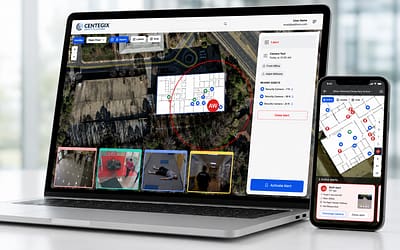
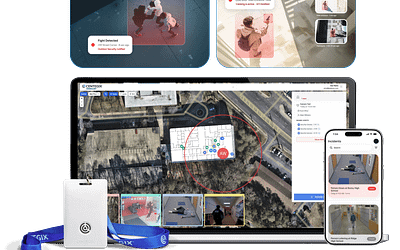
Once a human confirms an event, the alert flows into the CENTEGIX Safety Platform and activates the workflow the school itself has defined. A medical emergency routes to medical staff. A security concern routes to the school resource officer. The right people, the right place, the right time.
Does the System Use Facial Recognition or Track Individual Students?
No. The VOLT platform uses no facial recognition, stores no biometric data, and cannot track where any individual has been. It is built to understand behavior and environment, not identity.
For Sokolowski, privacy wasn’t a feature added late in development. It was the foundation.
“Safety should not be a trade-off between privacy and safety, especially when you’re dealing with kids,” he said.
That principle shaped the architecture. The platform analyzes behavioral anomalies, such as the signature of a physical altercation or a person in medical distress, without ever mapping events to individual identities. The platform is also recognized under the Department of Homeland Security SAFETY Act, reflecting the level of scrutiny applied to technology deployed in schools.
Sokolowski framed the stakes in personal terms. “As a parent myself, I want to make sure that my kids are protected, but I also want to make sure that my kids are not tracked.”
Protected, not tracked. That’s the standard.
Who Controls School Security Video Data?
The school does. On the CENTEGIX Safety Platform, video and incident data stay within the school’s environment and are shared only when someone requests help, following policies the school has predetermined. Sharing stops the moment an incident closes.
Verification and privacy-first AI answer half the Big Brother question. The other half is about control. Once an alert exists, where does the data go, and who decides?
This is where Cobb was unequivocal. School districts, universities, health systems, and every other organization CENTEGIX serves must maintain control of their own data, including video.
“We have collectively been very purposeful that our platform can only share data when a customer requests help,” Cobb explained. Whether help is requested through a CrisisAlert badge press or a human-verified AI alert, the data stays within the customer’s environment until an actual event occurs. Even then, information is shared only according to policies the organization itself has predetermined.
Cobb offered a simple way to picture it. “You can think of this platform and our partnership as an on/off switch. The data flow is only turned on when there’s an actual incident, and the switch is turned off the minute that incident is closed.”
No standing feeds to outside parties. No open pipeline to law enforcement. The school decides what gets shared, with whom, and under what circumstances.
Can Schools Really Have Both Safety and Privacy?
Yes, when the technology is designed for both from the start. The CENTEGIX and VOLT approach demonstrates that faster emergency detection and response don’t require sacrificing student privacy.
Both CEOs kept returning to the same theme. None of this technology matters without trust, inside the organization and across the community it serves.
That trust is earned through design choices. AI that watches for events instead of people. Humans who verify every alert before anyone is notified. A platform that recognizes behavior rather than identity. Data that flows only when help is requested and stops the moment the incident ends.
And it’s earned by remembering who the technology is for. As Sokolowski put it, AI is not the hero of this story. The teachers, school staff, and first responders on the ground are. The partnership exists to give them context, time, and confidence when every second matters.
Safety and privacy. Not safety or privacy.
That’s how you answer the Big Brother question. You build the system so the question answers itself.

Frequently Asked Questions
Does AI school safety technology watch students all the time?
No. With the CENTEGIX and VOLT integration, no human watches camera feeds unless AI flags a potential safety event such as a fight, medical emergency, intrusion, or weapon. This replaces the older model where staff monitored live camera walls throughout the day.
Do CENTEGIX and VOLT use facial recognition in schools?
No. The VOLT platform uses no facial recognition and stores no biometric data. It identifies safety events by analyzing behavior and environmental changes, not individual identity, and it cannot track where a specific person has been.
Who verifies AI safety alerts before a school is notified?
A trained human professional reviews every AI-generated alert and makes the final determination. Only after human verification does the alert enter the CENTEGIX Safety Platform and activate the school’s predefined response workflow.
Who owns and controls the video data from school security cameras?
The school or organization does. Data stays within the customer’s environment and is shared only when help is requested, following policies the school predetermined. Data sharing turns off when the incident closes.
Is the VOLT platform recognized by the Department of Homeland Security?
Yes. The VOLT platform is recognized under the DHS SAFETY Act, a designation reflecting rigorous review of security technologies.
Do schools need to buy new cameras to use AI-activated alerts?
No. VOLT’s AI works with the cameras a school already owns, analyzing existing feeds in real time. There is no rip and replace required.
Hear the full conversation with Brent Cobb and Dmitry Sokolowski on The Safety Signal, available on YouTube, Spotify, Apple Podcasts, and wherever you get your podcasts.