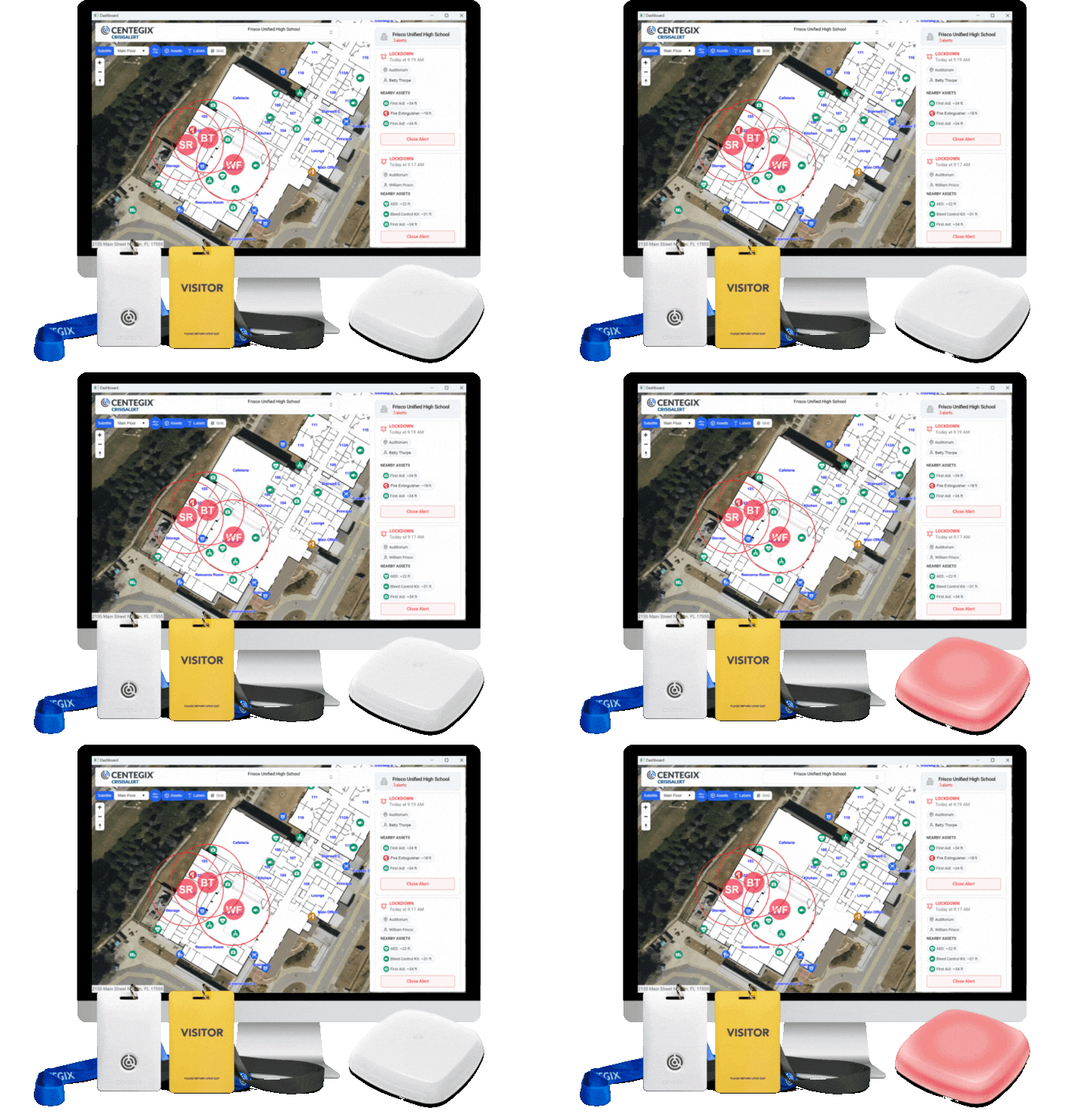
A modern correctional officer duress system should let personnel discreetly request help from anywhere in the facility, identify who activated the alert, communicate precise location information, and immediately notify the appropriate responders. It should also provide reliable coverage, digital facility mapping, configurable workflows, training, testing, incident reporting, and support for continuous improvement.
The essential question is what happens from the moment someone requests help until the appropriate response arrives.
What is a correctional officer duress system?
A correctional officer duress system connects activation, location, notification, and response so personnel can request assistance during a threat or emergency. Effectiveness depends on the complete pathway.
The Office of Justice Programs’ Correctional Officer Duress Systems Selection Guide provides a useful framework for understanding that distinction. Although published in 2003 and not a complete picture of today’s technology, the guide separates duress systems into three fundamental categories:
The framework remains relevant: an alert without identity or actionable location can leave teams searching for critical information.
Why is wearable, discreet activation important?
Correctional personnel move through housing units, medical spaces, kitchens, stairwells, sally ports, yards, and administrative areas. Healthcare, maintenance, contract, and civilian personnel also work throughout the facility.
A fixed panic button protects a location. A wearable device remains accessible to the person as they move. That matters when an employee cannot reach a wall button, retrieve a radio, unlock a phone, or navigate an application. A wearable device reduces the steps required under stress.
Discretion also matters. A wearable alert can request assistance without visibly announcing that action. It cannot guarantee de-escalation, but it gives personnel another option during an evolving situation.
How precise should location information be?
“Location” can mean a facility address, a building, a floor, a zone, a housing unit, or a specific room. Those levels of detail are not equally useful during a correctional emergency.
Responders should receive precise floor- and room-level location information of the alert so they can act without requiring the person under duress to describe the location. Building-level information only can still leave teams searching corridors, units, or floors.
What does total facility coverage require?
Coverage should follow people and operations across an entire campus. A correctional facility assessment should include:
- Housing units, cells, and dayrooms
- Medical and behavioral-health areas
- Kitchens, laundry, maintenance, and storage spaces
- Recreation areas and yards
- Corridors, stairwells, elevators, and sally ports
- Administrative and visitor areas
- Parking, perimeter, and required outdoor locations
- Concrete, below-grade, or other signal-challenging spaces
Leaders should understand system behavior during Wi-Fi, cellular, internet, or power disruption. Reliability determines whether employees can reach help from difficult areas.
Who should receive an alert and what do they need to know?
Incidents require different responses. A staff-assistance request might notify nearby officers; a medical event requires healthcare personnel; a larger threat may involve command staff or outside agencies.
Effective workflows define:
- Who receives each alert type
- Which channels deliver the notification
- What identity and location details appear
- Who acknowledges the alert
- When and how escalation occurs
- Which maps or safety assets responders can see
- How the incident is closed and reviewed
Local and centralized response can work together. The people closest to an incident may act first, while a command center gains visibility, adds context, and coordinates additional resources. Technology should reinforce those responsibilities rather than leave them implicit.
How do digital maps improve correctional response?
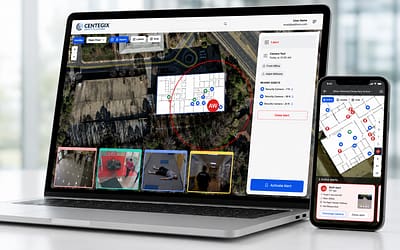
Digital maps add context by showing floors, rooms, entrances, restricted paths, and safety resources such as AEDs or bleed kits.
Maps must remain accurate and available to intended responders, with ownership for updating layouts, routes, and safety assets.
What training, testing, and reporting should facilities require?
Even an intuitive system requires implementation discipline. Personnel need to understand how to activate an alert, what response it initiates, and how to report a problem with a device or coverage area. Responders need to know how to acknowledge, escalate, and close an event.
Facilities should test activation, location accuracy, coverage, notification, escalation, and contingency behavior before relying on the system operationally. Testing should continue after implementation because facilities, personnel, devices, and procedures change.
Incident data can support continuous improvement. Useful measures include alert type, location, acknowledgment, response intervals, device or coverage issues, and post-incident findings. The purpose is not merely documentation; it is identifying patterns and strengthening readiness.
Understand Staff Safety Risk
This guide helps correctional leaders reduce staff safety risk by improving response visibility, location clarity, and readiness during assaults or escalating incidents.
Get the Staff Assault Prevention Guide.
What does Tennessee’s statewide model demonstrate?
The Tennessee Department of Correction is deploying CENTEGIX across all 10 state-operated correctional facilities. Every officer and staff member will receive a CrisisAlert wearable panic button. Activations will identify the person requesting help, provide a precise location to designated on-site responders, and route to TDOC’s new, 24/7 Correction Safety Intelligence Center in Nashville.
The deployment has not yet established measured outcomes. It demonstrates an architectural approach connecting wearable access, location-aware local response, centralized visibility, and multi-facility coordination.
How can CENTEGIX support a safer correctional facility?
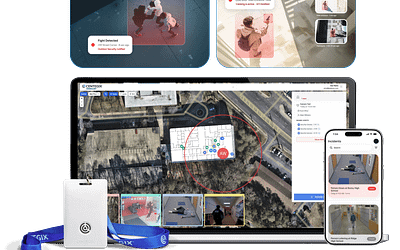
The CENTEGIX Safety Platform is designed to connect wearable activation with precise location information, digital facility mapping, designated responder notifications, and incident data. Its value in a correctional environment is not the badge alone; it is the ability to turn one accessible request for help into a coordinated, location-aware response.
Personnel may activate an alert for an assault, medical emergency, self-harm incident, fire, accident, or another situation involving an employee or incarcerated person. The system complements staffing, supervision, policies, training, and emergency procedures.
Leaders should assess who can activate, where coverage works, what location responders receive, who acts, how contingencies function, and what the agency learns from tests and alerts. Those answers determine whether a duress system contributes to a safer facility.
Identify gaps across your correctional facility
Use the Correctional Response Readiness Checklist to evaluate where alerting, location visibility, communication, or coverage may slow response inside your facility.
Get your copy of the Correctional Response Readiness Checklist.
Frequently Asked Questions
Are wearable panic buttons better than fixed buttons in correctional facilities?
Wearable panic button devices provide access while employees move, whereas fixed buttons protect specific locations. Many facilities may use both as complementary layers based on roles, spaces, and response procedures.
Can correctional panic buttons work without Wi-Fi or cellular service?
Some systems use dedicated infrastructure rather than Wi-Fi or cellular networks. Leaders should verify network dependencies, coverage, redundancy, and contingency behavior for the specific system under consideration. The CENTEGIX Safety Platform maintains functionality even when Wi-Fi or cellular service is unavailable.
How accurately should a duress system locate an officer?
It should provide a precise location responders can act on without additional searching or verbal clarification, including room-, floor-, zone-, or unit-level information.
Who should receive correctional facility emergency alerts?
Recipients should match the incident (staff emergencies versus campus-wide emergencies) and may include nearby officers, supervisors, healthcare personnel, response teams, command staff, or outside agencies. Ownership, acknowledgment, and escalation must be predetermined.
Can a duress system protect healthcare and civilian staff?
Yes. With the CENTEGIX Safety Platform, appropriate healthcare, maintenance, contract, administrative, and other personnel receive wearable panic buttons so they are empowered to request help when they need it.
What should a facility test before implementation?
Test activation, difficult-area coverage, location accuracy, notifications, acknowledgment, escalation, maps, infrastructure contingencies, device management, and employee understanding before operational acceptance.
How often should a correctional duress system be tested?
Testing should occur during implementation and on a recurring schedule established by the agency. It should cover device activation, location accuracy, difficult spaces, notifications, escalation, mapping, contingencies, and employee understanding.