This year’s American Hospital Association (AHA) Leadership Summit delivered one clear message: the future of healthcare requires transformation. From adapting to AI and shifting reimbursement models to rethinking the patient experience, healthcare leaders are confronting an accelerating pace of change.
With an endless list of emerging threats to tackle, it’s no wonder healthcare leaders feel like they’re coming apart at the seams. Every decision affects every department, every dollar, and every outcome. However, among the trends and trials discussed, stood one silently present subject—violence in healthcare.
Throughout this article, I’ll highlight the key takeaways from the Summit and how they relate to workplace safety. When healthcare organizations invest in safety, they’re not just solving for one problem—they’re supporting a strategy that drives retention, patient satisfaction, financial resilience, and organizational alignment. This is why a comprehensive approach to workplace safety in healthcare matters now more than ever.

Effective Change Management Is the New Mandate
Session after session emphasized the need to evolve. Healthcare can no longer be reactive. COVID-19 made that lesson clear. Today, the industry is grappling with a new era marked by rapid change: the rise of AI, shifting funding and reimbursement models, and increased pressure to do more with less. Leaders are being asked to innovate while maintaining excellence in clinical care, financial performance, and operational efficiency.
This balancing act is pushing leaders to rethink outdated workflows, challenge legacy systems, and eliminate inefficiencies. One example discussed at the Summit was a trend toward a consumer-based approach for patient care. Hospitals are shifting toward minimizing human touchpoints in provider visits, streamlining digital registration, and accelerating patient intake. These changes align with consumer expectations but require thoughtful change management to avoid disrupting care or eroding trust.
Where safety fits:
Change creates uncertainty—and uncertainty heightens anxiety. In environments where staff already feel overwhelmed, new workflows or reduced touchpoints can amplify fear, especially if incidents of workplace violence are rising. A strong safety strategy helps stabilize the workforce during change. It signals to employees: “We’ve got your back.” Organizations can ease transitions and increase resilience by deploying effective safety technology and reinforcing a culture of support.

Community Engagement Must Go Beyond Brick and Mortar
A second recurring theme was the future of community care. Leaders were challenged to reimagine healthcare not as a destination, but as a service that meets people where they are. The historic model of the hospital as the central hub of care is no longer sustainable. Telehealth, urgent care, and community-based services are the new frontier.
Patients want ease, convenience, and control. They want healthcare to mirror the customer experiences they’ve grown used to—online ordering, same-day delivery, app-based everything. To maintain relevance and reach, healthcare systems must embrace this evolution and adapt to community expectations.
Where safety fits:
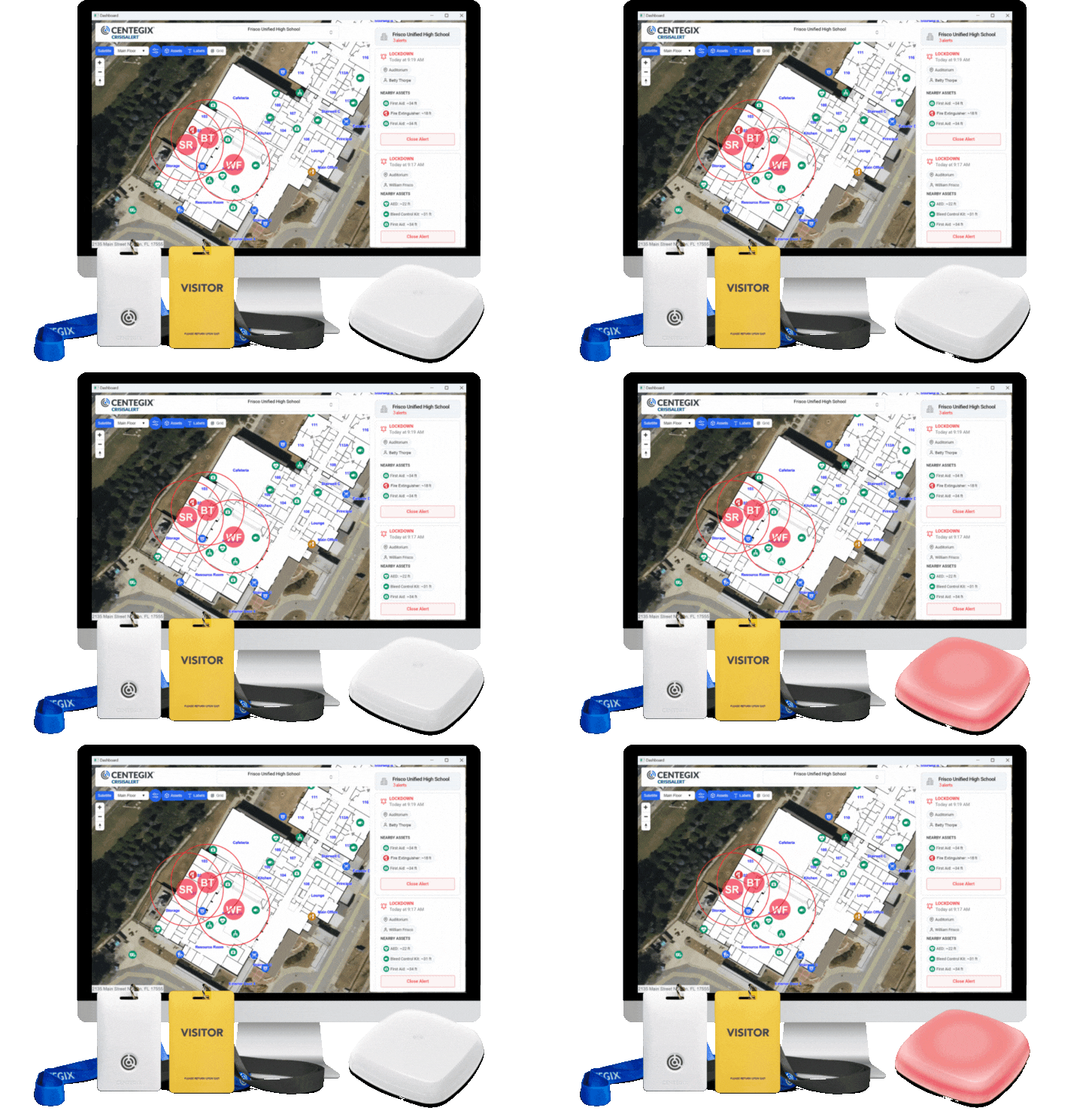
Safety isn’t limited to hospital walls. As care delivery expands into homes, clinics, and mobile settings, protecting staff in all environments becomes even more critical. Safety must scale with innovation. Organizations can uphold safety standards no matter where care is delivered by implementing flexible, wearable technology that travels with staff and doesn’t rely on infrastructure like Wi-Fi or cellular signals. That’s how safety becomes a bridge between clinical innovation and staff trust.
Employee Empowerment Isn’t Optional
Perhaps the most compelling message from the AHA Summit was the call to empower healthcare workers. When employees are invited into the conversation—through town halls, surveys, or safety committees—they expect to see their input reflected in decisions. It’s not enough to listen. Leaders must act on feedback or explain their reasoning for not doing so.
This level of engagement is non-negotiable in today’s workforce. With staffing shortages looming and burnout on the rise, clinicians want more than reassurance—they want partnership. They want to know their voices matter, their experiences shape solutions, and their safety is prioritized.
Where safety fits:
Safety is one of the most tangible ways to demonstrate empowerment. When healthcare workers have access to tools like wearable duress buttons that they can activate on their own terms, it tells them: “Your instinct matters. Your well-being is a priority.” It’s a visible, daily reminder that the organization is committed to protecting its people—not just in policy, but in action.
Why Workplace Safety Is a Smart Investment
Workplace violence is one of the most pressing challenges in healthcare today. But too often, safety initiatives are viewed as siloed or secondary to bigger issues like financial sustainability or patient satisfaction. The truth? Workplace safety touches every part of your organization:
- Quality of Care: When providers aren’t distracted by threats to their safety, they’re more focused on care and outcomes.
- Retention: Staff who feel safe are more likely to stay, reducing turnover costs and preserving institutional knowledge.
- Patient Experience: Protected, supported caregivers provide more compassionate and focused care, improving satisfaction scores.
- Financial Stability: Avoiding violence-related costs—from lawsuits to lost productivity—protects the bottom line.
- Regulatory Compliance: A proactive safety strategy helps meet OSHA and CMS expectations, reducing risk and liability.
In a time when healthcare leaders are being pulled in a dozen directions, a comprehensive workplace safety program is not just another task on the to-do list—it’s a force multiplier. It supports your people, enables your priorities, and gives your organization a path forward when everything else feels uncertain.
Final Thoughts
The AHA Leadership Summit made one thing clear: the future of healthcare won’t be built on tradition. It will be built on trust, innovation, and courage to do things differently.
If we want to strengthen patient care, reduce burnout, embrace innovation, and connect more meaningfully with our communities, we must start with safety. When safety is strong, everything else has a better chance to thrive.