41% of American undergraduates pursue higher education at community and technical colleges. These colleges fill an increasingly vital and versatile educational role by providing flexible, supportive, innovative, and effective educational programs.
Post-secondary instructors are increasingly seeking positions at community and technical colleges. The higher education job market is highly competitive, and many prospective educators find community college teaching positions gratifying. When prospective instructors weigh their employment opportunities, they consider various factors, including teaching load, benefits, institutional culture, academic service requirements, and salary. These educators are also concerned about campus safety. Community and technical colleges can appeal to prospective teachers by implementing campus safety measures.

What Factors Do Prospective Instructors Consider When Pursuing a Teaching Position?
University faculty are expected to conduct research and publish. These activities can impact the time they spend teaching in the classroom. K-12 teachers typically work within institutions wherein decisions happen at the administrative level and trickle down to the classroom. Community and technical college instructors, however, “…land in the sweet spot where the focus is on teaching and assistance to students, and have the responsibility to develop and propose solutions for curriculum, degree requirements, and other aspects of student learning rather than have those solutions come down from top administrators,” says Beth Smith, Academic Senate for California Community Colleges President. The community college setting can be ideal for post-secondary instructors who enjoy teaching and having instructional autonomy.
Many instructors establish careers at community colleges because they believe in providing accessible, practical education to a diverse student population. Community colleges are succeeding in changing the tired public perception that they are “just vocational-technical schools,” both through the design and delivery of their programs and how they communicate about them. Instructors choose community colleges for various reasons:
- It dramatically expands their career options. With over 1,000 two-year colleges in the US, instructors who apply for college positions increase their odds of landing a position.
- The work is mission-driven. Instructors participate in preparing a diverse group of students for the workforce.
- They get to teach. Instructors who enjoy working directly with students have many opportunities to instruct, advise, and support students.
- Competitive salaries. In many areas of the country, salaries at two-year colleges are competitive with (and sometimes exceed) those of neighboring four-year colleges and universities.

What Can Colleges and Universities Do to Attract Instructors?
The employment rate for post-secondary instructors is rising faster than that of other professions and is expected to increase by 8% through 2033. This means community and technical colleges need to compete for top candidates. Prospective instructors can expect competitive salaries, benefits, and good teaching and advising opportunities at most two-year colleges nationwide. Colleges can differentiate themselves from other employers by investing in campus safety.
Campus safety is a top concern for prospective students, parents, and staff. This year, public safety concerns appeared for the first time in a survey of risks at US higher education institutions. Given the rise in active shooter incidents on college campuses in recent years, this concern is understandable. By creating a culture of safety on campus, colleges can attract the best and brightest job candidates. Knowing that a college campus has effective safety measures gives prospective instructors peace of mind when accepting a new position.
Community college administrators recognize the value of creating a safe campus. Research indicates they believe they should “…be proactive and reinforce values that promote and prioritize campus safety, follow regulations, and provide sufficient resources to ensure campus safety measures.” In a survey of community college presidents, 90.9% of respondents reported that considerations of campus safety issues guided their decision-making, and all respondents indicated they had a responsibility to address campus safety issues with their constituents. Administrators at these institutions understand that campus safety plays a critical role in the decision to become a member of a college community and that implementing safety solutions creates a culture in which staff and students feel secure.
Campus Safety: Special Considerations
Most community and technical colleges have open campuses. Anyone can enter campus—with or without authorization. In addition, many campuses span several buildings spread over a large area, which can result in a chaotic emergency response. Spotty Wi-Fi or cell service can hinder communication on campuses without comprehensive campus safety solutions. In buildings where loud vocational activities occur, loudspeaker systems may be insufficient.
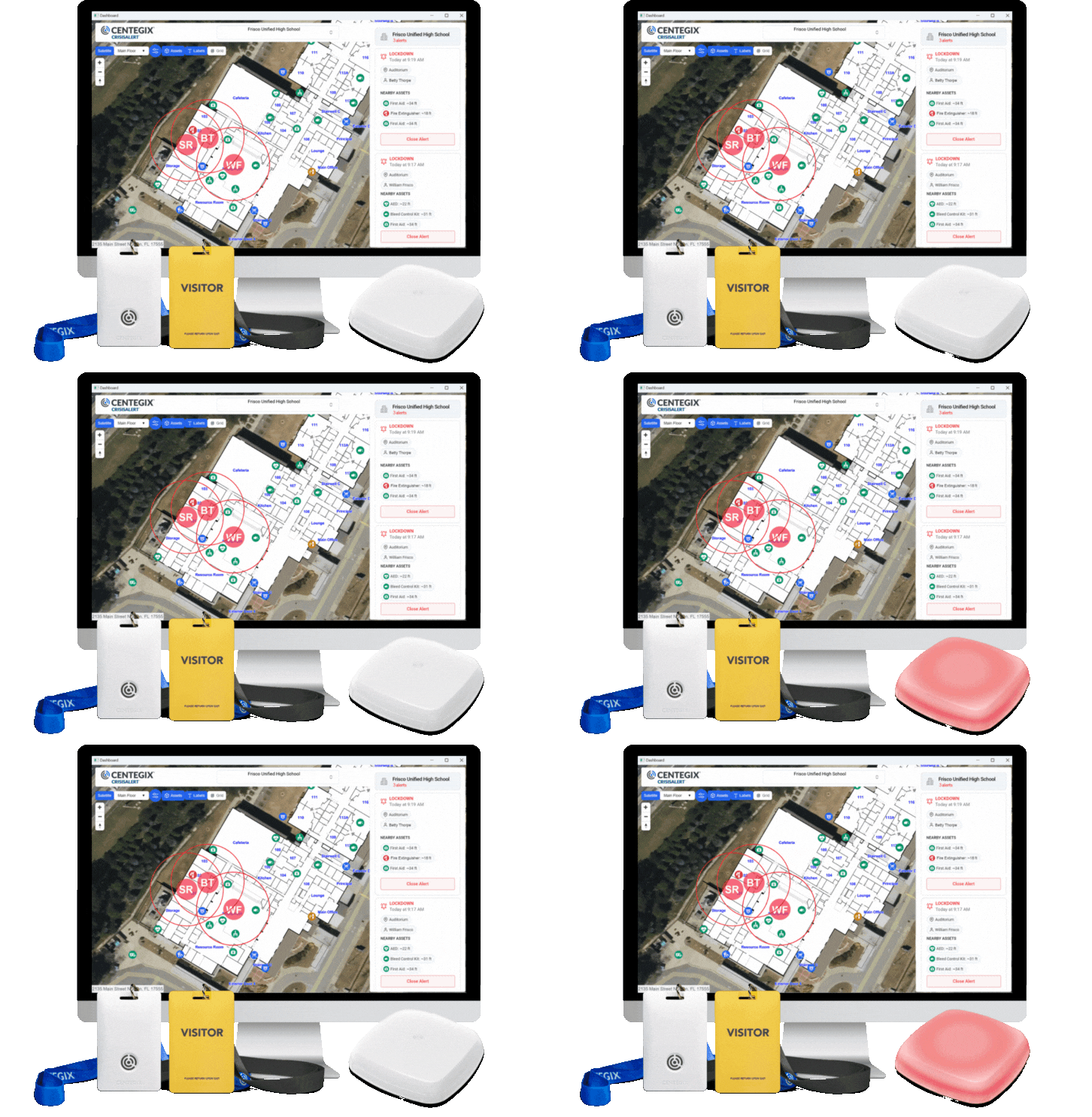
Campus safety solutions must enable quick, clear communication between everyone during emergencies. Innovative solutions, such as digital mapping technology and wearable panic buttons, empower staff to initiate alerts, allow first responders to arrive rapidly at the precise location of an incident, and allow them to intervene or render aid immediately.

Mobile Panic Button Technology Aids Colleges in Creating a Culture of Safety
When higher education instructors and staff are equipped with wearable panic buttons, they can request help from anywhere on campus. When combined with digital incident mapping, administrators and first responders can see the precise location of any incident on campus in real time. As a result, responders receive accurate information as events occur, leading to a faster, more effective response.
The CENTEGIX Safety Platform® is the foundation of a layered safety plan for higher education campuses. CENTEGIX designed its safety solutions to meet the specific safety needs of educators. CENTEGIX CrisisAlert™ is a wearable panic button that faculty and staff can use to request help or initiate campus-wide alerts. CrisisAlert:
- Provides full campus coverage; badges work everywhere—indoors and outdoors
- Works on multiple campuses
- Is easy to use and always accessible
- Instills a sense of safety for staff as they can initiate lockdowns or request help instantly
Safety Blueprint® is the dynamic digital mapping solution from CENTEGIX. When a staff member equipped with a CrisisAlert badge initiates an alert, their location is visible on the Safety Blueprint map, along with nearby safety assets, evacuation routes, and other critical information that first responders need to respond rapidly and effectively.
With Safety Blueprint, college administrators and public safety teams can:
- Update, layer, and share digital maps across departments
- Use maps to improve safety planning and preparation
- Take asset management to the next level by visualizing safety assets, recording maintenance checks, and gathering data
- Eliminate unwieldy spreadsheets and version control errors
College administrators and public safety personnel believe in CENTEGIX campus safety solutions. West Georgia Technical College is a rural college that has specific safety concerns. While they do not have to account for a substantial amount of vehicle or pedestrian traffic, as an urban campus would, they have to monitor the exteriors of their many buildings and the surrounding outdoor areas across an expansive campus. CrisisAlert empowers them to do so.
James Perry, Chief of Police for West Georgia Technical College, says, “The faster you can know what’s going on outside your buildings, the better you can control what goes on on the inside.” Some staff and instructors were initially skeptical about CrisisAlert, but real-time tests and quick responses to emergencies converted the skeptics. And now, Chief Perry says, “Our response time has been in the seconds, not in the minutes. And it’s been fantastic for us.”
Request a demo today to learn more about how CENTEGIX safety solutions can create a culture of safety on your campus, drawing people in and making them feel secure in your college community.