Healthcare workers in hospitals or units specializing in behavioral health or substance abuse treatment face a significantly higher risk of workplace violence compared to their peers. When these hospitals implement effective safety solutions, they can protect their workforce and create a culture of safety that benefits staff, patients, patient families, and the institution as a whole.
Workplace violence prevention techniques prioritize nurse safety and the safety of all staff, patients, and visitors.

Nurse Safety in Psychiatric Healthcare
Many psychiatric healthcare professionals choose this field driven by a passion to help individuals lead productive, healthy lives. They care deeply about their patients.
These professionals are also at a high risk of workplace violence. Healthcare professionals in the field of psychiatry have the highest incidence rate of nonfatal injuries—more than 10 times the rate of other hospital departments. Long-term nursing and residential care facilities also see increased rates of violence—approximately 75% higher than the overall rate of violence in a hospital.
At the 2024 American Psychiatric Association Annual Meeting, Dr. Laura T. Safar discussed the issue of workplace violence. Dr. Safar is the vice chair of psychiatry and director of the Neuropsychiatry and Behavioral Neurology Fellowship at Lahey Hospital and Medical Center at Harvard University. She noted that 50 to 90 percent of healthcare workers have been exposed to workplace violence, including verbal harassment. Dr. Safar added that nurses have the highest rate of workplace violence due to the amount of time they spend with patients. Forty percent of psychiatrists reported physical assault in inpatient settings.
The Negative Effect of Workplace Violence on Workers and Organizations
Workplace violence doesn’t just affect the healthcare workers who experience it; it casts a shadow on the whole organization.
Data from the Centers for Disease Control and Prevention (CDC) illustrates the impact of violence on healthcare workers. Healthcare workers make up 10 percent of the workforce, yet they experience 48 percent of nonfatal injuries due to workplace violence. Moreover, they also lose more time from work due to violence in the workplace. Between 2021 and 2022, healthcare workers accounted for a rate of 14 nonfatal injuries, resulting in more days away from work per 10,000 full-time equivalents (FTEs). That rate is more than triple the overall rate for all industries combined (4.3 per 10,000 FTE).
Violence in the workplace doesn’t just leave physical scars. CDC researchers observed that healthcare workers who had experienced harassment on the job were more likely to be anxious, depressed, and burned out.
Burnout directly affects healthcare worker retention. The National Center for Healthcare Workforce Analysis predicts a substantial shortage of behavioral healthcare professionals by 2037.
Workplace violence not only impacts nurse safety and the safety of other staff, but it hurts patients as well. When staff feel burned out, they leave. There will be fewer staff members to treat patients, resulting in compromised outcomes.

Safety Protocols Improve Conditions for Behavioral Healthcare Workers
By putting safety protocols in place, you can improve nurse safety and the safety of staff, visitors, and patients. Safety protocols should include the following key components:
- De-escalation training
- Reporting and data collection
- Environmental safety measures
- Implementing safety solutions
De-Escalation
A critical component of an effective safety protocol is de-escalation. De-escalation strategies promote leading with compassion to best diffuse a situation before it becomes aggressive or unmanageable. Key de-escalation strategies include actively listening to the person expressing frustration, maintaining a calm demeanor, respecting personal space, and using non-threatening body language.
Successful de-escalation requires training. Investing in de-escalation training can help resolve situations faster and improve outcomes for patients, families, staff, and visitors.
Reporting and Data Collection
The Joint Commission, an organization dedicated to quality improvement and patient safety in healthcare, published workplace prevention requirements, including an obligation to report and gather data about workplace violence.
The rationale for this requirement was that investigating workplace violence “allows
the organization to identify risk factors in vulnerable areas…Ongoing data collection can identify trends, patterns, and gaps.” By collecting data on workplace violence, you can better understand how, when, and where it’s happening to prevent it.
Environmental Safety Measures
Environmental safety measures are another component of nurse safety that aim to preserve the safety of everyone in the facility.
Environmental safety measures involve physical components that reduce risk. For example, to enhance security in a facility, more cameras could be added, and two-way windows could be installed. Safety measures also include establishing policies to protect everyone in the facility, setting proper expectations, and training staff to handle emergencies.
Implementing Safety Solutions
Providing safety solutions empowers healthcare workers. Duress button technology provides behavioral healthcare staff with a discreet and immediate way to summon support.
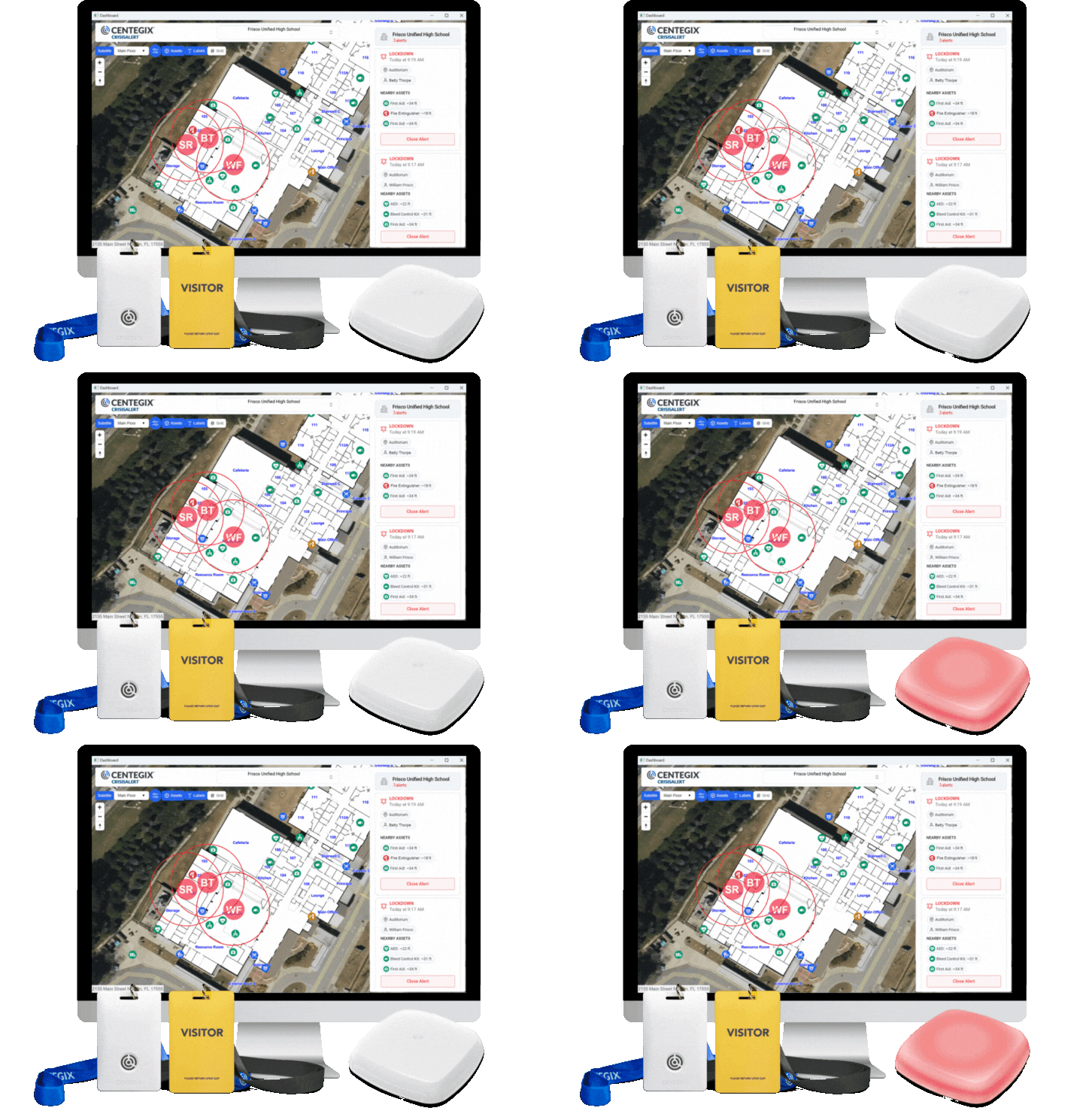
CENTEGIX CrisisAlert™ is a wearable duress badge with one-button activation. It is part of a layered safety plan to enhance nurse safety in behavioral healthcare systems. In an emergency, healthcare professionals can signal for help quickly and easily. The duress button immediately sends the user’s name and precise location to responders and security teams, accelerating response times.
Knowing that help is on the way gives healthcare professionals the confidence to initiate de-escalation techniques.

The CENTEGIX Safety Platform: Protecting Behavioral Healthcare Facilities
CENTEGIX CrisisAlert is part of the CENTEGIX Safety Platform™, the foundation of a layered safety plan. It’s built for rapid incident response when every second matters.
The CENTEGIX Safety Platform offers three critical capabilities to help prevent workplace violence:
- Accelerated incident response
- Precise location information, activated by the user
- Data reporting and collection
Accelerated Incident Response
The CrisisAlert wearable duress button is a powerful tool for accelerating response times in hospitals. With a simple push of a button, staff can discreetly and immediately request help, enabling responders to initiate appropriate actions quickly to ensure safety.
Worn inconspicuously with a provider’s ID badge, the device allows alerts to be sent from anywhere on hospital property faster than using intercoms or mobile phones, facilitating rapid response in emergencies.
Precise Location Information
CENTEGIX Safety Blueprint offers digital critical incident mapping to streamline emergency response. Responders who have access to campus and asset maps can save precious time and help the people who need it most.
When a staff member activates the CENTEGIX CrisisAlert duress button, responders receive the name and precise location where help is needed, reducing response times. This capability comes from CENTEGIX Safety Blueprint™, part of the CENTEGIX Safety Platform.
Data Reporting and Collection
Understanding the root causes of workplace violence is essential for preventing it. The CENTEGIX Safety Platform tracks data from each alert in a reporting dashboard.
This data helps you identify trends, mitigate high-risk areas, and reallocate resources to increase safety around your campus. Automation and accessibility help combat underreporting and provide leaders with an accurate picture of what’s occurring on their campus.
Improve Retention Rates by Investing in Staff Safety
Your staff chose to work in behavioral healthcare because they believe in helping this patient population. But they also need to feel safe and supported.
Investing in safety solutions that reduce workplace violence helps staff feel protected and confident. CDC researchers observed that investing in staff safety reduces the organizational risk factors that lead to workplace violence: complacency, inadequate safety protocols, and lack of staff preparedness. Safety solutions make staff feel that the organization cares about their well-being and help better prepare them for emergencies.
Improve Behavioral Healthcare Safety with Safety Solutions
Keeping your caregivers safe enables them to better protect their colleagues, patients, families, and other visitors. They feel more confident in the event of an emergency because they know help is on the way when they need it.
Learn more about boosting nurse safety and the safety of everyone in your facility.