CENTEGIX® | Education
ArkansasSchool Safety Standards

School Safety Legislation & Resources
Arkansas Proposes Alyssa’s Law: HB1492
In February 2025, the Arkansas House introduced HB1492, an act to require Arkansas schools to provide all school employees with a wearable panic alert system device “that allows the individual to immediately contact local emergency response agencies.” The legislation, if passed, would require all public school districts and open-enrollment charter schools to implement a wearable panic alert system in each public school within its public school district or open enrollment public charter school system that 1) integrates with local Public Safety Answering Point infrastructure to transmit 911 calls and mobile activations; and 2) can initiate a campus-wide lockdown notification.
Arkansas LEARNS Act
On March 8, 2023, Governor Sarah Huckabee Sanders signed Act 237, known as the Arkansas LEARNS Act, into law. Intended to bring sweeping changes to Arkansas’ education system, the law covers a broad range of topics, including everything from school vouchers, to increased pay for teachers and higher literacy standards for elementary students, to safety training and resources. The law includes a focus on school safety. Prioritize school safety by focusing on physical security, additional resource officers, mental health, and training to implement best practices.
School Safety Commitments
The Arkansas Department of Education (ADE) will accomplish their school safety goals through the following commitments:
- Distribute funds for improvements in safety measures: Continue to oversee the implementation of the $50 million of grant funding to provide resources for districts as they implement ADE’s safety priorities.
- Expand new Safe Schools Unit to support districts: Expand the new Safe Schools Unit to provide direct support to districts as they put into place new procedures. This unit will be instrumental in providing direct support, professional learning, monitoring, and direction regarding school safety.
- Develop best-practice crisis response plans: Develop a statewide crisis response plan that identifies the roles and responsibilities of each actor (state and local partners) in time of a crisis and support districts to create a local crisis response plans.
Learn more about the LEARNS Act
Arkansas Center for School Safety
The Arkansas Center for School Safety (ACSS) provides education, resources, training, and more to educators and law enforcement professionals in Arkansas to help them in providing our students with a safe, supportive learning environment to reach academic success.
ACSS Catalog
The Criminal Justice Institute and the Arkansas Division of Elementary and Secondary Education (DESE) have partnered to create a robust catalog of basic and specialty school safety training courses, available to law enforcement and school personnel such as administrators, teachers, staff, counselors, and school security officers.
The Arkansas Center for School Safety uses practical, hands-on application and classroom-based instruction together in a myriad of topics that increase knowledge and skills pertaining to school safety issues.Some of the topics covered include professional development for school resource officers, safety and crisis planning, active shooter response, drugs on campus, gang awareness and intervention, and bullying awareness and prevention.
Safe Schools Intiative Act (Ark. Code § 6-15-1303)
The Safe Schools Initiative Act (Ark. Code § 6-15-1303) details the responsibilities of Arkansas school districts regarding school safety and emergency esponse plans. There are several key areas of responsibilities.
Key Resonsibilities
School Safety Assessments: Each school district in Arkansas must conduct a comprehensive school safety assessment every three years. It should include an assessment of the following:
- Safety and security of the site and exterior of buildings
- Access control
- Safety and security of the interior of buildings
- Monitoring and surveillance, including without limitation type and extent
- Communication and information security
- Review of emergency operation plans
- School climate and culture
School Safety Plans: Each school district in Arkansas must develop and maintain a comprehensive school safety plan. This plan must address various aspects of school safety, including but not limited to emergency response procedures, crisis management, prevention and mitigation strategies, and communication protocols.
Collaboration and Input: The law emphasizes the importance of collaboration and involvement from various stakeholders in developing the school safety plan. This includes input from school administrators, teachers, parents, law enforcement agencies, and other relevant community organizations.
Annual Review and Updates: School districts are required to review and update their school safety plans at least once a year. This ensures that the plans remain current and effective in addressing evolving safety concerns.
Training and Drills: The law mandates that school personnel, including teachers and staff, receive appropriate training on emergency response procedures and crisis management. It also requires schools to conduct regular safety drills, such as fire drills, tornado drills, and lockdown drills, to familiarize students and staff with the appropriate actions to take during emergencies.
Reporting Incidents: School districts must establish a system for reporting incidents that pose a threat to the safety and security of students and staff. This may include procedures for reporting bullying, harassment, violence, or other concerning behaviors.
Coordination with Law Enforcement: he law encourages school districts to collaborate with local law enforcement agencies to enhance school safety efforts. This may involve establishing partnerships, sharing information, and coordinating response plans.
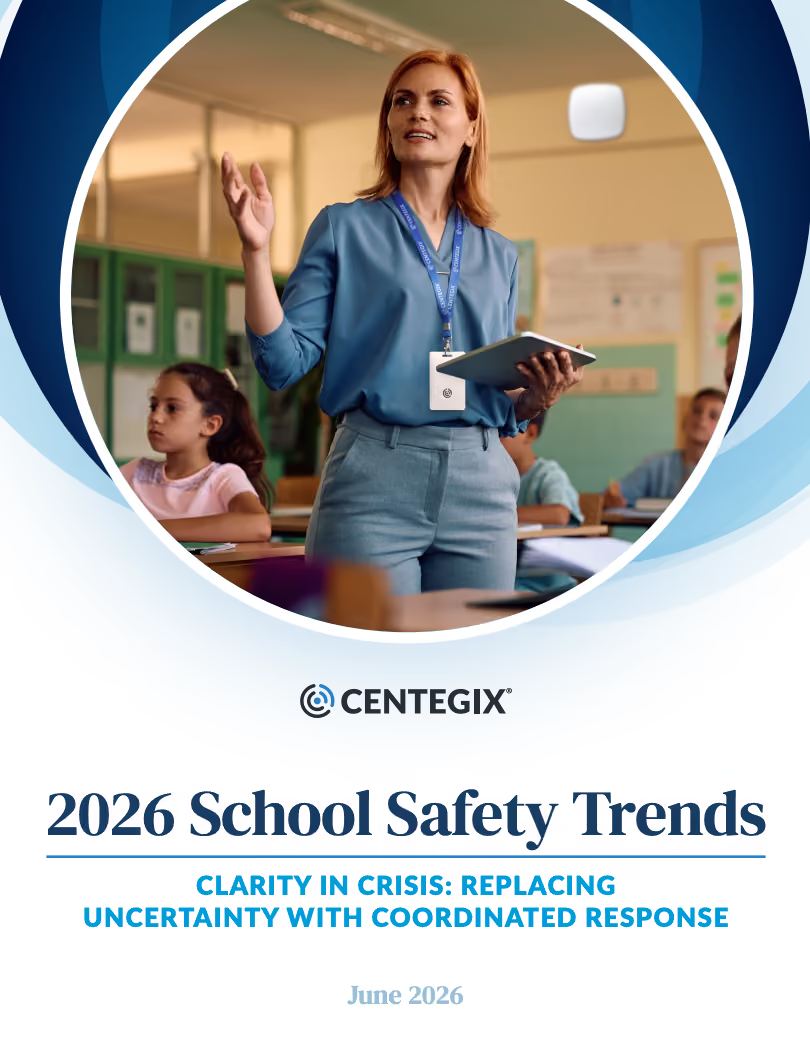
CENTEGIX Safety Report 2026 School Safety Trends:
Clarity in Crisis - Replacing Uncertainty with Coordinated Response
Built from more than 346,000 wearable panic button alerts collected during the 2025–2026 school year, the 2026 School Safety Trends Report provides a comprehensive look at how K-12 schools are improving emergency response, strengthening preparedness, and enhancing campus safety nationwide through clarity.
Download your copy today.
Resources
Resources for Arkansas Schools



Proven where it matters most
Real people. Real outcomes.

Education
Little Rock School District: Gains Full Staff Adoption
See how Little Rock School District tripled staff adoption of its safety solution, empowering more employees to quickly call for help and strengthening emergency preparedness across the district.
Read more
Education
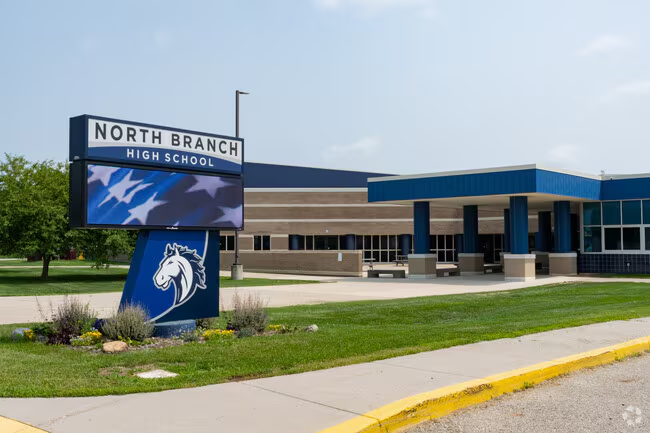
North Branch Area Schools Improve Emergency Communications with CENTEGIX CrisisAlert™
See how North Branch Area Schools improved emergency communication with a connected safety solution designed to help staff quickly call for help and give responders the information they need to act.
Read more

Education
Yakima School District: An Impressive Approach to Safety
Discover how Yakima School District takes a proactive, district-wide approach to school safety, using connected technology to strengthen communication, improve emergency response, and better protect staff and students.
Read more
Championing Safe Schools with Educators and Educator Associations





Built to respond first
Discover the Safety Platform
Safety solutions that prioritize speed for the best outcomes.

One-Button Ease
A wearable mobile panic button quickly and discreetly initiates alerts.

Location Accuracy
Mapping and locating capabilities provide precise location of emergencies, visitors, and safety assets.

Audio & Visual Notification
Announcements and strobe notifications make everyone aware of a campus-wide emergency.

Two-Way Messaging
Responders stay connected with continuous updates on incident type, location, and response status.

Visitor Management
A visitor management system screens and locates visitors on your campus.

Protocol Development
Plan for rapid incident response with protocols built alongside your team.

Private Managed Network
Campus-wide coverage with 100% grounds coverage and room-level location.

Integrations
Integrations to your existing safety assets to extend their capabilities.
See it for yourself
Ready to Connect with a CENTEGIX Specialist to Learn More?