Workplace violence in healthcare is a growing problem. Despite an increase in the frequency and severity of attacks, incidents tend to go widely underreported. Nurses and clinicians frequently experience threats, aggression, and physical assaults—yet many remain silent. Why?
Some believe violence is “just part of the job.” Others assume nothing will change, even if they do speak up. And for many, the reporting process is too cumbersome to prioritize during an already demanding shift.
But underreporting workplace violence in healthcare has a ripple effect. When leaders don’t have a complete picture, they can’t make data-driven decisions that best protect their staff and patients. This gap weakens safety strategies, delays interventions, and sends the message that these attacks in healthcare are tolerated.

Why Healthcare Workers Don’t Report
According to a 2024 member poll conducted by the American College of Emergency Physicians (ACEP), 91% of respondents reported being threatened or attacked at work, yet few felt their employers’ response was sufficient—50% disclosed that their employer took no action after their report.1 This could be a key contributing factor to underreporting related to violence in healthcare.
This problem isn’t unique to physicians. Research by the American Nurses Association revealed widespread hesitancy among nurses to report violence, despite daily exposure to verbal abuse, threats, and physical harm. Another healthcare provider survey conducted by Black Book Research found that while 100% of staff reported experiencing or witnessing workplace violence, significantly less had formally documented it—29% admitted to avoiding reporting due to fear of retaliation, management inaction, or normalization of violence.2
These polls illuminate several reasons healthcare workers have given up submitting incident reports—a problem that must be addressed before a culture of safety in healthcare can be achieved.
Why Underreporting Matters
Underreporting doesn’t just skew the numbers—it skews reality. When only a fraction of incidents are documented, safety programs lack the insight needed to improve. Trends go unnoticed. High-risk units don’t get the attention they require. And staff remain unprotected.
In a recent AHA Affinity Forum, CHRISTUS Health Security Leader Eddie Jones emphasized how ensuring accurate incident reporting is the first step to real change. After implementing targeted training and messaging in his organization that “violence is not part of the job”, he saw an increase in the number of reported incidents—not because violence increased, but because awareness and trust in the process improved.
This influx of data allowed them to pinpoint patterns, shift security presence, and adapt their de-escalation protocols, ultimately creating a safer environment for caregivers and patients.

Encouraging a Culture of Reporting
Combating underreporting starts with shifting the mindset on violence from tolerance to zero tolerance. Leaders must:
- Clearly communicate that violence is unacceptable. From the top down, this message should be consistent and unwavering.
- Encourage reporting without punishment. Near-misses, verbal threats, and hostile behavior should all be reported and treated as valuable insight.
- Celebrate reporting as a proactive safety step, not a sign of failure or weakness. Coach leaders to embrace this mindset within their teams.
Provide feedback loops. When staff report incidents, leaders should follow up. Show how the information is used to improve violence prevention and safety protocols.
Even small changes can help. QR codes on ID badges linked to a mobile-friendly reporting checklist can empower staff to act quickly in real-time if an incident of violence does occur.
Make Reporting Easy and Accessible
Accessibility plays a huge role in improving reporting. If incident systems are buried in intranets, require too many steps, or don’t fit clinical workflows, they’ll remain unused.
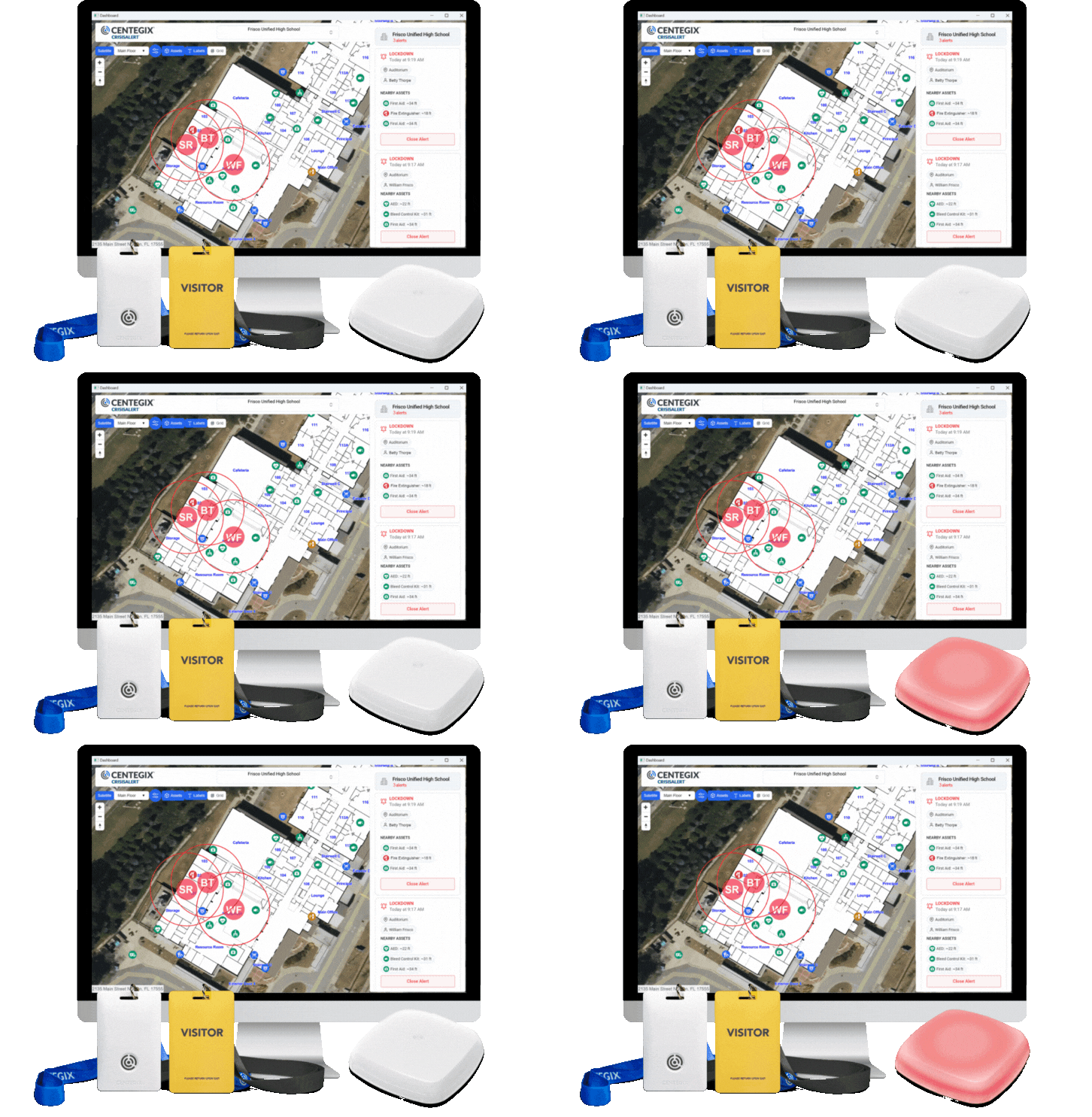
Innovative systems like wearable duress badges that initiate incident reports with minimal effort can help improve consistent and accurate reporting. CENTEGIX CrisisAlert™ wearable duress badges ensure every healthcare worker can signal for immediate help when needed, and every duress alert initiates an automatic incident report to collect pertinent information. These incident reports provide valuable insights into trends, hot spots, and safety opportunities. When reviewed over periods of time, they can help organizations make informed decisions to improve workplace safety for their providers and patients.
CrisisAlert is an ideal solution for healthcare workers because it offers total campus coverage—indoors and outdoors—and doesn’t rely on Wi-Fi or cellular service to send an alert. Once a user triggers a duress alert with their badge, their exact location is shared with designated responders and security, initiating a rapid response.
Final Thoughts: Normalize Safety, Not Violence
For too long, violence in healthcare has been underreported and gone underaddressed. But by normalizing and encouraging reporting, making tools more accessible, and fostering a true culture of safety, organizations can finally close the data gap and open the door to meaningful change.
What doesn’t get reported doesn’t get fixed. And our healthcare workers deserve better than silence.