What does it take to protect 230,000 students?
For Chief John Newman, the answer draws on 41 years of experience spanning law enforcement and school safety. After nearly three decades with the Tampa Police Department, Newman became head of safety and security for Hillsborough County Public Schools, one of the nation’s largest school districts and an early adopter of CENTEGIX CrisisAlert™. He now serves as Director of Customer Partnerships at CENTEGIX.
In Episode 6 of The Safety Signal, Newman joins CENTEGIX CMO Robb Monkman to discuss lessons from Parkland, the limitations of single-channel emergency communication, the role of AI in threat detection, and the importance of giving every school employee immediate access to help.
At the center of their conversation is a straightforward principle: An emergency plan cannot protect people if the information needed to activate it does not reach them. A comprehensive school alert system must do more than initiate an alert. It must quickly tell the right people what is happening, where help is needed, and what they should do next.
Why Is Communication Critical to School Emergency Response?
Newman describes threat mitigation as a three-legged stool:
- Identify the threat.
- Communicate the threat.
- Mitigate the threat.
Each step depends on the one before it. Identifying a threat establishes that something is wrong, but people cannot begin mitigating it until they receive the information necessary to act.
“It’s the glue that keeps it together,” Newman says of communication. “Without really good communications—to the point of fidelity—your plan, no matter how good it is, isn’t going to be good enough.”
He compares the process to preparing for a hurricane. Weather monitoring identifies the threat. Repeated public communication tells people where the storm is headed and whether they should evacuate, seek shelter, protect their homes, or prepare for power outages. Those instructions allow people to mitigate the danger.
School emergencies can compress that same sequence into seconds. There may be little or no advance warning between identifying a threat and needing people to act. The school’s emergency notification system must communicate quickly enough for students, employees, administrators, and first responders to follow the appropriate safety protocol.
The consequences of communication failures are well documented. The U.S. Department of Justice’s critical incident review of the Robb Elementary School response examined breakdowns involving leadership, incident command, coordination, communications, policies, and training. Its findings reinforce Newman’s larger point: Emergency response depends not only on detecting danger, but also on getting accurate information to the people positioned to respond.
Why Isn’t a Single Emergency Alert Enough?
In the episode, Monkman asks Newman about a point he emphasizes in his school safety presentations: A single announcement is not enough.
Newman points to the communication failures surrounding the 2018 shooting at Marjory Stoneman Douglas High School. Staff members recognized the attacker and communicated by radio, but the school was not immediately placed into a lockdown protocol. When gunfire activated the building’s fire alarm, students and staff also received signals associated with evacuation rather than a clear, coordinated warning about the threat.
Relying on any one communication channel creates the possibility that an alert will be missed or misunderstood. An intercom may be difficult to hear in a crowded cafeteria. A computer notification cannot reach someone supervising students outside. A staff member responding to an altercation may not be able to retrieve and unlock a phone.
That is why Newman advocates for multisensory communication: “When you have a strobe, you can see it. When you’re looking at a computer screen, you can read it. When you’re walking past an intercom, you can hear it.”
FEMA recommends using multiple, duplicative outlets to improve the likelihood that emergency messages reach their intended audiences. The CISA K–12 School Security Guide also encourages schools to evaluate security through a layered approach rather than relying on one measure.
The CENTEGIX CrisisAlert emergency notification system uses colored strobes, intercom announcements, computer screen takeovers, and other mass-communication integrations to notify people across campus. These overlapping channels help communicate both that an emergency is occurring and which safety protocol people should follow.
As Newman explains, when notifications engage multiple senses and reach people in different environments, “it’s hard for you not to recognize something bad is happening.”
What Information Must an Emergency Notification System Provide?
Newman’s three-legged-stool framework makes clear that speed alone is not enough. Information must also be specific enough to help people respond.
An effective school emergency alert system should communicate:
- What is happening: The type of emergency or required safety protocol.
- Where it is happening: The precise location of the incident or person requesting help.
- Who needs to respond: Administrators, onsite responders, emergency services, or the entire campus.
- What people should do: The appropriate action, such as sending assistance, evacuating, sheltering, or initiating a lockdown.
Location is particularly important. An alert that someone needs help does not eliminate delays if responders still have to search for the emergency.
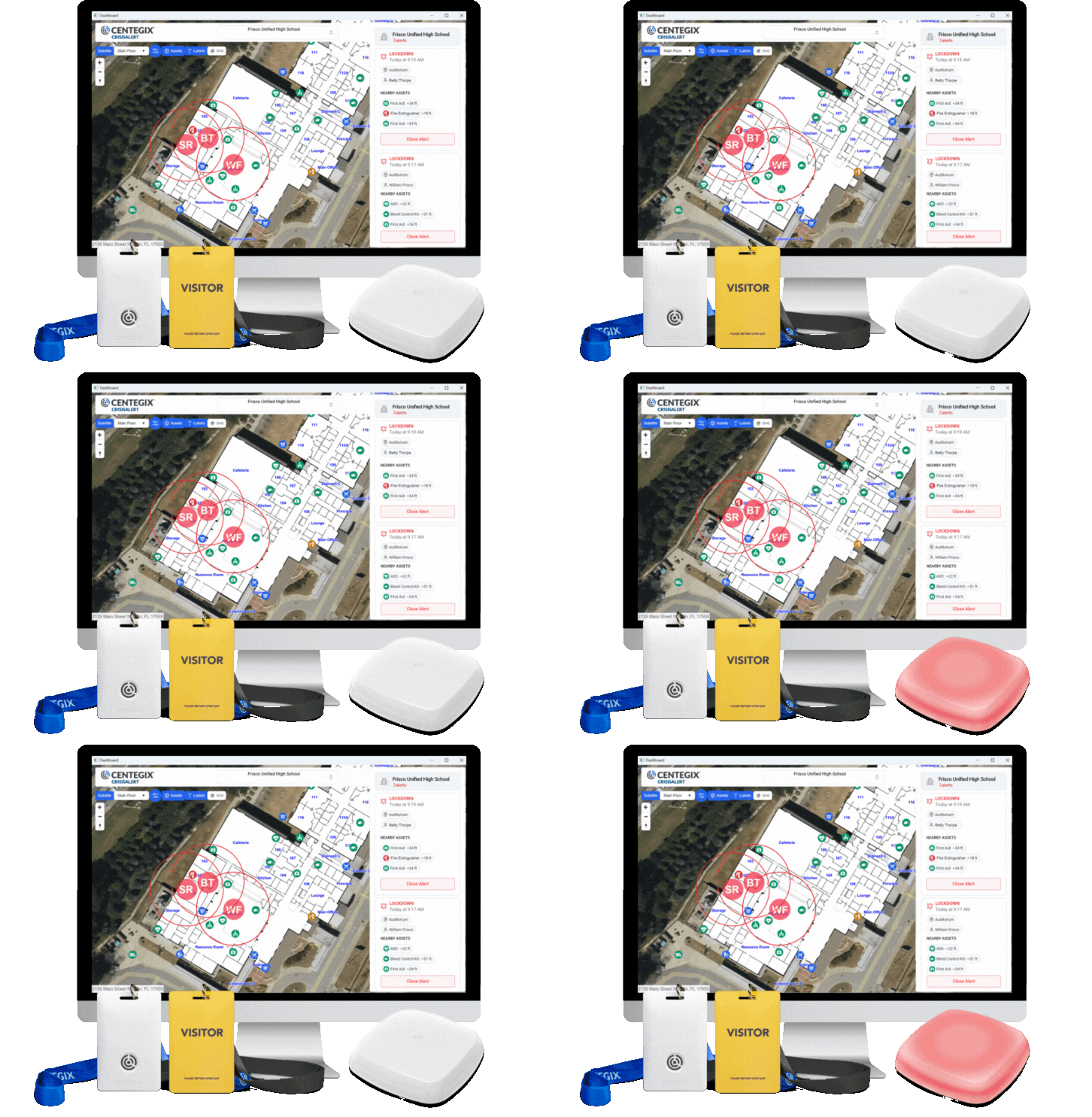
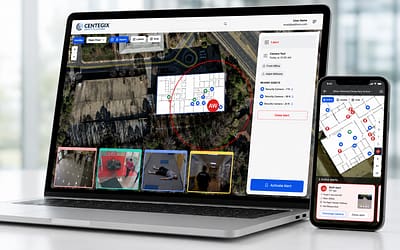
CENTEGIX Safety Blueprint® provides dynamic digital maps of the entire campus that can show an alert’s location down to the floor and room, along with nearby entrances, exits, cameras, AEDs, fire extinguishers, and other safety assets. Digital mapping brings clarity to emergency response by giving school officials and responders a shared view of where an incident is occurring and what resources are nearby.
That combination of speed and location transforms a general request for help into actionable information.
Why Should Every School Employee Be Able to Initiate an Alert?
The conversation then turns from how schools communicate an emergency to who is permitted to initiate that communication.
Newman warns that some districts still require employees to contact an office or administrator before activating an alert. That additional step can create delays when someone is facing an immediate threat, medical emergency, student altercation, or other urgent situation.
“If we’re telling them to see something and say something, now we want them to report that,” he says. “We’re trusting them that they know something bad is happening.”
At Hillsborough County Public Schools, approximately 28,000 employees received CrisisAlert badges. That included more than teachers and administrators. Cafeteria employees, coaches, custodians, and other staff members gained a direct way to request assistance wherever they were working.
Newman describes those employees as “an army of people” equipped with the technology to request help anytime and anywhere.
A wearable panic button keeps that capability immediately accessible. Unlike a wall-mounted panic button, it moves with the employee. Unlike an app, it does not require someone under stress to find a phone, unlock it, and navigate to the correct screen. “I didn’t want to use a cell phone,” Newman explains. “That’s a fine motor skill.”
Giving every employee a wearable panic button also communicates trust. As Newman tells district leaders, it sends a message to staff: “I care about your safety so much that I want you to call for help anytime, anywhere, and we’re going to send the calvary.”
Why Does the System Behind the Panic Button Matter?
The button only initiates the process. The larger emergency alert system must transmit the alert reliably, identify the correct location, notify the appropriate responders, and communicate instructions across the campus.
Schools present challenging coverage environments. A single campus may include classrooms, hallways, stairwells, athletic facilities, parking lots, playgrounds, portable buildings, and other outdoor areas. Cellular and Wi-Fi coverage can vary across those spaces.
The CENTEGIX Safety Platform® operates through private, managed networks rather than solely relying on a user’s Wi-Fi or cellular connection to initiate an alert. Its wireless panic button system is designed to provide campus-wide coverage and communicate precise location information to designated responders.
Its installed devices also communicate continuously so their operational health can be monitored. Ongoing communication between devices helps identify potential equipment or coverage problems before an emergency exposes them.
A district evaluating panic buttons must therefore assess the entire system behind the device, including its network, location accuracy, coverage, monitoring, notifications, integrations, and response procedures.
How Can AI Strengthen Emergency Detection and Response?
Newman and Monkman also discuss how AI-driven video technology can help schools identify potential weapons, fights, medical emergencies, and other incidents.
Newman sees AI as a potential force multiplier for school safety personnel, especially when it can work with a district’s existing security cameras. However, he emphasizes that technology cannot make every response decision on its own.
“Technology can’t do it by itself,” he says. “You need that person, the human element, to review what the AI is telling you and then use your protocols as to how you’re going to respond to that incident.”
For example, technology may identify behavior that resembles a physical altercation, but a trained person must determine whether the footage shows a genuine threat or students playing. Human verification helps connect automated detection with the appropriate response protocol.
That same principle applies across an emergency notification system: Technology should give people faster access to accurate information, but trained people must still interpret that information and act on it.
Why Do Everyday Emergencies Matter?
Although emergency alert systems are often purchased with the worst-case scenario in mind, Newman stresses that their daily value becomes visible through the incidents that rarely make the news.
Medical emergencies, fights, elopements, behavioral incidents, and staff safety concerns occur more frequently than active-assailant events. They also require a fast, coordinated response.
“The return on your investment is the frequency of use for the everyday events,” Newman says. “The frequency of use for the everyday events that occur in the brick-and-mortar hallways of our classrooms and our campuses is where you really see the effectiveness of the technology. Full stop.”
This everyday protection also contributes to a broader culture of safety. Students need to feel secure enough to focus on learning, while educators need to know that support is readily available.
“If kids don’t feel safe, if teachers and administrators don’t feel safe, the delivery of education doesn’t happen,” Newman explains. “If you’re not creating that nurturing, caring, safe environment, then nothing else matters.”
Where Should District Leaders Begin?
Asked what first steps superintendents and school board members should take, Newman offers three practical recommendations.
1. Bring in trusted safety expertise
Newman encourages district leaders to work with a credible law enforcement or school safety professional who can evaluate the campus without an agenda. Safety professionals and educators bring different perspectives, and an effective plan benefits from both.
2. Conduct a physical assessment
“Do a physical assessment of your campus so you know where your vulnerabilities are,” Newman advises.
The assessment should consider buildings, access points, communication systems, existing technology, staffing, outdoor areas, and relationships with emergency responders. The SchoolSafety.gov emergency-planning resources also encourage collaborative planning among schools, first responders, emergency managers, and community partners.
3. Match technology to identified needs
Districts should determine how each technology fits within their broader security strategy. That includes evaluating whether an emergency notification system:
- Gives authorized employees immediate access to help
- Covers district-defined indoor and outdoor areas
- Provides precise incident location information
- Uses multiple audible, visual, and digital notifications
- Routes alerts to the appropriate onsite and external responders
- Integrates with existing safety systems and protocols
- Can be monitored for device health and coverage
- Is supported by training, drills, and regular review
Technology should strengthen the district’s emergency plan, not operate separately from it.
Communication Turns Emergency Plans Into Action
Chief Newman’s experience across law enforcement and one of the nation’s largest school districts has taught him that emergency preparedness is about making sure people receive the right information in time to act.
An effective emergency notification system connects every stage of response. It empowers staff to request help, sends alerts through multiple channels, identifies the precise location of an incident, and gives responders the information they need to move without delay.
Hear Chief Newman’s complete conversation about emergency communication, multisensory alerts, AI, staff empowerment, everyday emergencies, and the lessons he has learned throughout his career in Episode 6 of The Safety Signal: “230,000 Students. One Mission. 41 Years. Hard Lessons in School Safety.”
Frequently Asked Questions About Emergency Notification Systems
What is an emergency notification system?
An emergency notification system communicates urgent information to people affected by an emergency and those responsible for responding. In a school, it may combine panic buttons, intercom announcements, visual strobes, computer notifications, digital maps, and alerts sent to designated responders.
What is the difference between a panic button and an emergency notification system?
A panic button is a device or mechanism used to initiate an alert. An emergency notification system includes the broader technology and processes that transmit the alert, identify its location, notify responders, communicate instructions, and support the resulting response. For example, the CrisisAlert panic button is part of the CENTEGIX Safety Platform emergency notification system.
Why should schools use multiple types of emergency notification?
People may not hear, see, or have access to every communication channel during an emergency. Combining audible, visual, and digital notifications increases the likelihood that everyone receives the warning and understands which safety protocol to follow.
What should schools prioritize when selecting a school emergency alert system?
Schools should prioritize immediate accessibility, campus-wide coverage, precise location information, multiple notification methods, reliable communication, system monitoring, and alignment with established emergency protocols. Districts should also involve first responders and other community partners in planning how alerts will be received and acted upon.